
Metolius founder Ross Liggett — now VP of Data at Noteefy — joins Mike to unpack the acquisition, golfer data ownership, and where AI is taking tee time booking next.

Ross Liggett

51min


Ross Liggett co-founded Metolius, the golf industry's leading data consolidation platform, and just sold it to Noteefy — where he now serves as VP of Data. In this episode, Mike Hendrix sits down with Ross for a candid conversation covering the deal, the road that got him there, and where booking technology is headed next.
They dig into Ross's path from hospitality school through Kemper Sports and Landscapes Golf Management to founding Metolius, the real history behind the "RevPAR vs. RevPAT" debate, and why Metolius built its platform around raw transaction-level data rather than top-down financials. Mike also presses Ross on Noteefy's data privacy policy — what happens to golfer data, who controls it, and what changes (and doesn't) after the acquisition.
The conversation closes with a deep look at Noteefy's booking engine push, why Ross believes LLMs — not browsers — will become the primary way golfers book tee times, and what that means for course operators who don't have a real booking strategy in place.
Source: noteefy.com/privacy-policy — Last Updated August 2025
Here are the specific clauses referenced in this episode:
1. Golfer data is explicitly listed as "sold" to third parties, not just shared.
The policy separates "Categories of Personal Information we disclose to third parties" from a distinct section titled "Categories of Personal Information we sell to third parties" — and the list under "sell" is identical to the disclose list: name, phone, email, mailing address, social media identifiers, date of birth, transaction data, geolocation, and website analytics/IP data.
2. Your data can be used to pad other courses' marketing lists.
Under "Other third parties for marketing, advertising, and promotional purposes," the policy states Noteefy may provide personal information to other golf courses to enhance or correct their own marketing lists.
3. The acquisition clause — the one that may matter most given the Metolius deal.
Under "Retention, Confidentiality, and Security," the policy states that in a merger, acquisition, corporate change, or bankruptcy, golfer personal information may be shared or transferred to the acquiring entity as part of an asset transfer.
4. Third parties who may receive your data include AI tools.
The "Categories of Third Parties" section lists generative AI integrations alongside payment processors, analytics providers, and marketing partners as recipients of personal information.
5. Data goes cross-border to the U.S. regardless of where the golfer is.
The policy confirms personal data is transferred to and processed in the United States to deliver services.
6. Opt-out exists, but it's manual and capped.
Golfers can request their categories of sold/shared data and opt out of sale — but the policy caps self-service rights requests at twice per calendar year, and opt-outs must go through a dedicated link or a direct email to dathan@noteefy.app.

Metolius founder Ross Liggett — now VP of Data at Noteefy — joins Mike to unpack the acquisition, golfer data ownership, and where AI is taking tee time booking next.
Ross Liggett
51min
Golf District co-CEO Kevin Kalner breaks down the StubHub-style tee time resale platform disrupting golf booking — prepaid rounds, weather guarantees, and a new "unsolicited offer" tool that lets golfers bid on sold-out tee times.
Kevin Kalner
46min
Jon Last joins Tech Caddie to unpack the NGCOA Business Pulse Report, the K‑shaped economy, and what current golf data says about pricing, technology, and golfer expectations.
Jon Last
53min

NGCOA CEO Jay Karen joins host Mike Hendrix to talk association challenges, membership growth, booking engine performance, dynamic pricing, and how AI can help golf course operators finally “measure what matters” in their tee time business.
Jay Karen
48min

Connor Van Gilder, whose background is in product design for complex enterprise solutions at companies like Zonos and Entrata, explains why he believes the digital tools surrounding golf—the tee sheet and point of sale (POS)—must be as thoughtfully designed as the golf course itself. Vn Gilder, founded Trutee Golf.
Connor Van Gilder
49min

In this episode of the Tech Caddie Podcast, Mike Hendrix welcomes Southern California Golf Hall of Famer John McNair, VP of Golf Operations for JC Resorts. With 26 years at the helm and a portfolio of 21 courses, John shares the "silver bullet" behind their 24,000-member affinity program and why controlling your own data is the ultimate competitive advantage.
John McNair
51min
Tech Caddie sits down with Golf Genius founder Mike Zisman on building category-leading tournament tech—and what’s next: racquet sports and a possible liquidity recap.
Mike Zisman
1hr 2min
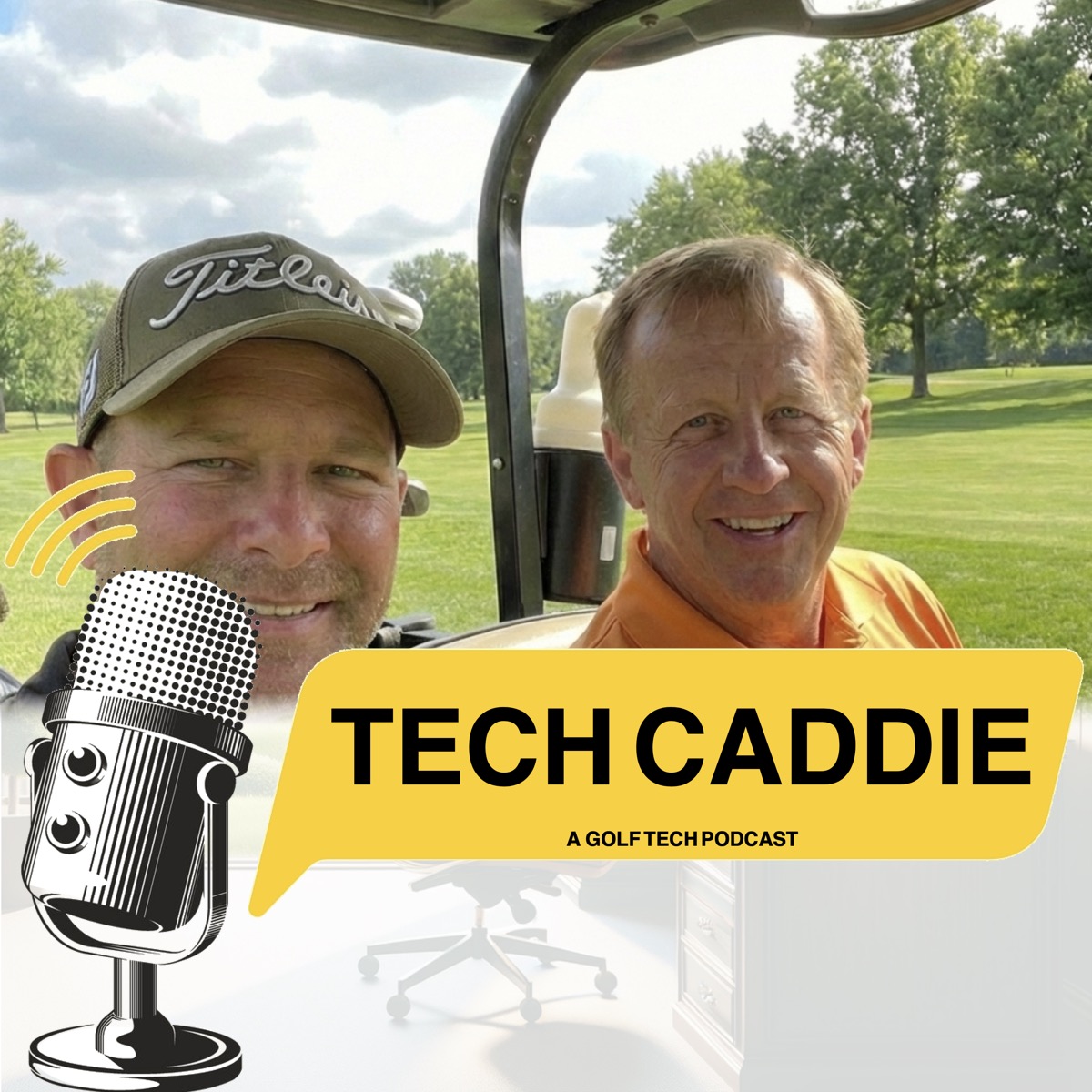
Primo Tee Times inside ChatGPT: live availability search, MCP explained, and what this means for golf course bookings.
Mike Dickoff & Jason Patronas
51min

Vache Hagopian joins Tech Caddie to explain why Jonas Synergy was built, who it’s for, and how long-term service, integration, and strategy shape better club technology decisions.
Vache Hagopian
37min
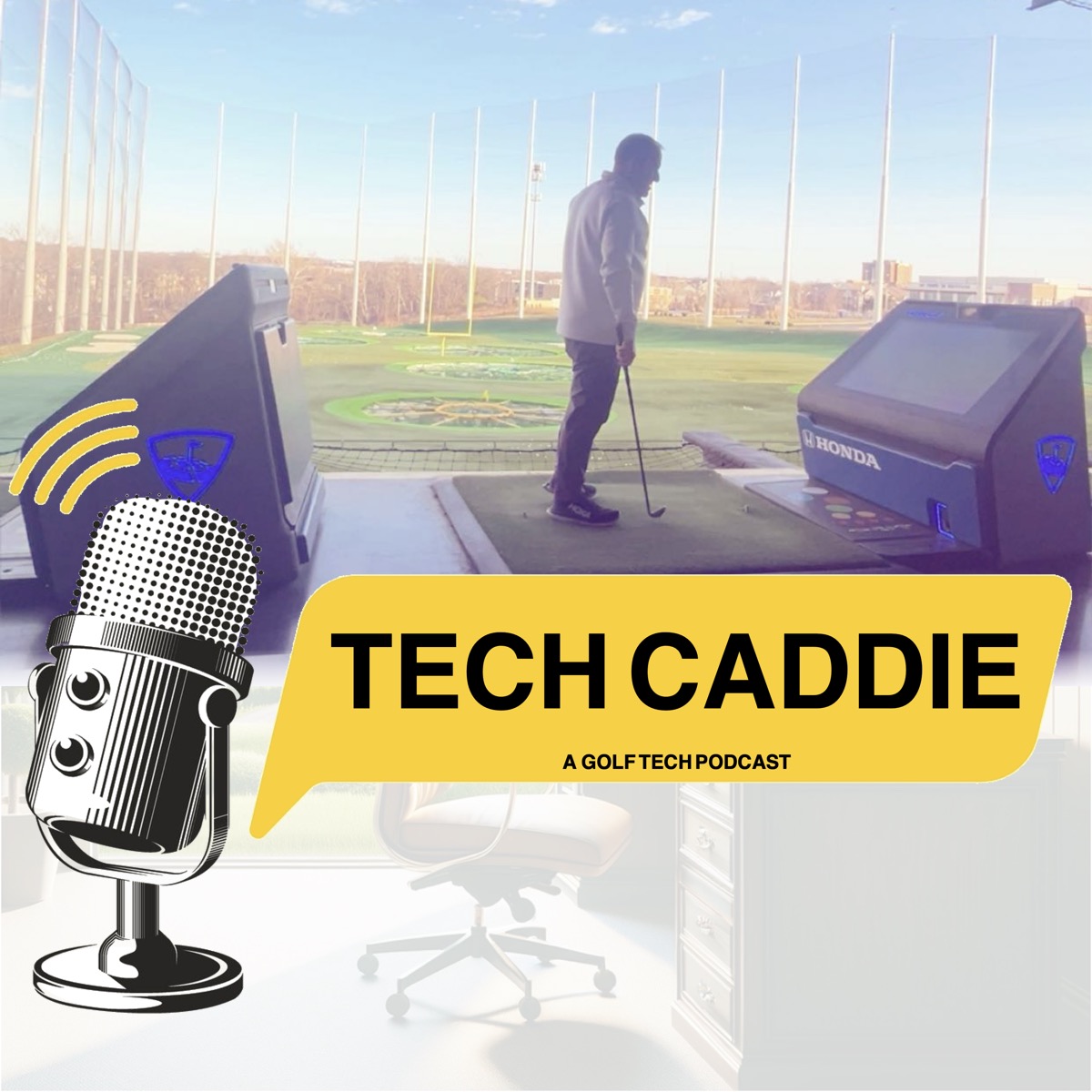
In this Tech Caddie episode, host Mike Hendrix (Founder & President of smbGOLF) sits down with Rusty Grimm, Founder of Rustic Golf Properties, to unpack one of the more practical—and fast-moving—growth stories in golf operations today: how Rusty went from buying one golf course to building a portfolio of six properties in Wisconsin.
Rusty Grimm
49min

In this conversation, Frank Halpin, co-founder of GolfNow and CIO of Sagacity Golf, shares insights into his journey through the golf technology industry. He discusses the evolution of Golf Now, his transition into real estate, and the founding of Sagacity Golf, which focuses on integrating AI into golf operations. The conversation explores the future of AI in the golf industry, emphasizing the importance of technology in enhancing customer experiences and operational efficiency.
Frank Halpin
57min
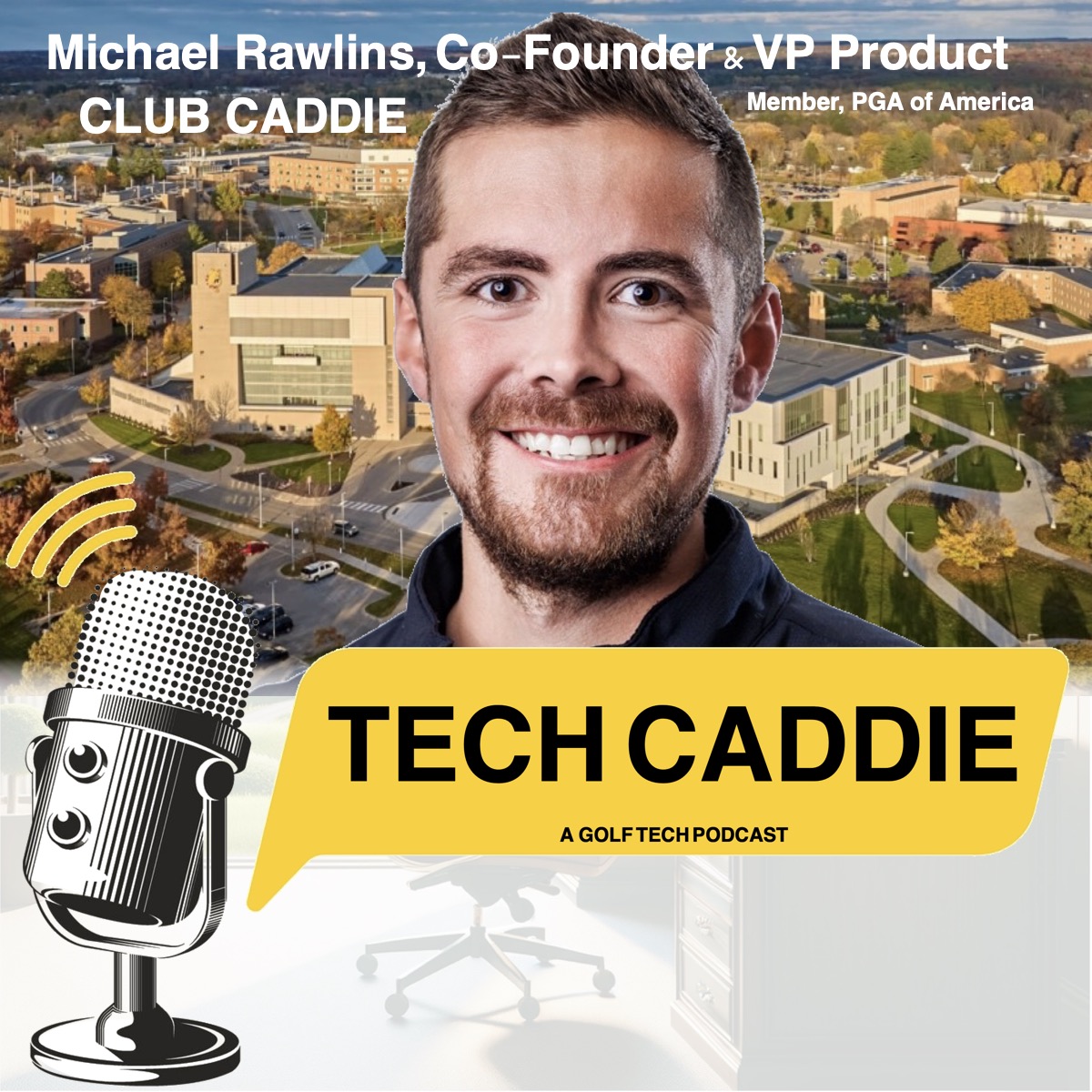
Michael Rawlins, Co-Founder and VP of Product at Club Caddie.Michael, a Class A PGA Member, shares the fascinating origin story of Club Caddie, from his early days as a PGM student at Ferris State to meeting CEO Jason Pearsall at Rackham Golf Course, leading to the co-founding of the company.
Michael Rawlins, PGA
49min

Mike Hendrix welcomes Bryan Lord, founder of Teesnap, one of the most disruptive forces in modern golf software. Bryan shares the full origin story: from the initial idea while at Purdue to securing major investment from Allegiant Airlines' Maury Gallagher.
Bryan Lord
57min

Mike Hendrix talks with David Clark, the founder of Easy Tee Golf. David shares how his product background at Capital One and Amazon shaped Easy Tee’s UX, why 50% of his customers are nine-hole courses, how Reserve with Google already drives ~13–14% of online bookings, why he shipped Waitlist before “squeeze times,” and what “default alive” meant for going all-in as a founder.
David Clark
52min
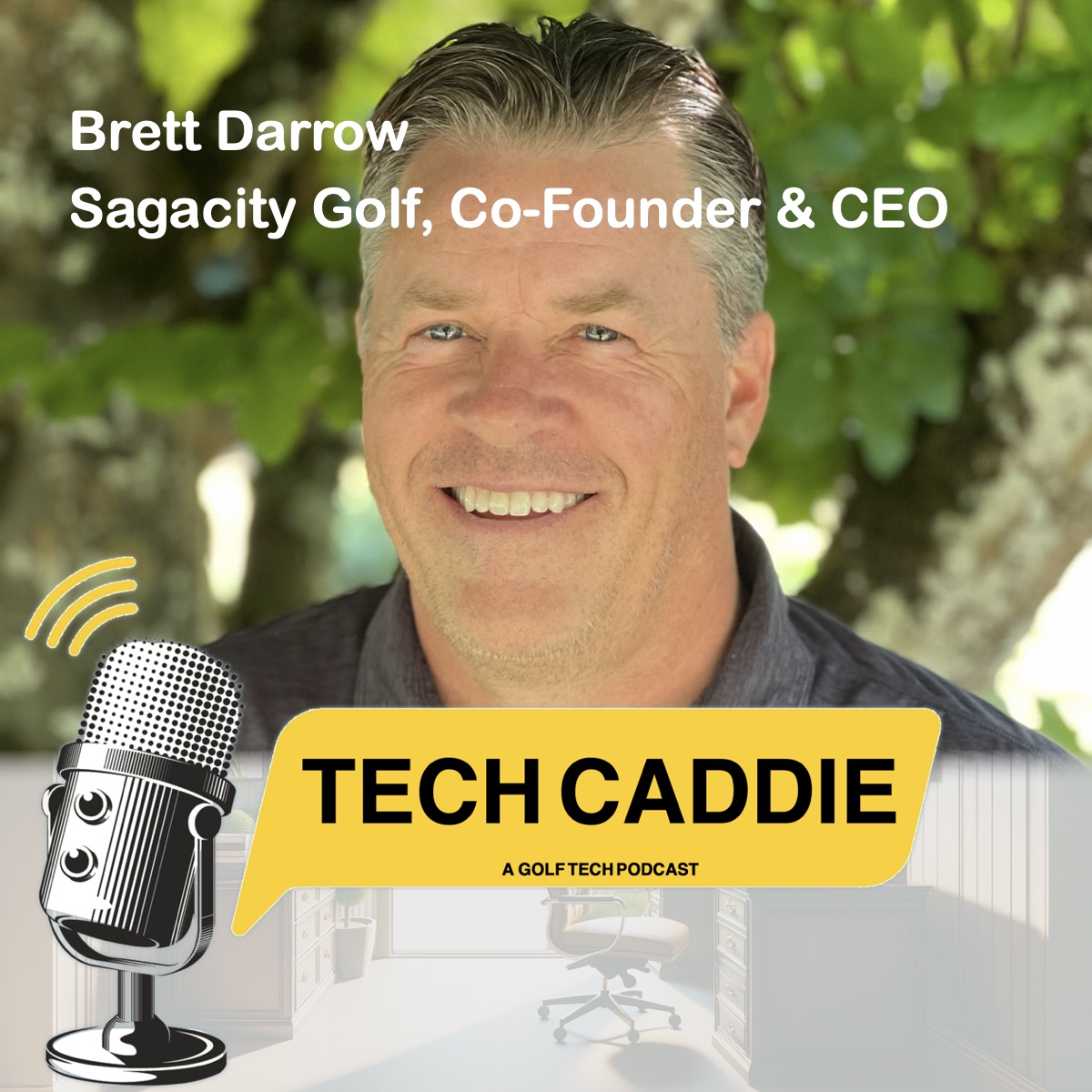
Mike Hendrix sits down with Brett Darrow, the visionary behind GolfNow and Sagacity Golf. Discover the untold stories of building and selling GolfNow, the challenges of innovation in golf tech, and the exciting future of Sagacity Golf's Yards app and advanced tee sheet solutions. A must-listen for golf entrepreneurs and industry enthusiasts.
Brett Darrow
60min

Can your golfers give feedback during the round? Real Time Feedback lets them text the shop in real time—no phone calls, no drama. Great for F&B, pace of play, and 5-star reviews. Hear how it works on the latest Tech Caddie podcast. 🎧 #golftech #golfbiz
Mike Terrell
45min

Zack Enriquez of Par 6 Media joins Tech Caddie to share how golf courses can show up in ChatGPT and Google Spotlight by improving their photos, metadata, reviews, and local listings to drive real bookings in the AI era.
Zack Enriquez
45min

Fraser Marriott, Head of Golf at Lightspeed Commerce, for a rare in-depth conversation about Lightspeed Golf’s growth, strategy, and vision. Fraser shares how a startup mindset still drives their team, why customer support is central to their success, and what’s coming next on their roadmap—including their Reserve with Google integration and plans to support both public and private clubs.
Fraser
46min

In this episode of the Tech Caddie podcast, Mike Hendrix is joined by golf industry veteran James Cronk—consultant, speaker, and co-founder of Golf Industry Guru. Together, they dive deep into one of the most overlooked areas of golf operations: e-waivers and risk management.
James Cronk
50min

Paul Sampliner shares his journey from growing up across the street from Highland Park Golf Course in Cleveland, to becoming a PGA golf professional, and eventually pioneering some of the earliest golf call centers and online tee time booking models while working for Marriott, Hilton, and later GolfNow.
Paul Sampliner
52min

2 Googlers join Mike for an honest conversation about when and why Google became interested in adding tee times to their results. They discussed the impact on golf courses not using an approved tee sheet, why some golf courses have more than one booking vendor available through search results and how long it takes for tee sheet and aggregator vendors to enable the Google integration.
Kathleen Oshima & Adam Jaffe
53min

In this episode of the Tech Caddie podcast, Mike Hendrix interviews Jake Gordon, co-founder and CEO of Noteefy, a company focused on demand technology for golf courses. They discuss the challenges faced by golf operators, particularly the issue of no-shows and cancellations, which lead to significant revenue loss.
Jake Gordon
55min

Nick Anderson joined the Tech Caddie podcast to share his impressions of the 2025 PGA Show and provide updates about his tee sheet and point of sale platform, MemberSports.
Nick Anderson
49min

In this episode of the Tech Caddie podcast, host Mike Hendrix chats with Martin Ort from Desert Canyon Golf Club about how his family-run course has embraced technology to stay ahead. From video game design to managing one of Arizona’s most tech-forward golf courses, Martin shares his unique journey.
Martin Ort
41min

In this episode of the Tech Caddie Podcast, host Mike Hendrix dives into the transformative power of golf course data with Bodo Sieber and Craig Kleu, Co-Founders of Tagmarshal. Learn how Tagmarshal is helping courses optimize pace of play, improve golfer experience, and boost revenue by capitalizing on dynamic pricing opportunities and expanded tee time inventory.
Bodo Sieber & Craig Kleu
42min

In this episode of the Tech Caddie podcast, Mike Hendrix interviews Jason Wilson, founder of Gallus, a company that provides mobile app solutions for the golf industry. They discuss the evolution of Gallus, the importance of mobile apps for golf course operators, and the essential features that make an app valuable.
Jason Wilson
53min

In this episode of the Tech Caddie podcast, Mike Hendrix interviews Chad Wright from Deer Ridge Golf Club about their recent technology transition from ForeUP to Sagacity and Toast. They discuss the challenges faced with ForeUP, the benefits of the new systems, and how they integrate operations for a better customer experience.
Chad Wright
50min

Watch as Mike and Chad explore the booking experience when using Lightspeed Golf in a desktop environment. Chad provides a pro tip in using Golf EMS to simply his events and golf packages operation and learn why Chad opted to leave foreUP and Sagacity Golf in favor of Lightspeed.
Chad Pettingill
40min

In this episode of the Tech Caddie podcast, Mike Hendrix interviews Jonathan Wride and Jarrette Schule from TenFore Golf. They discuss the origin story of TenFore, the challenges faced in developing golf management software, and the importance of user experience. Jonathan opens up about how he co-founded Supreme Golf with Ryan Ewers and the journey that led to Jonathan leaving Supreme Golf to help Jarrette build TenFore Golf.
Jonathan Wride
1hr 10min

In this episode you'll meet Jay Snider who built a simple tee sheet and email tool for his country club, to help keep dues down. Today, Proshop Tee Times has become a robust point-of-sale, tee sheet, member management solution for a wide variety of golf courses.
Jay Snider
52min

In this episode of the Tech Caddie podcast, Mike Hendrix interviews Rob Smyth from Cobalt Software, discussing his journey in the golf technology industry, the evolution of Smyth Systems, and the impact of family-owned businesses on company culture.
Robb Smyth
1hr 11min

CourseRev is a voice reservation system for golf courses that uses AI technology to handle tee time bookings over the phone. The system can integrate with tee sheet systems like Lightspeed and Club Prophet, allowing golfers to make reservations, join waitlists, and receive directions to the golf course. The system has surpassed online reservations in terms of volume and has handled more than 75-80 calls per day for a course. CourseRev is a game changer in terms of labor costs and customer experience.
Manna Justin
52min

Colin Read, co-founder of Whoosh, discusses his background in golf and entrepreneurship, as well as the challenges and opportunities in the golf tech industry. He emphasizes the importance of improving member and guest experiences, as well as staff workflows, through technology.
Colin Read
48min

Mike Hendrix interviews Scott Mingay from the USGA. They discuss the development of the GS3, a golf ball that measures green speed, smoothness, and firmness. The GS3 is used by golf course operators and superintendents to improve the playing experience and make data-driven decisions about maintenance practices. The conversation focused on the GS3 ball and the Deacon course management system. The Deacon platform is a cloud-based system that integrates data from various sources to help golf course superintendents make informed decisions.
Scott Mingay
58min

Menno Liebregts, founder of Golfspot, discusses the challenges of managing customer data in the golf industry and the need for an integrated solution. He shares insights on the company's journey, customer base, funding, and expansion plans. The conversation highlights the importance of open platforms and the impact of data on decision-making in the golf industry.
Menno Liebregts
37min

Jason Pearsall, the founder of Club Caddie, shares his journey of building the company and the importance of understanding the day-to-day operations of a golf course. Jason has the unique perspective as a golf course owner as he purchased Warren Valley Golf Course in 2022. Club Caddie started as a food and beverage delivery system called Golfler, but quickly evolved into a full clubhouse management software. Pearsall's experience as a golf course owner and operator have allowed him to build a product that solves real problems for golf course operators. The company has experienced significant growth and success, winning deals with management companies and continuously improving their product.
Jason Pearsall
1hr 11min

Kevin Fitzgerald, Assistant Director of Public Affairs for the Southern California Golf Association, provides an update on recent meetings regarding the implementation of a pilot program for golf tee time bookings in Los Angeles. The Golf Advisory Committee and the Recreation and Park Board of Commissioners both endorsed the staff recommendation for a $10 non-refundable deposit per player when booking a tee time.
Kevin Fitzgerald
34min

Jon Schultz, founder of ezLocator, discusses how their solution helps superintendents find the daily optimum hole location and enhances communication within a golf facility. ezLocator now include AI to improve the customer experience.
Jon Schultz
35min

In this episode of the Tech Caddie podcast, Mike Hendrix speaks with Kevin Fitzgerald, the Assistant Director of Public Affairs for the Southern California Golf Association, about the intersection of golf and public policy. Included is the TikTok video from Dave Fink which helped expose the gray market on the KaKao app, used by hundreds of golfers to score the best tee times available at the LA City municipal golf courses. Aaron Gleason from Golf Geek Software, discussed their solution called FairPlay Guardian, which uses machine learning to detect fraudulent activity in tee time bookings. Matt Holder from Loop Golf emphasized the need for operators to understand the pricing pressure and revenue management opportunities in the golf industry.
Kevin Fitzgerald, Aaron Gleason, Matt Holder
54min

Aaron Gleason discusses the issue of reselling tee times at LA City Golf courses and how Golf Geek's FairPlay Guardian technology can help detect and prevent fraudulent activity. He also spoke about the importance of knowing the conversion rate of a booking engine and how marketing automation can help increase revenue.
Aaron Gleason
29min

Mike Hendrix and Kevin Fitzgerald, the Assistant Director of Public Affairs for the Southern California Golf Association have a conversation about golf in Los Angeles. They discuss the role of the advisory board for Los Angeles City Golf Courses and the intersection of golf and public policy. They also peer into the issue of reservation systems and online brokers in the golf industry and specifically the City of Los Angeles.
Kevin Fitzgerald
43min

Matt Holder from Loop Golf joins the podcast to discuss Loop Golf. Matt talks about the early days for Loop and mistakes made along the way. Mike and Matt go into detail about tee time scraping and how Loop helps golf courses.
Matt Holder
29min

Don Rea joined Mike Hendrix on The Tech Caddie podcast for a conversation about the technology Don uses to run the golf course he owns in Mesa, AZ - Augusta Ranch Golf Club. Don is the VP of the PGA of America and he speaks about operating technology from that perspective and from his knowledge gained as a podcast host with Jay Karen, the Executive Director of the NGCOA.
Don Rea Jr.
48min

Del shares his background as an entrepreneur and his life in golf. He discusses the history of Seven Jars Distillery and the discovery of buried treasure on his family farm. Del talks about entering the golf business and the importance of technology in the industry. He shares his experiences with EZLinks and Fore Reservations, as well as the development of Kodology and Pitch CRM.
Del Ratcliffe
1hr 6min

Morgan Kimmins from Springfield Golf Resort in Chandler, Arizona discusses their use of Lightspeed technology and the impact it has had on their business. He highlights the benefits of Lightspeed's punch pass feature and the ease of use of their booking engine. He also discusses the importance of communication and the use of technology for frost delays. Morgan emphasizes the value of support and training provided by Lightspeed and the positive experience they have had with their customer service.
Mogan Kimmins
42min

Dave Vanslette, Founder and CEO from FAIRWAYiQ discusses the evolution of the company and its focus on data and automation in the golf industry. They have developed hardware sensors and software solutions to optimize golf course operations and enhance the player experience. They are focused on reducing friction and improving efficiency in the golf industry through AI and automation. The company has a strong customer support system and aims to provide value to golf courses of all types
Dave Vanslette
51min

Brendon Beebe, former CTO of foreUP, discusses his experience in the golf industry and building a successful company. He emphasizes the value of bootstrapping, hyper-focusing on specific market segments, and building a flexible system to meet the needs of different golf courses. At the end of the episode, Brendon asks Mike about how he would compete with GolfNow if he was to build a tee time aggregator and how he would use GolfNow if he was a golf course owner.
Brendon Beebe
51min

Allison George, a golf course owner and operator, discusses her experiences with various technology platforms in the golf industry. She shares personal updates, including her involvement in the golf industry and her use of technology in her golf courses.
Allison George
55min

Noteefy is a waitlist software that aims to help golfers play more golf and golf courses make more money. The product allows golfers to set their preferences for tee times and receive alerts when those tee times become available.
Dathan Wong
36min

Tyler Arnold, CEO of Eagle Club Systems, discusses the company's golf management software and its success in the industry. He highlights the flexibility and simplicity of their system, as well as their focus on customer support.
Tyler Arnold
35min
Mike Hendrix (00:00)
Hey everybody, this is Mike Hendrix, president at smbGOLF. And today my guest is Ross Liggett, VP of Data at Noteefy. And this is the Tech Caddie Podcast.
Ross, I first want to say congratulations, but welcome to the podcast.
Ross Liggett (00:28)
Really a pleasure to be here. Thanks, Mike.
Mike Hendrix (00:31)
so for people that don't know, you just sold your company to Noteefy. And I just think that that is super exciting. texted you shortly after it happened just to like it's just a culmination of a ton of work. It doesn't mean that the work is over, but it is a moment to kind of like take a breath and smile and feel good. So I want you to feel good. So congratulations. I think it's awesome.
That that you got that you've gotten to this point.
Ross Liggett (00:59)
Well, I appreciate that very much. yeah. It definitely yeah, a moment of of validation and a and a second to take a deep breath and then get back to work. Cause really this is not this is just the next chapter in the story, right? It's not it's not the end of the book.
Mike Hendrix (01:15)
Hundred percent. Yep. Hundred percent. But speak so speaking of books and or chapters and progressions, let's go backward. I think the first time I met you, we was at a what we called a power up session at GolfNow and where we brought people into Orlando and they kind of sat in this little auditorium and we would get up and and kind of you know, hey this, hey that, whatever. We'd take you guys to dinner, maybe we'd play golf, et cetera, et cetera.
And you at the time were I you were at landscapes and you were in a marketing role. So take us back to that time, how you got started at landscapes, what even brought you into golf?
Ross Liggett (01:55)
Yeah, so I I remember that very, very vividly. I am not sure if that was it was either late Kemper Sports tenure or early landscapes tenure. but I can't let this one pass because I'm a hospitality guy, so I'm a Hokey and I'm I'm very proud of my Hokies and our hospitality school at Virginia Tech. And so I I you know, the way I look at the world, maybe as evidence through
Who Metolius and Noteefy like I look at the world through data and I try to understand what's happening you know in in the business in terms of dollars and cents and information and then assembling those data points to create a story to to figure out. And I learned that in the hospitality school at Virginia Tech. And I remember being at GolfNow and learning that GolfNow was investing in the team at GolfNow and sending people to the Cornell Hospitality School.
big competitors, Michigan State being the third one, to adopt a more data driven approach to making decisions in the golf industry. So I will never forget that moment of validation where I was like, hey, I'm not the only nerd out here that wants to go to the hotel industry and understand what RevPar is.
Mike Hendrix (03:09)
Yes, yes. So let me so so I actually I had forgotten that too, that the Kemper sports part. I I do like now that you just said that, I'm like, that's right, you were at Kemper before you were at landscape. So apologies. I yeah, were you originally from Chicago?
Ross Liggett (03:26)
I was not. So so my whole nerd story is like is like as follows. Like most, like a lot of us in this industry, you know, I was sure I was gonna be on the PGA tour right when I was in high school. and I just ended up on the business side. So I worked at a private club through college. and after college, I worked for Intruest first. So I ran a couple of clubs in operations for Intruest in Vermont, a private golf club, a semi-private golf club and a private ski club.
and then in 08, I went to Kemper and stepped into kind of the sales, marketing, and technology land. so I worked at a property doing marketing, selling golf tournaments and outings and weddings and all of that sort of stuff for about four years before I became a regional director of sales and marketing, where I was looking over a portfolio of courses. And then yeah, eventually went to landscapes and looked after their whole portfolio in the management business again from that marketing, sales and technology purview.
Mike Hendrix (04:21)
Got it. And and so and where do you live today?
Ross Liggett (04:23)
I live in Fort Collins, Colorado today. about twelve years, the longest I've ever w lived anywhere in my life. But I I grew up mostly in the in the northeast in Massachusetts.
Mike Hendrix (04:33)
Okay, so you are a you're a northeast guy. So then yeah. like Red Sox Patriots, that kind of thing. yeah.
Ross Liggett (04:39)
Yep,
yep. Happy to see the Red Sox have turned it around here. They're my they're my true love. so hopefully we can hold on and sneak into the playoffs here in another couple.
Mike Hendrix (04:47)
Well let's set that aside because I'm on the other side of that.
Ross Liggett (04:51)
Maybe we
got a right handed bat we could use, I don't know.
Mike Hendrix (04:54)
We we need a lot of help in the Bronx. We need a lot of help. listen, you you actually mentioned something there, and I was debating as to whether I was gonna bring this up. But since you just said RevPar, I actually do just want to touch on this. I think some people that know me really well know this is a bugaboo for me. It I it's it's offensive, okay. so so you mentioned Cornell, and of course, when you get exposed to
To Cornell and especially revenue management, you have to go through the tract of Sherry Kimes, Professor Kimes at Cornell, who really is like a trailblazer when it comes to revenue management, especially in the hotel space. So here's a long story. Sorry for everybody listening. Professor Kimes got hired by Troon to do a big research project on are we even pricing golf the right way? I mean, this is like
Pre-GolfNow days, right? This is like going back. Her analysis was deep, and you can still find it online if you're willing to, you know, search for you know, search and search and search. But her analysis was number one, you all started selling golf the wrong way from day one. You should have been selling this as time and and not by the hole. But her whole report totally acknowledged that, but we're not going to change that now.
So let's talk about the world that you live in now. And it goes on to introduce a metric called RevPatt. And RevPatt, of course, standard for revenue per available tee time. And part of her part of the reason that she didn't use RevPar was because they had already done that in the hotel space. And like, so any good, you know, researcher, but almost like what would she be like a discovery person or a creator.
If she was going to create this new metric, she probably wasn't going to name it the same thing that was already being used elsewhere. Right. And and so and so now today, the vast majority of people in golf use the metric RevPar. And that is funny to me because there are facilities that have rooms and tee times, and that must be confusing at those facilities. And I always felt like
People didn't give her her due by just sticking with RevPatt. Like her long-term contribution to golf could have been, and hey, I'm the one that named RevPatt, I'm the one to introduce this to Troon. I'm really the one that got a conversation, you know, started around this. And then clearly, like me, like then there was this moment like me and Sampliner and Loustalot, we started to talk about RevPatt a lot, right? And kind of almost.
resurfaced it because it had kind of gone underground after she had done the work. But anyway, I I wish everybody would use RevPatt for what it's worth.
Ross Liggett (07:40)
I did not know that story and I am embarrassed that I've been contributing to to not giving her her due. So I'm gonna I'm gonna do my best. maybe we should just like rename the metric after and do it like on a slot basis or something and then we'll
Mike Hendrix (07:55)
It's funny because in Noteefy's explanation of Revpar, Noteefy uses the word Tee Times. So it's guys,
Ross Liggett (08:03)
Yeah.
Mike Hendrix (08:04)
if you're using Tee Times in the explanation, why wouldn't you just said Rev? But anyway, that's that's
Ross Liggett (08:09)
W
there's an interesting discussion here though. Are we just talking about semantics or are we talking about the difference between a whole tee time or a slot and a spring?
Mike Hendrix (08:18)
I agree. I agree. I
agree. And I actually know the vernacular is even if you're a single, you go, hey, I got a tee time for this Saturday. You know, even if you're a single, you do say it that way.
Ross Liggett (08:31)
You think of it on the slot basis.
Mike Hendrix (08:33)
Yes, yes, yes. So anyway, okay, so so enough enough of that. So you you mentioned Metolius. I probably should have mentioned the brand already. You you're at landscapes, right? And how long are you at landscapes?
Ross Liggett (08:47)
I was at landscapes for about five years.
Mike Hendrix (08:48)
Okay, so you're at landscapes for five years. Did you live in Nebraska or were you in Colorado?
Ross Liggett (08:53)
No, I was in Colorado. So we moved to Fort Collins, yeah, when I was still with Kemper.
Mike Hendrix (08:57)
Okay, so you weren't like elbow to elbow with these guys at landscapes every day.
Ross Liggett (09:01)
Mm mm no.
Mike Hendrix (09:02)
Obviously, you're talking, you know, you're you're a key part of the company. And and as I know the story, but you certainly can correct it. But as I know the story, you start feeling like there's a lot more here, on the bone, so to speak, that we could know about the golfer and understand the golfer that would impact marketing. But it but essentially, like you just don't have the tools to do it. Isn't it fair to say?
Ross Liggett (09:25)
Yeah, fair to say. And I think fair to say that I started feeling that, you know, all the way back to intro s days, it it just made me it just took a long time for me to like identify exactly what it was. You know, so for example, when I was 22 years old as the club manager at this at this semi private golf club, every Wednesday morning I would have to drive up to the HQ at our resort and get on a conference call, a Citrix Webex with Hoover.
Who was the the intro S main office in Vancouver where they had a team of five revenue managers who had already reviewed all of our information and we sat on that call and talked about what how many rounds we were doing, what was booking forecast looking, what was marketing doing to drive rounds into the business. And we optimized that business on a weekly basis every day. So I had always been like, this is how you do it, right? This is you look at the numbers, you optimize, you see if you did the right thing or the wrong thing.
It doesn't matter if you did the right thing or the wrong thing because you learned something and you're gonna get better with the next cycle. So that was like my whole purview. And yeah, so you know, here I'm making marketing reports and I'm spending all my time requesting that GMs and and head golf professionals and food and beverage directors are like emailing me, Hey, send me your sales report, send me, you know, Easy Links 22E, send me, you know, all and I'm spending all my time mashing data up in Excel. You know, meanwhile going, there's gotta be a way to automate this so we can spend more time.
Analyzing the information unless I find it
Mike Hendrix (10:49)
Other than yes, right. Yeah. And and so so you carry that with you, you do your time at landscapes, but at some point
Ross Liggett (10:59)
And
I make so I make the mistake that everybody makes, which is like, so I get to the point where I'm like, okay, we need consolidated information, is how we can ha get speed in reporting. Right. So I've sort of figured that that's the problem I'm trying to solve. We need to consolidate info, then we can have speed to decision making. And so I'm like, okay, well, that's easy. We'll just get everybody on all the same Tee sheet and point of sales and stuff.
Mike Hendrix (11:21)
Yeah.
Ross Liggett (11:23)
Every management company knows how that goes.
So I spend a couple of years doing that and realized like, okay, that's not the solution. The solution is something in the middle that can take all of the raw source data and put it in one structure. And then that delivers the speed to decision making down the line. And that's effectively what Metolius became. you know, dashboards are AI or BI or whatever you want to call it. The magic is in structuring the data to be able to meet whatever use cases down the road.
Mike Hendrix (11:52)
Right, right, right. But bec be yeah, you know there's a lot of founder people that watch this podcast and like I wanna like I I just wanna talk like personally about how hard was it to leave landscape, like you know, like to like, my god, I'm gonna do this, right? I'm gonna start a company and like just give other people some insight into that. Because again, like now you're in this bucket of he did it, like it you know, he won, so to speak. So I think your insight on that now becomes
especially important for other people in in golf tech.
Ross Liggett (12:24)
interesting. I did not this is the first moment in my life that that I've been positioned maybe as someone who made it. So I'm having a little trouble sort of wrapping my brain around this. And and like I said, I you know I I look at this as another like when we build the end all be all thing that does everything automatically, then then I'll have a different response. But yeah, so
We we've had a good run. We're still on it. You know, seven years, I guess that's more than what more than what most folks make. in those or most startups don't make it that far, I guess. you know, I think there's a couple things that that were important. I think most importantly, you know, before I left landscapes, we built a prototype and we knew that it worked. So
We knew that that it was there. And then also I felt like we had a really good feeling for what the pain points were out there in data. we we felt like we were a little bit ahead of the curve just because of the places that I had worked and and knowing what the strategy was with data and knowing what the opportunities were by looking into other industries. but I think the number one thing that I would say.
To anybody who wants to start a business is like differentiate, be different. and, you know, look for that blue ocean. You know, blue ocean strategy is one of my favorite strategy books. And one of my favorite sayings that I say to my team and people I work with all the time is like, don't swim upstream. Like swim downstream, go with the flow. and so I think, you know, probably the biggest thing that that
led to the success of Metolius and will continue, is just, you know, solving solving the real problem that nobody else was willing to to take on and solve. And and our problem was just kind of a boring one. Like we didn't invent the craziest, like we're not inventing chat GPT over here. It's just it's hard, it's boring, it's nuanced.
And we just kind of went about step by step trying to solve this data normalization problem. And I think nobody else did.
Mike Hendrix (14:32)
Right. And I think the other thing, although w when you say that though, like there should be we should honor some of the stuff that they did at Orca, like la Mike Loustalot at Orca.
Ross Liggett (14:44)
yeah. So when I say the unique problem, so I think I think that you know what Mike and the team have done at Orca is amazing and I think super useful. And I hope that the advances in technology with AI and everything will continue to maybe reignite that desire in the industry. Cause I do think benchmarking, you know, sort of again, another hospitality,
you know, parallel a star report and all that.
When I think about the problem, like the problem that Metolius was solving with our data platform, it's about transactions, reservations, and humans. Like it's about the intersection of that very granular data. And so so like we try to attack the problem
At literally the foundational level, because when you look at a golf course and you try to understand what's happening there, maybe you look at the financial statement. But that financial statement is built off of an aggregation of a bunch of very small transactions. And when those two things aren't connected, you can look at the financial statement, identify the problem, but you can't identify the solution because the data is disconnected. And so creating that modeling of data that starts at the
most basic level, the actual items that show up on receipts, the actual interactions that interactions that happen on your booking engine, and then building up from there as opposed to building down from the financial statement, I think that's the unique thing that we were trying to solve that led to everything that came after.
Mike Hendrix (16:11)
And so and so as a result, Metolius does have and maybe it's I just should say Noteefy now, but I mean Metolius amassed a large amount of golfer data in in doing all of that work. I I I think that's right to say.
Ross Liggett (16:23)
That is correct. We consolidated a lot of golfer, a lot of yeah, a lot of really granular data that that our clients, the golf courses who own and control that data, we do not own and control that data. They use that data to drive their businesses forward.
Mike Hendrix (16:37)
Right, right. okay, so to get started, I still want to go back to the starting point. To get started, did you were you able to get investors? Was it just you on your own? Well, like give us a just a little bit of insight into that.
Ross Liggett (16:51)
Yeah. So I kind of shopped around my little prototype. yeah, to people that I knew in the industry and some people that I knew outside of the industry. and sort of I did that enough to essentially just anecdotally feel like if I felt there was an opportunity or not. And then when I felt that there was, like I got enough good feedback on the prototype. yeah, I invested some I in.
approached some investors in the golf industry. And we got some seed capital. And we got sort of the promise that, hey, if it works, we'll buy it from you. And that was that was the start. So I had a little nugget of opportunity. But then at the same time, I brought or I hired someone who I had worked with, Katie Brando, who I'd worked with at Landscapes, who was a property level sales and marketing director.
and we launched our agency essentially hands-on fractional support for courses at the same time because I knew we could drive some revenue by by offering those hands-on services to courses while we were investing in building the underlying technology for the real system. And we have continued with that model.
Mike Hendrix (18:06)
Right. Super similar to GolfNow Plus in that I was just getting the dynamic pricing thing going, but at the same time we were offering services. And so as I improved the dynamic pricing deal, then GolfNow Plus became more and more valuable. So super similar
Ross Liggett (18:20)
Yeah,
because they go hand in hand. That's right. Especially when the data starts rolling in and you're making marketing decisions that are driving people to your website and bookings and now it just becomes one circle.
Mike Hendrix (18:30)
That's right. Okay. So that's cool. So hopefully so you did say though it and then if it worked, they would buy it, but but nobody bought it right until Noteefy
Ross Liggett (18:40)
Like they would come on as customers. Like once we built the they would
Mike Hendrix (18:43)
Quiet meaning of course.
Ross Liggett (18:45)
be customers of the of the product, yeah.
Mike Hendrix (18:47)
Right, right, right, right. Of course. Gotcha. Okay. So let's fast forward a little bit. So Noteefy comes along and I think a lot of people know the story of Noteefy, but obviously you started to, you know, build some kind of a relationship with the ownership at Noteefy with with Jake Gordon. you know. and at some point you guys must have just said, Hey, it would make sense if we joined forces.
Ross Liggett (19:12)
Yeah, I think so so my vision had always been like in 2019 when I made that pitch right to our investors, the pitch was like, hey, this golf data is going to be really valuable. We're gonna be able to build really cool AI based automation automated things from this data at some point in the future when AI catches up to where it's going to be. So, you know, up until this year, that
was our strategy. We need to collect this data because we're going to be able to build cool stuff. Right. And then, you know, last November is really when the models started getting crazy with writing code. And that that sort of ushered in the era of AI that that we have sort of been waiting in the wings to show up. and so we said, okay, our moment has arrived. and that means we need to now take all this data and connect it to actions. That's that's the opportunity that showed up on the doorstep. So then from my perspective is
What am I gonna do? Am I gonna go raise a bunch of money to build a whole new side of software that's gonna start to start to do these things, whatever they are, launching automatic websites or sending offers or whatever it is? am I gonna go do that and then compete with the other companies that are that are in a similar place? And there are, you know, sort of a few out there that are moving in this direction, or is it gonna be better to join forces? and so, you know, when when we take the biggest
most deep data system, data platform and knowledge and AI insights in the golf industry and then connect them with an AI native, modern, highly you know, very strong platform like Noteefy in the industry. And we take our data and put it underneath the communication, the customer side of things. Like those are the two pieces of the puzzle that are required for my vision. So as this
As this moment arrived for us that we had been sort of waiting in the wings for, you know, we evaluated a lot of options on how we were going to move forward, but we felt like this was the one that that frankly not the one that was gonna put the most dollars in everyone's pocket, the one that was gonna get the vision for the product in as many hands as possible as fast as possible. Because from day one, the mission has always been the same. Like golf operators are getting a raw deal.
We shouldn't have to work 80 hours for 40 straight weeks in the summertime or 20 straight weeks in the summertime. Technology can solve a lot of those problems. Like I actually want to solve those problems. That was me there. It was a long time ago, but that was me in the golf shop and and and that is actually what I'm trying to solve, like more than anything. Right.
Mike Hendrix (21:44)
Right, right. you know, rumor has it, I think Constellation came calling, right? Constellation was a possibility for acquisition. I'm sure there were others as well.
Ross Liggett (21:53)
Yeah, we have we explored a lot of options in terms of how we were going to to realize the vision that we had back in 2019. And that's why this isn't the end. It's just the next chapter in the book. But we're not for a moment in the, you know, in the negotiation, in the business process, everything leading up to close and now a a month after close, not for a moment. Have I second guess? Like only more excitement, more passion.
Just more desire to to go as fast as we can and get these tools in people's hands.
Mike Hendrix (22:22)
Yeah, yeah. Well, listen, I I said this offline before we started. In my estimation, and not that I matter, but you know, historically the the word in golf has been the best sales team in golf is titleist. And then along comes GolfNow. And and look, certainly within our walls, we used to say it a lot. We're the best sales team in golf, right? And I just told you before we kind of turned on the recorder that.
In my estimation, pound for pound, because certainly Noteefy doesn't have the head count yet that like a GolfNow or others would have from sales, but pound for pound, like let it be known from this moment forward, the best sales team in golf is Noteefy. And and I think if I'm you, I'm like, well, that's super exciting to get hooked up with a sales team that can just crush it because it does help a founder, builder, a person like you. It's you know, you're kind of driven by something other than money.
It helps you get to where you want to be. And that's what's pretty cool about.
Ross Liggett (23:19)
Yeah, there's no question that that's part of the factor. And I want to just make sure that I that we give the sales team and Noteefy their due. Like they're not the best sales team because they close the greatest number of deals. They're the best sales team because they this has been unbelievable for me. Like I thought I knew a little bit about sales, right? I mean, I'm I ran a twenty-five person sales team at Kemper. And we were selling not technology, but I mean I ran a sales team. I thought I knew. I had no idea.
How fine tuned you can get your sales team to really
quickly get to not knowing who the person on the other end of the call is and really understanding the business and what problems are going to change the story of that business. I can't express how impressive it is, the system that helps identify those problems. And then once you have that problem identified, it's like, okay, what's do we have a solution? If not, we'll help you find one somewhere else. But if we have a solution, let's get you the solution. So but yeah, from my, I mean, look, Metollius, zero sales.
zero marketing in the last seven years. Right. So hey, on one level I'm proud of that because we got to six hundred courses without any of that. But at the same time I'm I'm embarrassed because like we probably should have poured some some resources into that area. And and so this is, you know, this is part of
Mike Hendrix (24:33)
Don't don't be embarrassed because even i if you had poured resources into it, it doesn't mean it would it would you would have got a good ROI. You gotta tip your hat to these guys. There's other sales teams in golf that aren't as effective, right? I mean it it's it's they're effective. So
Ross Liggett (24:50)
Enough. It's so much fun. So the first week that I was here, Austin and I went and just sat down with the sales team and we just like went just full-on product deep dive. Not even how you sell this thing. Here's what it does. here's how it helps operators, here's how operators use it, here's how single operators use it, here's how MCOs use it, here's how technology companies use it. and just seeing the instant light bulbs go off of how this product.
can impact everyone. It was it's just it's really exciting.
Mike Hendrix (25:20)
Yeah, yeah. Okay. So let's kind of I do think there's a another side to this thing, right? when the when the acquisition went down, certainly you know, people like me pr I you know, you get phone calls from other people. Hey, did hey, what do you think about this? Or hey, did you hear this or whatever? Yeah. And one of the themes I was getting, like the inbound to me was what about the data?
and so look, I just thought it'd be good to go through it, right? Because you said earlier Metolius did not own the data, the golf course owned the data. But when I look at Noteefy's kind of like rules of data, if you and that's paraphrase, you know, terms and conditions, privacy policy, that kind of thing, right? It does say things like, Hey, we may share the golfer data with other golf courses.
We may share the data with tournament organizers. it says to the golfer, when you create an account, we own your data. Right? Like, like there and it even has a clause in there that's as interesting because it almost gives you like vision into the future of Noteefy. It has a section in there about if we're acquired, you know, here's what happens to the data. The person that buys us gets the data. And and it says that.
Where it feels like, and I can we can in the show notes I can put up the different lines of text. It feels like even on an ongoing basis, the the data is being sold to like data aggregator companies. There's language that would that leads you to believe that. And you're a smart guy. I'm sure you went through all of that before the acquisition, you know, went down. Just give us your feel for that and like and and and what your thoughts are around that.
Ross Liggett (27:02)
I think the most important thing is just anecdotally to like to to say like the golf course's data is the golf course's data. Like when you put a customer in your point of sales system, that's your customer. That's that's PID. And Metolius, we do not have any rights to that PID whatsoever.
Mike Hendrix (27:23)
No no I I understand that about Metolius, but now
Ross Liggett (27:26)
Metollius
is Noteefy. I'm saying so one, for all Metolious customers, right? Like nothing has changed. We are all still bound by the Metolious terms of service, which which protect all of that personally identifiable information. Just yesterday we had a call with with the data privacy lawyers on creating the combined privacy policy that's gonna cover both sides of the equation.
And it it respects what is who the controller of data is, right? And so Noteefy when someone signs up for a Noteefy service. So here's the differentiation, right? Metolius, we don't offer any end user products to golfers. We don't we don't have any golfer information that's ours, with the exception of like if you consider a general manager.
Who uses our platform to be a golfer, like, yes, we have that data. But like of the millions of golfers who are in our system, we can't do anything and won't do anything with those. And Noteefy will not do, like, we will not do anything with those. Noteefy is a bit different because they people can sign up for Noteefy as an end-user golfer, right? And so the the data sharing on those gets treated differently than someone who only signs up at the golf course. And that's where that line of distinction is.
I and I think GolfNow has a similar concept with hey if you book on GolfNow and then it flows through into the course point of sale, like that creates some ambiguity of who the controller of that customer is. So I'm not a lawyer and and not doing just there's no intention.
Mike Hendrix (28:55)
When I go, so I think a lot of people know Noteefy has a booking engine in let's call it in beta. When I go from course to course to course that's bet that's beta testing the Noteefy booking engine, it just keep like my data, my golfer record just keeps flowing through, right? So it's to your point about GolfNow, it's similar to that concept of the golfer ID or what you know, golf ID, I think is what GolfNow.
Ross Liggett (29:18)
And I'll say I don't know technically enough about the underlying to to say that's exactly how it all works. But but yes, to say you're signing up with Noteefy, like you are you are agreeing to a Noteefy terms of service when you're a golfer booking through a course booking engine. Yes. And so then that that data, that that PID needs to be controlled differently with different controllers than someone who just goes into a course system, right? Who who that it's totally hands off.
Mike Hendrix (29:46)
It it there is even language in the in the terms and conditions, etc. etc. that it talks about data flowing from the golf course into Noteefy. So it seems like maybe in the case of some integrations that they have with some t-sheets or point of sales or something like that, but there is some as I as I went through it. I had a lot of plane time this week. So I had time to read. it you know, that was interesting to me as well, that that data could could be
sent from the golf course into Noteefy.
Ross Liggett (30:14)
Yeah. And I think I think the like the main theme here is that we all understand the importance. Not only not only do we understand the importance of the golf course, the green grass golf course owning the relationship, like, you know, going back to another reason to do this, that that we thought this was the right move, like there aren't a lot of companies that are agnostic to POS and Tee sheet.
And are wholly focused on helping green grass operators. And that's a synergy between Metolius and Noteefy that was massive. And because that's our mission, like we're not going to make decisions that are going to put that in jeopardy. Like the minute we make a decision that puts our relationship with greengrass operators in jeopardy, like it's over. We've seen that happen in this industry. not
Mike Hendrix (30:58)
Yeah.
Ross Liggett (30:59)
going to make those mistakes. So beyond whatever the language and all of those things say, I just think from a business standpoint.
It would be really silly to sell customer data from one course to another. Like that's that's not what we're
Mike Hendrix (31:11)
I mean, but it just for what it's worth, it says that they can. You know what I mean? And even like you mentioned this meeting with a with a l with an attorney, but the deal closed whatever a month ago, like all the data could have been consumed the very next day. Yeah, right.
Ross Liggett (31:25)
No, because because we're we're still like our Metolia's terms of service and what can and can't be done with data that lives in Metolia's systems is still bound by the Metolious terms of service. Gotcha. So so no, we could not have done that.
Mike Hendrix (31:38)
Okay. Okay. so I mentioned this booking engine, right? I would think that you're excited about that. And and you you mentioned previously that like you were cons you know, maybe you would consider building things that would ultimately be transactional. And you're kind of in like that's kind of like referring to a booking engine, right? Yeah. And and so now no, you guys are rolling out a booking engine. I would think that that's exciting.
you know, talk about like what the future at Noteefy looks like. Does it become it's there's more products or what like what do you think what do you think the future looks like?
Ross Liggett (32:13)
Yeah, I think there's I think there's more products and I think there's more connected analytics and I think there's more opportunity for us to get to the the the decision points and then the answers to those decision points a lot quicker. So I know you and I have had a lot of conversations, right, about this whole why do we not understand booking in the golf industry? Right. And so, you know, largely it's been around this problem of disconnected systems, right? So if we just like at a high level, right, I mean, how many times a week do we
Do one or one of us here is like, I just want to know if my whatever marketing activity is worth it. And so let's just use the example of like email. Is my weekly email getting people to book Tee Times and Tee Sheet worth it? And what you have to have in terms of data to actually answer that question. So one.
I might get a little flack for this, but you got to start with how much did it cost for your resource to create that email? So that's in our accounting or finance system. I mean, truly, if we're gonna get all the way to the answer, we gotta account for that time. We gotta account for how much it costs to have that email system. Okay, but really, all right, the email system, do we send the email? How many people did we send it to? We need that information from the email system. Then what do emails do? Well, you can't book a tee time on an email, right?
You send them to the website. So now we need website analytics. In some cases, that's two systems because we have a course website and then a booking engine, different analytics packages, different domains. That's right. So we're up to like POS or we have accounting system, payroll system, email, website. Nobody's even booked the Tee Time yet. Tee time, Tee sheet. So who actually booked, then POS to see if that person and what rate they actually played at. So we have six data sources.
That we need to have to understand if the emails we're sending are driving people appropriately to our booking engine. And then on top of that, then we have to mash up
Mike Hendrix (34:00)
I mean when you say appropriately, is that another way to say like is it you know, it it is the percentage of success high enough? Because like you could be one percent successful, but then you might be like, it's not worth it to be one percent. I mean, you're trying to figure out, right, like what's the acceptable level of success? Yeah.
Ross Liggett (34:19)
Yeah.
Like, should I have that marketing person spend three hours a month putting together that email? How many Tee times get booked from that email? Is it worth it? It's the same thing with a Facebook ad. We're just doing a different calculation. Like it took some amount of time to create this Facebook ad and then some amount of money to put behind it. And a social media post, it took some amount of time, right? If we can get at that information, we can start to understand what activities are.
Actually driving revenue, but we have to have those six sources. And then we need to be able to, you know, toggle between all of our different activities and then compare them against each other to understand which ones drive our most efficient, is really the way to think about this, right? Yep. What can I invest most efficiently to give me the most at the end of the funnel? And so connecting those six disparate data sources is a lot of what Metolius is all about.
Bringing more of those systems in and creating stronger connections between them, creating a stronger connection between the email system and how you're parameterizing the links that you put in an email and how they land on the website. And then connecting the website more closely with better information sharing to the booking engine, and then connecting the booking engine, passing more information to the T-sheet so that we can get the analytics we need so that we can help people make the right decisions.
Up until this moment in time, if I needed someone to change something on the booking engine in order for the course to get better better analytics, that's a decision that, you know, GolfNow or Lightspeed or Club Profit or Club Caddie would build into their own dev pipeline.
Mike Hendrix (35:49)
And then I think as you and I have talked about, and then we have to rely that on them maintaining it.
Ross Liggett (35:54)
Yeah.
Mike Hendrix (35:55)
Like if it breaks and the two engineers that built it don't work here anymore, and nobody even knows that it's broken, you know, and so that's some of the struggles that my company is going through right now. Like we're
Ross Liggett (36:08)
Yeah.
Mike Hendrix (36:09)
yes, yes.
Ross Liggett (36:10)
So I'm excited about having all of that in a single system so that we can connect all of that data in the right way and ensure it lands in the right place at the right time. And then if we have that consistent system that manages the data, then we can build efficient systems after the data that help make decisions, spot anomalies, et cetera.
Mike Hendrix (36:28)
Value
prop then just just me spitballing here, but the value prop then of this impending booking engine, it won't just be the golfer experience, it will be all of the data that is kind of auto-connected by using this engine, right? That the really the reason you want to do this is because the the intelligence that we gather on your golf course kind of skyrockets, it goes through the roof.
Ross Liggett (36:52)
Yeah, yeah. It's like, hey, in the in the data are are unbelievable insights about how you can communicate, interact with customers to drive your business goals. And I think this is more than booking engine too, right? This is about outings and lead generation for weddings and all these other areas of the of the business as well. answers are in the data.
Mike Hendrix (37:16)
Yeah, and and and it only stands to reason that those are the other products that you guys would build, right? Like, hey, when when a event lead does come in, it might as well just flow through our forms. So it's we don't have to worry about integrations or anything like that, right? And and it's just gonna, it's just gonna, and so of course you're gonna build that and you're gonna build this and and on and on.
Ross Liggett (37:36)
And
that's the lead management, like the lead management is already a a Noteefy product and a big, you know, a very exciting thing for for me because we spend a lot of time in that area.
Mike Hendrix (37:46)
Right. Now I I most people that watch me know I'm I'm pretty pro operator, right? So I just I just say that, I preface that what I'm about to say with that. I just am coming off of a education seminar I put on in Frisco. and I was a speaker on Monday. And it was it was really good. It you know, those aren't attended by a hundred people, that they're kind of smaller rooms, but
The conversations generally are pretty good conversations. And so, you know, I'm up up there doing my thing and and that kind of thing. Guy raises his hand and he goes, How come you know, I have a booking engine on my website, I've had it there for years. How come people still call me to book tee times? And he's kind of like he's frustrated. He's like, Mike, it's like I've kind of had it, right? And I say to him and the room in general, I said, Well, number one,
I don't know your golf course specifically. I don't even know what booking engine you're using, et cetera, et cetera. But folks, as a room in general here, what number one, how many of you have booked a tee time through your booking engine in the last six months? Like no one raises their hand, right? And I said, and then number two, let me give you some grace on that. You're busy. It's I get it. I said, but then number two, how many of you have ever had a conversation with your tech provider about
Is this really the best booking engine that that we could use? Like, is it really doing what it should be doing in in an AI era in 2026? And so I was kind of saying to the group, like, guys, you you kind you're the you're the purchaser, you're the buyers. You need to push. Like you need to push and ask for better tools because I think until you do, I think there's going to be a lot of average tools out there.
Ross Liggett (39:25)
I think you're right. And I worry, I worry that other industries are gonna get here first. And when folks go to their agent and say, Hey, can you book me a tee time for Saturday? And the whole golf industry doesn't have agentic booking, the agent's not gonna say, Hey, call the golf courses. The agent's gonna say, Hey, I found, you know, this winery tour and this museum special and this bowling alley lane. Do you want me to book one of those for you instead? And then and then now we're right back to two thousand seven or two thousand eight, right? So
I I truly worry about like these are the things that keep me up at night. and so yeah, we gotta put pressure on our providers to take advantage of the biggest technological revolution that we've ever known. Right. It's happening right now. We're in the middle of it. Let's go.
Mike Hendrix (40:07)
Do you do you think it's it's possible? Let me let me like bounce a scenario off of you here. you have a a a a big company with Tee sheet, a big T-sheet company that of course has a booking engine. And the vast majority of their golf courses use that booking engine today. It's just it's easier, it's simple, blah, blah, blah, blah, blah. Do you envision a day?
When a booking engine company comes along and and kind of like does a deal with a t-sheet company and says, What if like you flip 80% of your booking engines to us and then we'll handle all the nightmares about building a great booking engine and we'll make sure that your customer ultimately has a better product and they and so therefore they're gonna value your t-sheet more and more. Like, is that a a plausible scenario to you?
Ross Liggett (40:54)
I think so.
I think I think it's just really hard to predict how technology is gonna gonna gonna progress in the super fragmented market. Yeah. I think I think what I see at the highest, highest level is I think we're gonna see the way that humans interact with computers shift more and more into the LLM interface. So I think we're gonna use web browsers a lot less.
than we have in the past to interact with the internet. And I think we're going to use applications on our computer a lot less because they're going to be connected into the LLM. And the LLM is going to become, and when I say the LLM, I'm I'm referring specifically to the harness that we're choosing to use. So that would be like, you know, on my computer, I have three harnesses open at the moment. I have cursor for coding. I have ChatGPT codex for kind of
One area of projects that I do. And then I have Claude co-work as so those all three of those things are harnesses, which are connected to models. More and more functionality is going to be able to be accomplished in the harness. And what that's going to mean is less humans themselves landing on your website, landing on your booking engine, even logging into your software as a service system. And so I think from a large
From the high level, I'm trying to predict the future, I guess, looking through that lens. and so when I think about that, I worry about, well, does the harness just become the booking engine, right? Is that where it's gonna go? I think there was a lot of fear, not fear, but there was a lot of discussion, I don't know, 24 months ago when Google released their booking feature, or that might have only been a year ago, the the book now with Google, right?
This is essentially the same.
Mike Hendrix (42:42)
And strategy, yeah.
Ross Liggett (42:44)
Right? So like the whole industry was like, wait a minute. Does that mean Google's going to take distribution? Like we should be having the same conversation about Gemini and Claude right now that we were having about that little book with Google link because that is the same thing. That is a distribution channel that golf consumers are going to start to use more and more and more. And we're seeing it in the data. Website visits from LLM, you you have a big part of driving all of that traffic.
But but yeah, so that's that's how I'm trying to think of it. How that plays out, I don't know. Yeah. But I do think we're gonna go to the LLM to do a lot more than we do today.
Mike Hendrix (43:15)
Well, I'll tell you to your point about traffic from LLMs. I mean, it's meaningful enough now that Google is letting you measure it specifically. Like that they didn't actually used to have that broken out, and now they do. So that's a real indicator of like of you know like where we are and and and that type of thing. I'm you know, I still believe I believe strongly that no time soon will people be really booking their tee times outside of
I mean, will people get a tee time through an LLM experience? I think so, but I don't think in big numbers. I I I don't I I just personally don't see that yet. So for for whatever that's worth.
Ross Liggett (43:55)
I think yeah. I think it'll take
you know, the the iPhone moment for LLMs. Like I think I think what we're gonna see is more tight more tight coupling of the LLM with hardware. so Chat GPT has been making some pretty strong moves that are signaling they're going into the hardware world. If you think about what the iPhone did, it it's what made handheld computing actually work. For sure. And I think that's the moment, not until
someone gets that device and says, book me a tee time and then it magically books them a tee time, that's the moment when we're gonna start to get the middle part of the market of actual golfers booking. And yeah, I think we're, you know, however long it takes to to release that world beating device away from that actually
Mike Hendrix (44:37)
Yeah. So back back to the booking engine for a second, because here's my fear if the booking engine companies don't kind of like grow rapidly pretty soon here. I just don't I don't know of a t-sheet company out there. And when you say t-sheet company, you almost always then say point of sale. Almost always, you know, but yeah, I just don't know of a t-sheet company out there that really prioritizes the booking engine.
And I'll tell you, could it could be for good reason. The Tee sheet company is saying, but dude, my customer is the director of golf that's banging away on this thing every day. And I'm focused on making his life better. And so maybe I even regret building a B2C tool as part of my suite, but but I'm still not going to turn my big battleship to where I'm really focused on this B2C experience that's part of my overall suite of products.
And I just feel like and and so I would say that's reasonable. Like I don't fault the CEO of a Tee sheet company for feeling that way. So I think that's reasonable. But what happens is to your what falls through the cracks is then we don't know what the hell is going on with our golf.
Ross Liggett (45:47)
Yeah.
Mike Hendrix (45:48)
That to me is unacceptable.
Ross Liggett (45:51)
yeah, that's an interesting one. So I think a lot of the industry I think I think the the COVID boom is is some it has a has an impact here. because we were down, right? The industry was down. We were looking for rounds.
Mike Hendrix (46:07)
Industry was down, GolfNow was flourishing. Those things work together, right? They work in inverse if people haven't figured that out by now. Yeah. Yeah.
Ross Liggett (46:15)
And so then COVID comes along and and a lot of courses had to improve their technology just to keep up with demand, right? Like, man, we're so much busier. We need a more efficient system for A or B. And now they're achieving better results. but now most tee sheets are full, right? at least largely. And so there's not an opportunity to pick up 10% more rounds, for example. Like the opportunities for golf courses to improve their
their operations from a financial perspective, they're in the margins, right? They're the edge cases. They're the things that are harder to find. And they're the things that require more granular data to understand. And so I I think what we're going to start to see is more operators putting more pressure up and asking for those things. And I think that's the only thing that's going to get those things developed, right? Is is the customer saying, hey, I need better analytics because I'm out of things.
that I can do to keep driving my business forward. I need the this information to make these decisions.
Mike Hendrix (47:15)
I will I will say this. There is another alternative. And that and it will be interesting to see how this plays out. But that will be, well, I'm, you know, I'm Mr. Operator. I really don't feel like I have a vendor that's really interested in, you know, helping me through this problem. Maybe I'll just build it myself. Because build it myself is a way bigger reality today than it was 24 months ago.
Ross Liggett (47:37)
No question. No question. And I think it'll be interesting to see, like going back, and and you're but you're now in the same sort of place where I was sort of talking about like we're gonna do more and more through that LLM interface, because that's where that thing's getting built, right? I think we're gonna have more systems that help us manage our data in the same way a POS or a T-sheet does, but but they're gonna sort of live in this ephemeral place underneath that LLM interface.
yeah. And I think we're we're starting to see that with the transition to payments and POS coming together, like these are the beginnings of that change happening.
Mike Hendrix (48:16)
That's right. That's right. And it's it's it's become easier and easier to like just have your own Stripe account, right? So I mean you really can have your own processor without relying on on one of the big companies. And I'm and to a degree, and I'm not an attorney, but to a degree, you can just rely on Stripe doing things that cover you legally, right? So that you are PCI compliant and you you kind of don't have to worry about those things. You offload those to Stripe. and then you're either
Ross Liggett (48:43)
Stripe becomes payments and data infrastructure. And when it comes to the UI that your people use at the counter, that's something that you've customized on top of Stripe's data infrastructure because all a UI is in your POS is just, is just a a way for you to make changes in the database as a human. That's all it is.
Mike Hendrix (49:00)
100%. And maybe you're this, maybe you're this golf course in Oklahoma that you do have two big edge cases when it comes to booking that like have real financial impact on you. And now you finally don't have to bug your vendor to like, you gotta help me rough out this one spot. You just build it yourself. And it's totally subservient to the edge case, right? And and now you like have no worries and you just go run your business.
Ross Liggett (49:25)
And now we're talking about the SAS pocalypse. So we can go everybody can go Google that. What we're talking about is the SAS pocalypse.
Mike Hendrix (49:31)
That's exactly right. That's exactly right. Yep. So well, listen, again, major props to you on on on getting this thing done and and you know, I think at one point we talked about like, yes, there's more work to do, but at least when you go to bed at night, you're not thinking about raising money. Right. Like you kind of have that off your plate now. And it
Ross Liggett (49:53)
I'm
not thinking about building a sales team. Those are two things that like check, don't have to worry about.
Mike Hendrix (49:58)
Exactly, exactly, exactly. And
Ross Liggett (50:02)
To get back into the product more and build more stuff. like and I have been able to do that a lot more. So that's that's really awesome for me personally.
Mike Hendrix (50:10)
Yeah,
that's good. That's good. And and congrats to your investors that took a chance, right? Cause that that's important too, right? And so congrats to those people.
Ross Liggett (50:18)
And the
eleven I c I can't I can't we can't leave out the the I guess thirteen people that were on Team Metolius over the last seven years that trusted in this crazy nerd idiot, and what we have. They're the they're the ones who who took the biggest chance. So they're you know, they're the most important.
Mike Hendrix (50:35)
Good, good, good, good. Okay, so that's that's Ross Liggett from Noteefy, formerly of Metolius, and this has been a really fun episode of the Tech Caddie Podcast.
Ross Liggett (50:47)
Thanks for having me.
00:07
Lorem Ipsum is simply dummy text of the printing and typesetting industry. Lorem Ipsum has been the industry's standard dummy text ever since the 1500s, when an unknown printer took a galley of type and scrambled it to make a type specimen book. It has survived not only five centuries, but also the leap into electronic typesetting, remaining essentially unchanged. It was popularised in the 1960s with the release of Letraset sheets containing Lorem Ipsum passages, and more recently with desktop publishing software like Aldus PageMaker including versions of Lorem Ipsum.
00:43
Lorem Ipsum is simply dummy text of the printing and typesetting industry. Lorem Ipsum has been the industry's standard dummy text ever since the 1500s, when an unknown printer took a galley of type and scrambled it to make a type specimen book. It has survived not only five centuries, but also the leap into electronic typesetting, remaining essentially unchanged. It was popularised in the 1960s with the release of Letraset sheets containing Lorem Ipsum passages, and more recently with desktop publishing software like Aldus PageMaker including versions of Lorem Ipsum.
01:34
Lorem Ipsum is simply dummy text of the printing and typesetting industry. Lorem Ipsum has been the industry's standard dummy text ever since the 1500s, when an unknown printer took a galley of type and scrambled it to make a type specimen book. It has survived not only five centuries, but also the leap into electronic typesetting, remaining essentially unchanged. It was popularised in the 1960s with the release of Letraset sheets containing Lorem Ipsum passages, and more recently with desktop publishing software like Aldus PageMaker including versions of Lorem Ipsum.
01:50
Lorem Ipsum is simply dummy text of the printing and typesetting industry. Lorem Ipsum has been the industry's standard dummy text ever since the 1500s, when an unknown printer took a galley of type and scrambled it to make a type specimen book. It has survived not only five centuries, but also the leap into electronic typesetting, remaining essentially unchanged. It was popularised in the 1960s with the release of Letraset sheets containing Lorem Ipsum passages, and more recently with desktop publishing software like Aldus PageMaker including versions of Lorem Ipsum.


Be the first to receive golf course technology updates on articles, podcast episodes, product reviews, buying guides, new releases, and more!


