

Connor Van Gilder, whose background is in product design for complex enterprise solutions at companies like Zonos and Entrata, explains why he believes the digital tools surrounding golf—the tee sheet and point of sale (POS)—must be as thoughtfully designed as the golf course itself. Vn Gilder, founded Trutee Golf.

Connor Van Gilder

49min


In this episode of the Tech Caddie Podcast, host Mike Hendrix sits down with Connor Van Gilder, founder of Trutee Golf, to explore the concept of digital hospitality and his mission to reinvent the golf technology landscape. The conversation centers on the philosophy captured by the episode title: The Trutee Golf North Star: Seamless, Considered and Intentional.
Get the 12-point checklist: data ownership, export timing, gift cards, memberships and the questions to settle before you sign.
Get the switch checklist

TenFore Golf CEO Jonathan Wride and CivicPlus's Taylor McCulley explain their new partnership, which brings TenFore's golf-specific platform to municipal golf courses through CivicPlus's local-government relationships and one-contract procurement.
Jonathan Wride & Taylor McCulley
39min
Metolius founder Ross Liggett — now VP of Data at Noteefy — joins Mike to unpack the acquisition, golfer data ownership, and where AI is taking tee time booking next.
Ross Liggett
51min
Golf District co-CEO Kevin Kalner breaks down the StubHub-style tee time resale platform disrupting golf booking — prepaid rounds, weather guarantees, and a new "unsolicited offer" tool that lets golfers bid on sold-out tee times.
Kevin Kalner
46min
Jon Last joins Tech Caddie to unpack the NGCOA Business Pulse Report, the K‑shaped economy, and what current golf data says about pricing, technology, and golfer expectations.
Jon Last
53min

NGCOA CEO Jay Karen joins host Mike Hendrix to talk association challenges, membership growth, booking engine performance, dynamic pricing, and how AI can help golf course operators finally “measure what matters” in their tee time business.
Jay Karen
48min
Connor Van Gilder, whose background is in product design for complex enterprise solutions at companies like Zonos and Entrata, explains why he believes the digital tools surrounding golf—the tee sheet and point of sale (POS)—must be as thoughtfully designed as the golf course itself. Vn Gilder, founded Trutee Golf.
Connor Van Gilder
49min

In this episode of the Tech Caddie Podcast, Mike Hendrix welcomes Southern California Golf Hall of Famer John McNair, VP of Golf Operations for JC Resorts. With 26 years at the helm and a portfolio of 21 courses, John shares the "silver bullet" behind their 24,000-member affinity program and why controlling your own data is the ultimate competitive advantage.
John McNair
51min
Tech Caddie sits down with Golf Genius founder Mike Zisman on building category-leading tournament tech—and what’s next: racquet sports and a possible liquidity recap.
Mike Zisman
1hr 2min

Primo Tee Times inside ChatGPT: live availability search, MCP explained, and what this means for golf course bookings.
Mike Dickoff & Jason Patronas
51min
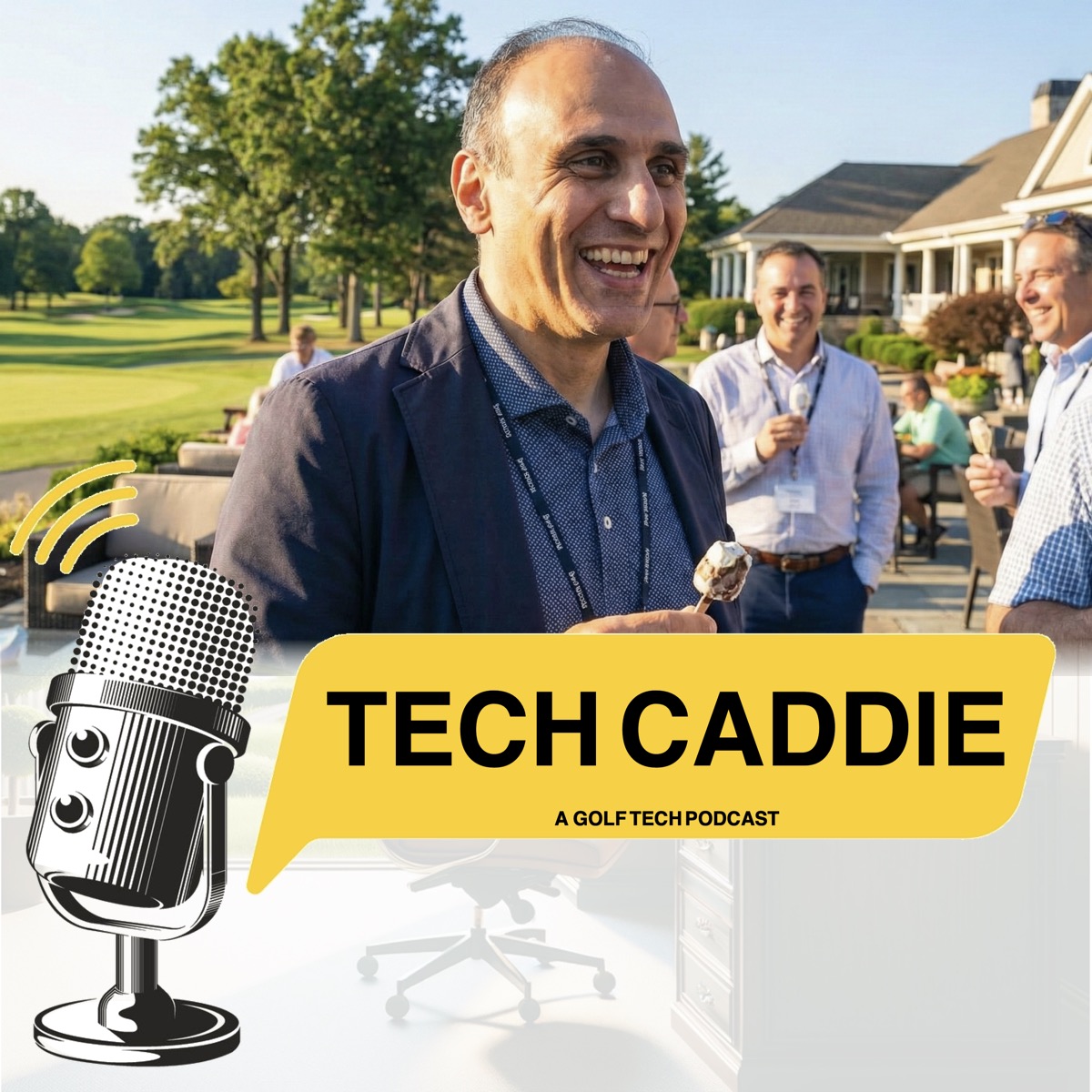
Vache Hagopian joins Tech Caddie to explain why Jonas Synergy was built, who it’s for, and how long-term service, integration, and strategy shape better club technology decisions.
Vache Hagopian
37min
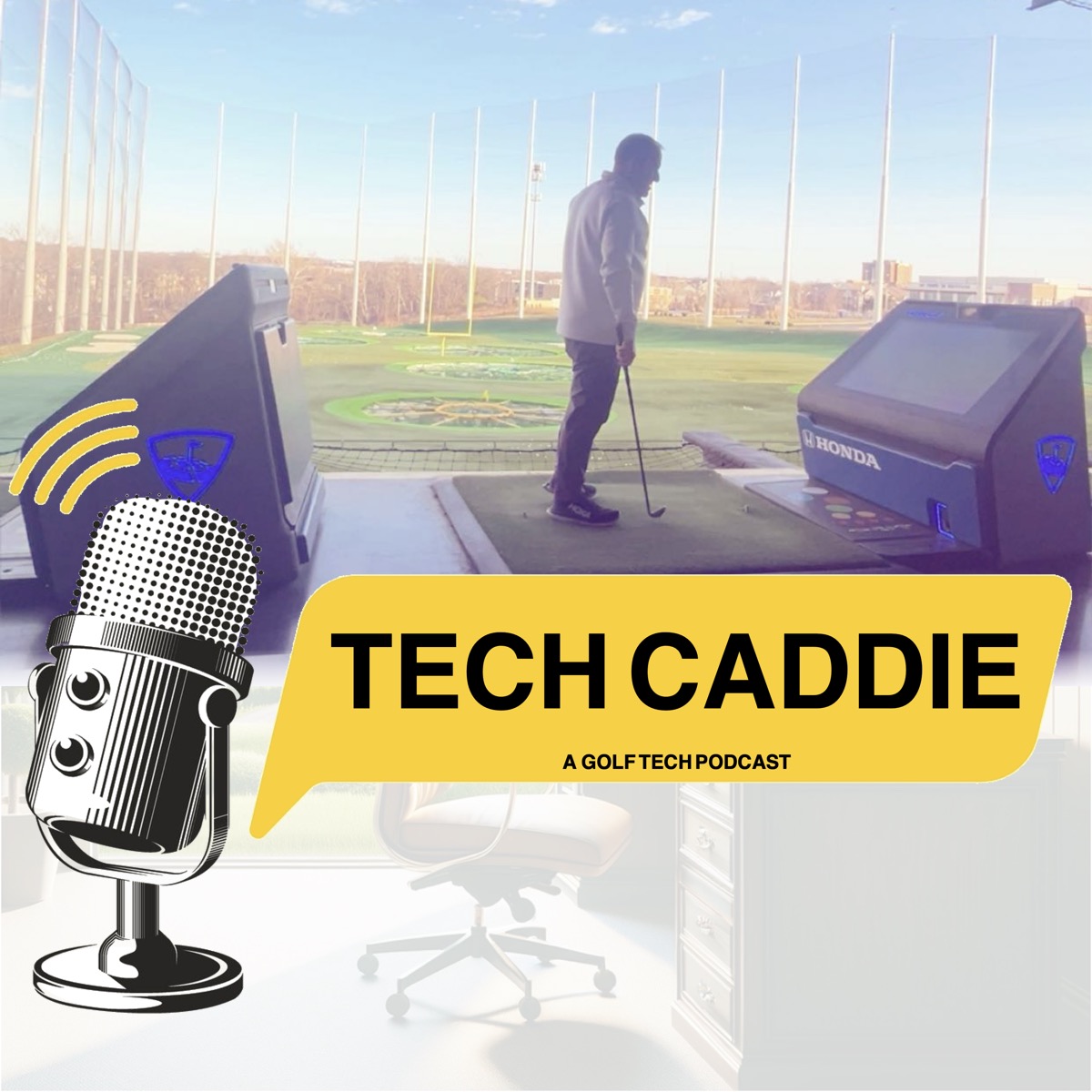
In this Tech Caddie episode, host Mike Hendrix (Founder & President of smbGOLF) sits down with Rusty Grimm, Founder of Rustic Golf Properties, to unpack one of the more practical—and fast-moving—growth stories in golf operations today: how Rusty went from buying one golf course to building a portfolio of six properties in Wisconsin.
Rusty Grimm
49min
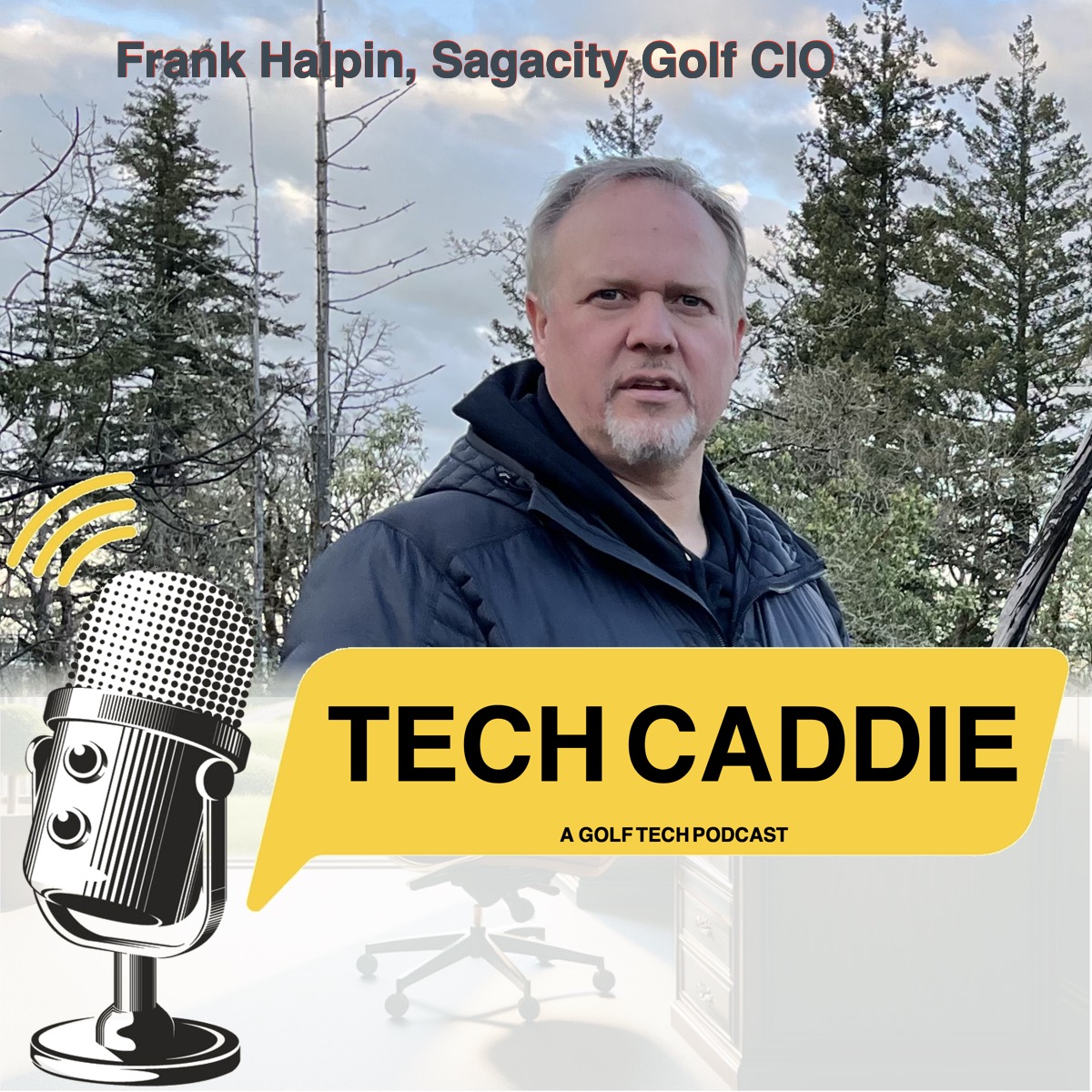
In this conversation, Frank Halpin, co-founder of GolfNow and CIO of Sagacity Golf, shares insights into his journey through the golf technology industry. He discusses the evolution of Golf Now, his transition into real estate, and the founding of Sagacity Golf, which focuses on integrating AI into golf operations. The conversation explores the future of AI in the golf industry, emphasizing the importance of technology in enhancing customer experiences and operational efficiency.
Frank Halpin
57min
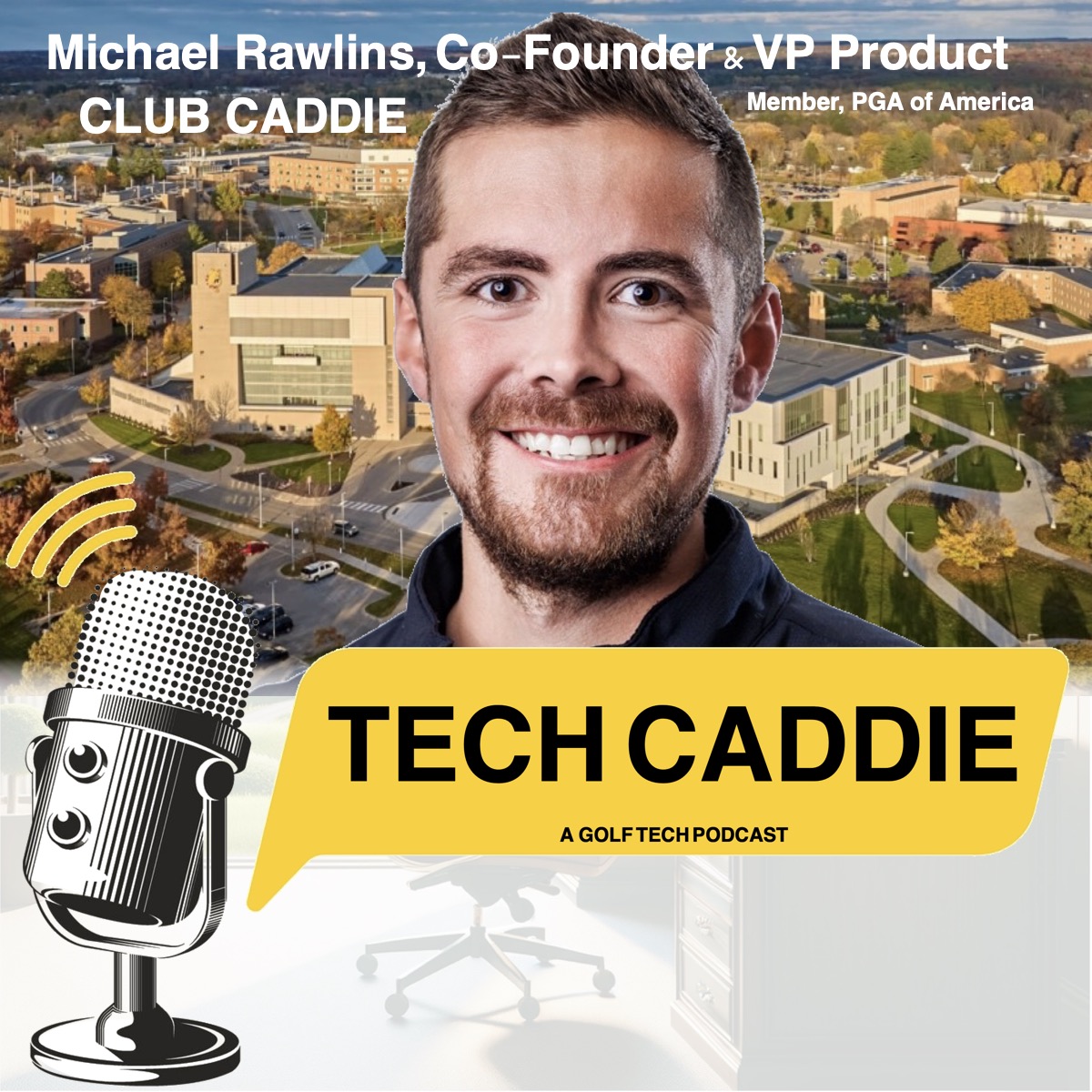
Michael Rawlins, Co-Founder and VP of Product at Club Caddie.Michael, a Class A PGA Member, shares the fascinating origin story of Club Caddie, from his early days as a PGM student at Ferris State to meeting CEO Jason Pearsall at Rackham Golf Course, leading to the co-founding of the company.
Michael Rawlins, PGA
49min

Mike Hendrix welcomes Bryan Lord, founder of Teesnap, one of the most disruptive forces in modern golf software. Bryan shares the full origin story: from the initial idea while at Purdue to securing major investment from Allegiant Airlines' Maury Gallagher.
Bryan Lord
57min

Mike Hendrix talks with David Clark, the founder of Easy Tee Golf. David shares how his product background at Capital One and Amazon shaped Easy Tee’s UX, why 50% of his customers are nine-hole courses, how Reserve with Google already drives ~13–14% of online bookings, why he shipped Waitlist before “squeeze times,” and what “default alive” meant for going all-in as a founder.
David Clark
52min
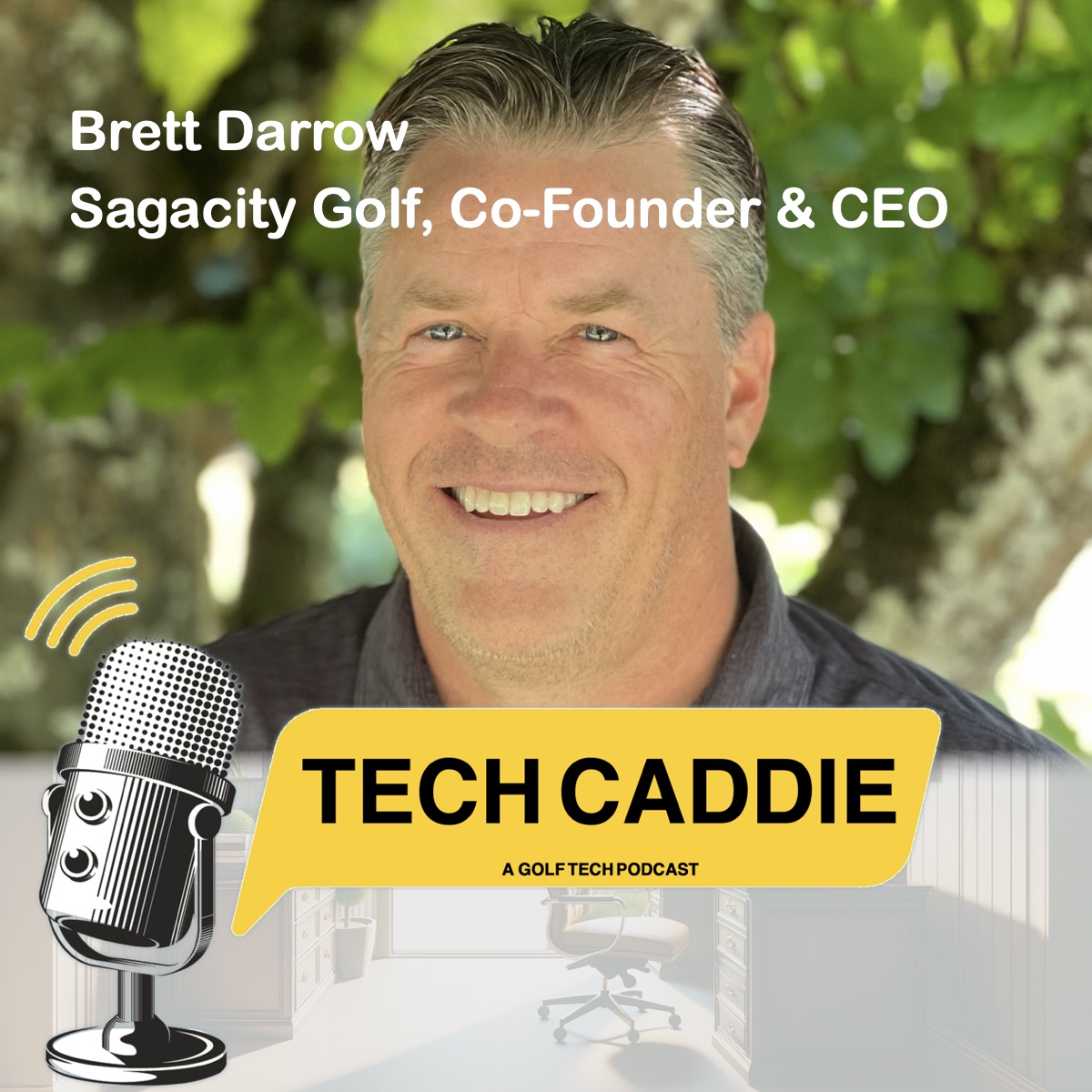
Mike Hendrix sits down with Brett Darrow, the visionary behind GolfNow and Sagacity Golf. Discover the untold stories of building and selling GolfNow, the challenges of innovation in golf tech, and the exciting future of Sagacity Golf's Yards app and advanced tee sheet solutions. A must-listen for golf entrepreneurs and industry enthusiasts.
Brett Darrow
60min

Can your golfers give feedback during the round? Real Time Feedback lets them text the shop in real time—no phone calls, no drama. Great for F&B, pace of play, and 5-star reviews. Hear how it works on the latest Tech Caddie podcast. 🎧 #golftech #golfbiz
Mike Terrell
45min

Zack Enriquez of Par 6 Media joins Tech Caddie to share how golf courses can show up in ChatGPT and Google Spotlight by improving their photos, metadata, reviews, and local listings to drive real bookings in the AI era.
Zack Enriquez
45min

Fraser Marriott, Head of Golf at Lightspeed Commerce, for a rare in-depth conversation about Lightspeed Golf’s growth, strategy, and vision. Fraser shares how a startup mindset still drives their team, why customer support is central to their success, and what’s coming next on their roadmap—including their Reserve with Google integration and plans to support both public and private clubs.
Fraser
46min

In this episode of the Tech Caddie podcast, Mike Hendrix is joined by golf industry veteran James Cronk—consultant, speaker, and co-founder of Golf Industry Guru. Together, they dive deep into one of the most overlooked areas of golf operations: e-waivers and risk management.
James Cronk
50min

Paul Sampliner shares his journey from growing up across the street from Highland Park Golf Course in Cleveland, to becoming a PGA golf professional, and eventually pioneering some of the earliest golf call centers and online tee time booking models while working for Marriott, Hilton, and later GolfNow.
Paul Sampliner
52min

2 Googlers join Mike for an honest conversation about when and why Google became interested in adding tee times to their results. They discussed the impact on golf courses not using an approved tee sheet, why some golf courses have more than one booking vendor available through search results and how long it takes for tee sheet and aggregator vendors to enable the Google integration.
Kathleen Oshima & Adam Jaffe
53min

In this episode of the Tech Caddie podcast, Mike Hendrix interviews Jake Gordon, co-founder and CEO of Noteefy, a company focused on demand technology for golf courses. They discuss the challenges faced by golf operators, particularly the issue of no-shows and cancellations, which lead to significant revenue loss.
Jake Gordon
55min

Nick Anderson joined the Tech Caddie podcast to share his impressions of the 2025 PGA Show and provide updates about his tee sheet and point of sale platform, MemberSports.
Nick Anderson
49min

In this episode of the Tech Caddie podcast, host Mike Hendrix chats with Martin Ort from Desert Canyon Golf Club about how his family-run course has embraced technology to stay ahead. From video game design to managing one of Arizona’s most tech-forward golf courses, Martin shares his unique journey.
Martin Ort
41min

In this episode of the Tech Caddie Podcast, host Mike Hendrix dives into the transformative power of golf course data with Bodo Sieber and Craig Kleu, Co-Founders of Tagmarshal. Learn how Tagmarshal is helping courses optimize pace of play, improve golfer experience, and boost revenue by capitalizing on dynamic pricing opportunities and expanded tee time inventory.
Bodo Sieber & Craig Kleu
42min

In this episode of the Tech Caddie podcast, Mike Hendrix interviews Jason Wilson, founder of Gallus, a company that provides mobile app solutions for the golf industry. They discuss the evolution of Gallus, the importance of mobile apps for golf course operators, and the essential features that make an app valuable.
Jason Wilson
53min

In this episode of the Tech Caddie podcast, Mike Hendrix interviews Chad Wright from Deer Ridge Golf Club about their recent technology transition from ForeUP to Sagacity and Toast. They discuss the challenges faced with ForeUP, the benefits of the new systems, and how they integrate operations for a better customer experience.
Chad Wright
50min

Watch as Mike and Chad explore the booking experience when using Lightspeed Golf in a desktop environment. Chad provides a pro tip in using Golf EMS to simply his events and golf packages operation and learn why Chad opted to leave foreUP and Sagacity Golf in favor of Lightspeed.
Chad Pettingill
40min

In this episode of the Tech Caddie podcast, Mike Hendrix interviews Jonathan Wride and Jarrette Schule from TenFore Golf. They discuss the origin story of TenFore, the challenges faced in developing golf management software, and the importance of user experience. Jonathan opens up about how he co-founded Supreme Golf with Ryan Ewers and the journey that led to Jonathan leaving Supreme Golf to help Jarrette build TenFore Golf.
Jonathan Wride
1hr 10min

In this episode you'll meet Jay Snider who built a simple tee sheet and email tool for his country club, to help keep dues down. Today, Proshop Tee Times has become a robust point-of-sale, tee sheet, member management solution for a wide variety of golf courses.
Jay Snider
52min

In this episode of the Tech Caddie podcast, Mike Hendrix interviews Rob Smyth from Cobalt Software, discussing his journey in the golf technology industry, the evolution of Smyth Systems, and the impact of family-owned businesses on company culture.
Robb Smyth
1hr 11min

CourseRev is a voice reservation system for golf courses that uses AI technology to handle tee time bookings over the phone. The system can integrate with tee sheet systems like Lightspeed and Club Prophet, allowing golfers to make reservations, join waitlists, and receive directions to the golf course. The system has surpassed online reservations in terms of volume and has handled more than 75-80 calls per day for a course. CourseRev is a game changer in terms of labor costs and customer experience.
Manna Justin
52min

Colin Read, co-founder of Whoosh, discusses his background in golf and entrepreneurship, as well as the challenges and opportunities in the golf tech industry. He emphasizes the importance of improving member and guest experiences, as well as staff workflows, through technology.
Colin Read
48min

Mike Hendrix interviews Scott Mingay from the USGA. They discuss the development of the GS3, a golf ball that measures green speed, smoothness, and firmness. The GS3 is used by golf course operators and superintendents to improve the playing experience and make data-driven decisions about maintenance practices. The conversation focused on the GS3 ball and the Deacon course management system. The Deacon platform is a cloud-based system that integrates data from various sources to help golf course superintendents make informed decisions.
Scott Mingay
58min

Menno Liebregts, founder of Golfspot, discusses the challenges of managing customer data in the golf industry and the need for an integrated solution. He shares insights on the company's journey, customer base, funding, and expansion plans. The conversation highlights the importance of open platforms and the impact of data on decision-making in the golf industry.
Menno Liebregts
37min

Jason Pearsall, the founder of Club Caddie, shares his journey of building the company and the importance of understanding the day-to-day operations of a golf course. Jason has the unique perspective as a golf course owner as he purchased Warren Valley Golf Course in 2022. Club Caddie started as a food and beverage delivery system called Golfler, but quickly evolved into a full clubhouse management software. Pearsall's experience as a golf course owner and operator have allowed him to build a product that solves real problems for golf course operators. The company has experienced significant growth and success, winning deals with management companies and continuously improving their product.
Jason Pearsall
1hr 11min

Kevin Fitzgerald, Assistant Director of Public Affairs for the Southern California Golf Association, provides an update on recent meetings regarding the implementation of a pilot program for golf tee time bookings in Los Angeles. The Golf Advisory Committee and the Recreation and Park Board of Commissioners both endorsed the staff recommendation for a $10 non-refundable deposit per player when booking a tee time.
Kevin Fitzgerald
34min

Jon Schultz, founder of ezLocator, discusses how their solution helps superintendents find the daily optimum hole location and enhances communication within a golf facility. ezLocator now include AI to improve the customer experience.
Jon Schultz
35min

In this episode of the Tech Caddie podcast, Mike Hendrix speaks with Kevin Fitzgerald, the Assistant Director of Public Affairs for the Southern California Golf Association, about the intersection of golf and public policy. Included is the TikTok video from Dave Fink which helped expose the gray market on the KaKao app, used by hundreds of golfers to score the best tee times available at the LA City municipal golf courses. Aaron Gleason from Golf Geek Software, discussed their solution called FairPlay Guardian, which uses machine learning to detect fraudulent activity in tee time bookings. Matt Holder from Loop Golf emphasized the need for operators to understand the pricing pressure and revenue management opportunities in the golf industry.
Kevin Fitzgerald, Aaron Gleason, Matt Holder
54min

Aaron Gleason discusses the issue of reselling tee times at LA City Golf courses and how Golf Geek's FairPlay Guardian technology can help detect and prevent fraudulent activity. He also spoke about the importance of knowing the conversion rate of a booking engine and how marketing automation can help increase revenue.
Aaron Gleason
29min

Mike Hendrix and Kevin Fitzgerald, the Assistant Director of Public Affairs for the Southern California Golf Association have a conversation about golf in Los Angeles. They discuss the role of the advisory board for Los Angeles City Golf Courses and the intersection of golf and public policy. They also peer into the issue of reservation systems and online brokers in the golf industry and specifically the City of Los Angeles.
Kevin Fitzgerald
43min

Matt Holder from Loop Golf joins the podcast to discuss Loop Golf. Matt talks about the early days for Loop and mistakes made along the way. Mike and Matt go into detail about tee time scraping and how Loop helps golf courses.
Matt Holder
29min

Don Rea joined Mike Hendrix on The Tech Caddie podcast for a conversation about the technology Don uses to run the golf course he owns in Mesa, AZ - Augusta Ranch Golf Club. Don is the VP of the PGA of America and he speaks about operating technology from that perspective and from his knowledge gained as a podcast host with Jay Karen, the Executive Director of the NGCOA.
Don Rea Jr.
48min

Del shares his background as an entrepreneur and his life in golf. He discusses the history of Seven Jars Distillery and the discovery of buried treasure on his family farm. Del talks about entering the golf business and the importance of technology in the industry. He shares his experiences with EZLinks and Fore Reservations, as well as the development of Kodology and Pitch CRM.
Del Ratcliffe
1hr 6min

Morgan Kimmins from Springfield Golf Resort in Chandler, Arizona discusses their use of Lightspeed technology and the impact it has had on their business. He highlights the benefits of Lightspeed's punch pass feature and the ease of use of their booking engine. He also discusses the importance of communication and the use of technology for frost delays. Morgan emphasizes the value of support and training provided by Lightspeed and the positive experience they have had with their customer service.
Mogan Kimmins
42min

Dave Vanslette, Founder and CEO from FAIRWAYiQ discusses the evolution of the company and its focus on data and automation in the golf industry. They have developed hardware sensors and software solutions to optimize golf course operations and enhance the player experience. They are focused on reducing friction and improving efficiency in the golf industry through AI and automation. The company has a strong customer support system and aims to provide value to golf courses of all types
Dave Vanslette
51min

Brendon Beebe, former CTO of foreUP, discusses his experience in the golf industry and building a successful company. He emphasizes the value of bootstrapping, hyper-focusing on specific market segments, and building a flexible system to meet the needs of different golf courses. At the end of the episode, Brendon asks Mike about how he would compete with GolfNow if he was to build a tee time aggregator and how he would use GolfNow if he was a golf course owner.
Brendon Beebe
51min

Allison George, a golf course owner and operator, discusses her experiences with various technology platforms in the golf industry. She shares personal updates, including her involvement in the golf industry and her use of technology in her golf courses.
Allison George
55min

Noteefy is a waitlist software that aims to help golfers play more golf and golf courses make more money. The product allows golfers to set their preferences for tee times and receive alerts when those tee times become available.
Dathan Wong
36min

Tyler Arnold, CEO of Eagle Club Systems, discusses the company's golf management software and its success in the industry. He highlights the flexibility and simplicity of their system, as well as their focus on customer support.
Tyler Arnold
35min
Mike Hendrix (00:00)
Hello, everybody. My name is Mike Hendrix from smbGOLF. And today I have Connor Van Gilder on from Trutee Golf. And this is the Tech Caddie Podcast.
Connor, welcome to the Tech Caddie podcast. And let me just say welcome to golf.
Connor Van Gilder (00:30)
Thank you. Thanks, Mike. Happy to be here.
Mike Hendrix (00:33)
Connor, you've been building Trutee, which for people that don't know, is that classic tee sheet point of sale specific to golf. You've been building Trutee now for certainly for over a year, because I read an article that you wrote that you published a little over a year ago on Medium, and basically you were sharing
what you thought golf tech could look like or should look like. But maybe you were working on this much longer before than you wrote that post. How long had you been at it before you posted that on Medium?
Connor Van Gilder (01:15)
Yeah, I mean, when I posted that I was doing everything with Trutee nights and weekends and I was probably only three to six months in of actual work there. And so it was very bare bones. At that point, you could book a tee time and you could see it in your tee sheet. And that was about it.
Mike Hendrix (01:36)
Let me pull this in because it struck me. I want to read this and get it right. You wrote this, Connor, if you remember: "playing golf is one of the most joyful (and sometimes painful) experiences: the walk, the strategy, the sound and feel of a well-struck shot."
But often the digital tools, and this is what resonated with me because I really do believe in this idea of digital hospitality, often the digital tools that surround the game feel like they weren't built to truly improve the lives of those who use them. That line also struck me because you didn't pick one or the other. You just said of the people that use them, meaning I think what you meant was I'm thinking about the golfer and the operator.
Whether you're stepping up to the first tee or managing a full tee sheet from the clubhouse, the experience should feel seamless; it should be as considered and intentional as the course itself. And I think when I read that last line, I was like, this guy's interesting to me. And I think that what you wrote
is a phenomenal goal. I'm sure you would probably be the first to say it's not going to be the easiest thing to accomplish that. But the fact that that is somewhat of a North Star for you, I feel like it's bravo. That is the right way to go about doing it.
Connor Van Gilder (03:15)
Thank you. It is definitely a North Star that we're pushing towards and it doesn't come without its challenges. It makes it to where sometimes things might take a little bit longer to build as we're thinking through things a little bit more. But at the end of the day, the end result is phenomenally better if you can take that time and attention to detail and put that towards what you're building.
Somebody might not notice those details, but you do, and they might notice them in the aggregate versus a small thing that you put into it.
Mike Hendrix (03:50)
Agreed. When I look at your LinkedIn profiles, and for the people that are at home, we've never talked to each other. This is the first time we've met as this meeting. I try to keep these things pretty organic, but you clearly have a strong design background. You've worked for a couple of different companies, but it's always been related to design.
That you're in golf because I think we need more people that come from a design mindset to build tools for operators and for golfers. But tell us, give us a little bit of your life story. Why did you get drawn into design? You live in the St. George, Utah area where we saw four up come from. There's clearly a lot of golf tech where you are, but talk to me about how you got started in design and
You know, why you enjoy it so much.
Connor Van Gilder (04:46)
Yeah, I grew up around different forms of design. My mom is an interior designer and my dad was an architect growing up. I've always been around varying forms of design in some sense, and it's always been interesting to me. When I ran into classes around graphic design and putting things on t-shirts and things like that, it was always really interesting.
As I progressed and got into college, I started looking for those types of paths. Initially I actually ended up getting into web development and coding, and then bridged the two loves to get into product design. It's always been there. I always appreciated things that are beautiful and crafted well, that are easy to use. So being a part of that industry was always intriguing.
Mike Hendrix (05:41)
And maybe fill us in a little bit. You worked for Zonos and you were head of product design there. Before that, you were at Entrata. What was interesting to me about that stop was that was an end-to-end solution.
For someone living in an apartment complex, where you were going to try to provide all of the tech that that person would have to encounter. Maybe you've thought about this, maybe you haven't. That's in line with trying to build a T-sheet and point of sale; I'm going to try to cover all these bases.
Connor Van Gilder (06:24)
Yeah, at Zonos I headed design there for a couple of years. But before that at Entrata, it's pretty similar. It's property management software, so definitely covering a whole lot of bases when it comes to everything that goes along with that, like collecting rent payments and dues from your clients and putting people in specific dorms. There's definitely a very large reach there in property management that carries over.
Mike Hendrix (06:51)
Connor Van Gilder (06:54)
Yeah, Zonos is probably the most complicated space that I've ever worked in. They do international duty and tax collection and remittance. Very complicated. Working there was very much about how to take something that is so hard for everybody to understand and try to bottle it up and package it in a way to where
Anybody who's on Shopify with their store can understand what is happening. The challenge there is astronomical. Learning how to figure out how do I get as much data as I possibly can into something that is really understandable and easy to use was the biggest challenge. That's something I can take with me forever, especially when getting into reporting and business analytics.
Mike Hendrix (07:47)
Right. I'm sure you learned to be a great problem solver there. But because you were the head of product, you probably stayed true to your design beliefs. I would assume that the tools are easy to use. What's interesting about Entrata is truly B to B to C, which is really where you are now. Ultimately, your customer is going to
bring in the consumer that's going to interact with the technology. Tell us about Trutee. What's different about Trutee and maybe we'll talk about your first big win, which is part of the way I learned more about your company.
Connor Van Gilder (08:34)
Trutee was designed on the basis of just making it as easy as possible for these golf course operators. That was the initial intent. It started from my perspective as a golfer, trying to book and manage tee times and never really having a great experience. My brother was a pro for a long time at a local golf course, so I grew up around the pro shop and have a lot of connections there.
And so I had a bad experience, or at least not a great one. Then I talked to everybody that I knew in the golf industry about their experience. It became clear that while there were solutions, they felt like a solution to the problem, but potentially not the best or the easiest solution. That's where Trutee was born: how do we make it so the things that you're doing day to day are just as easy and seamless as possible?
You don't have to think about it. You're operating, you're not stressed, the golfers aren't stressed. At the end of the day, we got into golf to have fun and enjoy the game. We didn't get into it to start stressing over numbers and analytics in the day-to-day. That's where Trutee was born: how do we help you do what you need to do, but also get out of the way so you can have fun?
Mike Hendrix (09:55)
How do you think today about the booking experience for the operator and the golfer? Another way to say that is what's most important from the different modules that you have? What is the one that you think is the moneymaker that everybody's going to touch?
Connor Van Gilder (10:14)
Right now the tee sheet is the biggest one. That's because the golfer books tee times through there. Even though we're early, we're focusing very heavily on that end golfer tee time booking experience, trying to make that as easy as possible. We are putting in features that may prohibit somebody from booking a tee time so there's no drop off. If they want to book a tee time, they go and book it without leaving.
so incentivizing that type of experience.
Mike Hendrix (10:43)
It's interesting that you say it like that because this podcast will probably publish on Thursday, June fourth. On Friday, I've got an article that'll publish with the NGCOA where we are talking specifically about the purchase flow and the operator being able to measure when people drop out of the purchase flow.
A lot of operators look at the T-sheet. Is the T-sheet full? Is it not full? I don't think very many operators today think about what were the steps the golfer had to get through to get the T-sheet.
Connor Van Gilder (11:21)
They don't have that and they are honestly pretty lacking. Obviously on our end we have all the analytics and insights that we could possibly want, but I was surprised to hear about how not exposed that information was. For example, when I was working with our current customers, I was telling them how many of their customers were booking through mobile versus on desktop. They had no idea.
Sixty-five percent of all of your bookings are coming from a phone. Now we can start optimizing for that experience and making sure that it's as easy as possible. The more insights and knowledge you have, the easier it is to operate.
Mike Hendrix (12:03)
To me, the fact that they don't have those insights today is a little offensive, because that means someone decided that they wouldn't care about it or wouldn't understand it. To me, it should be up to the operator. We should give them the information, then they'll decide if they want to consume it. For the vendor to just decide on their own not to build that is not the right way to run an industry.
they don't need to know that stuff. I don't think that's the right way to run an industry, frankly.
Connor Van Gilder (12:37)
You want as much clarity and insight as possible. You're running a business at the end of the day.
Mike Hendrix (12:44)
It's a multi-million dollar business. Not a business where we gross three hundred thousand dollars a year.
Connor Van Gilder (12:50)
Millions of dollars a month. And
Millions of dollars a month. You can't track what you don't measure and you can't make business decisions on things that you don't track. Any insights you have there should be available. There's nothing that prevents us from displaying it. Operational insight and clarity is critical for all these golf courses that are making decisions.
Mike Hendrix (13:14)
The title of this article is "Measure What Matters." Let's at least let these guys measure what matters and then they can decide on their own. Let's understand how you got this first customer. For people that don't know, it's the city of St. George, Utah. They have four golf courses, I believe.
Maybe eight weeks ago, at my company, smbGOLF, we track what T-sheet every golf course uses in North America. Lots of people pay for that information. All of a sudden I saw this new thing pop up in Utah called Trutee. Tell me how you won the account. I would imagine they were in the trenches with you as you were building the product. How did that come to be?
George, Utah. They have four golf courses, I believe. And geez, maybe six weeks ago, eight weeks ago, whatever it was, at at my company, smbGOLF, we track what T sheet every golf course uses in North America. Right. And so then, as you can imagine, there's lots of people that pay for that information. They like to have that information. And so all of a sudden I saw this new thing pop up in Utah called Trutee. tell me how you won the account.
I would imagine they probably were in the trench trenches with you a lot as you were building the product. How did how'd that come to be?
Connor Van Gilder (14:13)
There was definitely a six to eight month window where there was a lot of back and forth of things that they would need in order to go live. I grew up in St. George, so I played these golf courses a lot. The initial introduction was basically a cold outreach, heading there and saying, "Hey, I"m building this. Here's a quick early prototype demo."
What are you guys using? What do you need? What would make your life easier? It turned into months of that continuing on. We built something that meets what they need, from tee time booking all the way to the city treasurer doing their reporting and financing. Now she is no longer stressed out trying to figure out where they're actually making money. This came from basically me just coming to them and asking what they need.
Yeah, she is now longer no longer stressed out, trying to trying to figure out where they're actually making money at. And so that was where this came from, was basically me just coming to them and saying, like, what do you need?
Mike Hendrix (15:19)
In golf, a lot of technology companies would say when you work with a municipality, it's different than working with an individual entrepreneur. It's interesting you got your start in the municipal space. I will say we have seen another thing I track is RFPs. In other words, when cities put out a request for proposal.
We just saw the city of Columbus, Ohio put out an RFP in the last 10 days. Westchester County in New York as well. In Columbus, they have six golf courses, five of them are machines doing 40,000 to 50,000 rounds a year. There are some big RFPs sitting out there in the space. What are your thoughts on having started in a municipal environment? Are you glad you did it that way? Did it make it harder?
What are your thoughts on that you did start in a municipal environment? Are you glad you did it that way? Did it make it harder? Like, give me some insight on that.
Connor Van Gilder (16:19)
I don't know if I would necessarily recommend it as the starting point. It's definitely different. You're working on city and government timelines. You're working not just with the golf courses, but with city managers and treasurers and councilmen trying to get things approved. I probably wouldn't recommend it if you were to start from scratch somewhere, but at the same time, it's definitely proved it out.
We built something that these municipalities really enjoy and we can now take that and move that forward. It opens up opportunities for these bigger accounts that operate six or seven golf courses. It shows that we know how to work with them. In that sense, it was great.
Mike Hendrix (17:36)
What what did they need that was unique? You know, like what what did they ask for that maybe you guys had not thought of?
Connor Van Gilder (17:43)
For St. George specifically, they had a lot of reporting needs. They had issues whenever they got a payout from previous providers, knowing exactly the amounts that were hitting their bank account and what was associated with those amounts—gift card sales, merchandise sales, and counts. They had a lot of issues.
They'd had to run five to ten reports to try to aggregate this information. Some of the pros were manually entering in spreadsheets trying to figure out where this stuff was coming from. We worked with them so that now these pros just run a single report, send it over, and the two to three hours they were spending at the end of every day is now just five minutes. Saving them time and energy was the basis of a reporting need.
Mm-hmm.
Connor Van Gilder (18:40)
They also had smaller needs, like they run a junior golf program and want to give discounted rates to these kids, but there was no easy way to track their registrations and issuing them different price classes. We made a way for parents to sign up their kids for these events and leagues and get discounted rates, which before they had to sign up through Golf Genius and re-import them.
If more kids signed up, they had to try to re-import everybody. Lots of pain points that we're trying to take away and make it easy.
Mike Hendrix (19:13)
It must be fair to say that you've built Trutee using AI. How much were you using AI to build when you were at Zonos?
Connor Van Gilder (19:32)
For the last couple of years quite a bit. AI has progressed rapidly in the last year. Initially it was cool to copy and paste some things and maybe get some feedback on code. Nobody really trusted it to actually go out and write the code for them until six to eight months ago when it totally turned on its head. Now, I would imagine most code being written at tech companies is
purely written by AI and now developers are mostly reviewing code and giving direction versus actually handwriting.
Mike Hendrix (20:07)
It probably did help you get to market quicker. That's one of the advantages of it.
Connor Van Gilder (20:14)
Yeah, substantially quicker. We made sure that our tech stack is very modern and something that AI would recommend and likes to work with. That way we're not fighting technology trying to get AI integrated into it.
Mike Hendrix (20:34)
We are in Python, let's say?
Connor Van Gilder (20:37)
The web app is built with TypeScript and Next.js. This is the programming language AI loves. Same thing with our back end and database; it's built in a way that AI can read it and understand it. It's built in a way to optimize development, so it's far easier to develop.
Mike Hendrix (21:00)
I have a client, the Pennsylvania Golf Course Owners Association, and we're just about to launch a new site for them. This is the second owner association site that we built. I've been blown away by how quickly I can build custom plugins for a WordPress site. No more going off to the plug-in marketplace and maybe finding something that isn't quite what I want it to be.
Now everything can be exactly as I want. We put a floating widget on the Pennsylvania site so that any member golf course, their online tee times are one click away. It doesn't matter who the provider is. I'm pretty sure we built it in less than an hour. It's incredible.
Connor Van Gilder (21:48)
Very very very quickly, yeah.
It's an amazing tool and you can use it in multiple ways. You can use it to spit out as much code as possible and build as many features as you can imagine, which some people do and there's merits to that. We like to use it as a way to get us started and to afford us more time to think into things. We're trying to put in that attention to detail and think about the user experience.
Mike Hendrix (22:21)
That's what I wanted to add.
Connor Van Gilder (22:22)
It gives us more time to think about that type of stuff versus just having a feature and building it. It's now like, well, how should we build it? We can actually think through those things a little bit better. Now developing the code is the easy part. The hard part is figuring out what to build and how we should build it.
Mike Hendrix (22:40)
I wanted to ask about the world where AI and the user interface collide. I would imagine you as a founder are going to be the referee there and you're going to make sure that you don't give up on either side ultimately.
I wanted to ask about the world where AI and the user interface collide. As a founder, you're going to be the referee there and make sure you don't give up on either side.
Connor Van Gilder (23:02)
I heard somebody say that a lot of apps are basically a bunch of paper cuts; death by a thousand paper cuts. We're definitely doing it in a way to where we'll spend a day finding those paper cuts and fixing them. At the end of the day, everything adds up. Trying to make sure everything feels right and is easy to use. AI means we can develop super fast, which is amazing.
Mike Hendrix (23:13)
Connor Van Gilder (23:32)
But if it develops something that's not great, then it didn't really afford us anything. Now it's just a lot of code sitting there doing something that nobody's actually going to use.
Mike Hendrix (23:41)
Talk about why design matters. There are platforms out there where you would look at it and say there was really no design thought that went into this; they just built the functionality and it just looks the way it looks. Why should a prospective buyer care about design? If I'm the person in charge of making the decision for Columbus Recreation and Parks, why do I care about design?
The the person in charge of making the decision for Columbus Municipal Golf, or I think what they call it's Columbus Recreation and Parks, actually is what they call it. And I'm the I'm the key decision maker. Why do I care about design or why should I care about design?
Connor Van Gilder (24:22)
Everyone tends to think design is just what it looks like, which is part of it. But design is so much more than just what it looks like. It's also how it works and functions and how easy it is. For example, if we had a platform that is designed well, your onboarding time and staff training time all get cut.
The amount of time that you spend searching for something, like how to issue a refund, it's like you no longer have to click five to ten things to find it. It ultimately ends up making things more efficient. Companies that have been around for a while naturally build up a little bit of bloat where they do everything, and that ends up making the simple thing harder.
We're trying to avoid that and ask what the simplest solution is. How can we reduce clicks and reduce time? Ultimately, the more efficient you are, the more effective you are. That ends up paying dividends down the road. If you were comparing apples to apples and one of them looked better, you'd probably end up picking the one that looked better just because we're naturally
gravitating towards things that look and feel nice. If you're picking a car and they both did the exact same thing but you like the look of one a little bit better, you'll probably pick that one.
Mike Hendrix (25:53)
It does sound to me like part of what you said there was great design equals efficiency. Any small business operator is going to be interested in efficiency.
Connor Van Gilder (26:04)
Totally. It just makes things easier overall. You don't have to go look for something; it's intuitive where it's at. Eventually everybody learns their tools. We're trying to build out ways where if you are a power user, how can we make you even faster? Like shortcuts and AI to make you way more efficient.
Connor Van Gilder (26:31)
And if you are somebody who's more of a point-click type person, how is that still as fast as possible for you?
Mike Hendrix (26:37)
I'm sure you're looking at your competitors and seeing how they build things. I think Club Caddie in Michigan has done a really nice job of incorporating
an AI assistant into the point of sale T-sheet experience for the operator. Are you all thinking like that? Sally working in the shop is using ChatGPT on her phone anyway; she'd be used to that interface if it was inside of Trutee. Is that something that you think about?
Connor Van Gilder (27:22)
There's obviously chat interfaces which are great and serve their purpose. We're also trying to find ways where it's not always a chat interface, but more like just-in-time. For example, we're looking at charging no-shows. Right now you can see that somebody's a no-show and mark them. We're trying to find ways to make it where at the end of the day, can we
prompt you versus you prompting the AI? Have an AI in the background saying, "Hey, six of your tee times that have passed haven't been checked in yet. Do you want to charge them as a no-show?" And then you just click yes. You could type that into a chat interface to charge the last six no-shows, and that would work just fine.
Yes.
Connor Van Gilder (28:14)
But you have to go and do that. We're looking at ways to preemptively figure out what you might do or need to do and surface that to you to make it as easy as possible.
You mentioned the early days for you when you did build websites. Will you provide a website to a Trutee customer? How do you guys look at that?
Connor Van Gilder (28:37)
If somebody needed a website that they needed to integrate, we would definitely build that for them.
I would imagine there's several people that work at the city of St. George who have been at the golf course for 10 or 20 years. In the last three years they've used three different platforms. I went back and checked some records, they've made a couple changes here.
Connor Van Gilder (29:03)
Flip flopped a little bit, yeah.
Mike Hendrix (29:10)
What's the feedback from some of these longtime users who have been using lots of different golf POS systems over the years? What are you hearing from them in the early days for Trutee?
Connor Van Gilder (29:20)
Luckily we had a couple of people that I'm working with who went in and booked tee times as a shadow figure to get some feedback. So far what we've heard is, "Wow, this is so much faster." That's number one. I've also heard, "This is so much easier." This person now has a pass and the pricing is just there. We don't have to go and adjust their pricing.
Mike Hendrix (29:44)
Connor Van Gilder (29:47)
All we do is have to click pay and it just works. That's the number one feedback we've been hearing: it just works. It's doing everything that we would expect when we're not fighting the system.
Mike Hendrix (29:58)
It's really hard for legacy systems. Everyone builds up technical debt. It is literally impossible over time to not have technical debt. The guy that was at the top of the mountaintop eight years ago finds it difficult to be fast and efficient today. I work with
just about every T-sheet vendor there is when it comes to understanding how the booking engine works and helping my customers understand how to optimize it. It's incredible how much technical debt we come up against.
Connor Van Gilder (30:43)
No one is immune to that. Google and Microsoft are also very susceptible to this, which is why they end up acquiring companies that are very small and new. Those companies don't have the tech debt and they already do what they want to do without building on that debt, which is super valuable to them.
Mike Hendrix (31:04)
Right. You kind of brought it up there. What is the ten-year plan for Trutee? Is it to be amazing for three years and then go for acquisition? How do you look at that?
I grew up in golf and I love being in golf. Even if acquisition was something that was on the table, I'd want to stay involved. Hopefully I'm still on the team that's building Trutee. Everybody kind of dreams about that at some point of either going public or being acquired. There's grand goals there, but I don't see myself
getting out of golf in any way, even if that was to happen.
Mike Hendrix (31:49)
getting out of golf in any way. I've seen some things that you've written and I can tell there's some frustration that the golf industry maybe isn't the most open industry in the world. Talk about what that means to you. Why is that bad for golf? Let's talk about open versus closed networks and platforms.
Connor Van Gilder (32:17)
It all stems from a collaborative nature. We can all build in silos and try to compete, but the more that we are siloed, it stunts growth for the future. Somebody could go and build a
consumer golfer based app in a month and they might be restricted just because of what's there. It's not available to them. I see a lot of tee time booking apps and scorecard tracking apps, which are all great, but I know talking to a couple of them how painful it is trying to get integrated into some of these things. For me it's about how we can work together more to try to
make it the best possible experience for golfers. We're trying to build this in a way to where it is more open, so that if somebody was building a tournament app and wanted to connect it to a T-sheet, we would be able to provide that for them easily via an open API. The more that we are working together to build things
Connor Van Gilder (33:37)
eventually the golf courses also win because they get the best possible toolset and they can pick and choose what that looks like for them. Then we just end up being the rails or the foundation for that system.
Mike Hendrix (33:50)
Let's play this out for a minute. Everyone is going to see the world through their own glasses. If you were a well-established technology provider that played both sides of the market—consumer and B2B—you might think it's not in my interest to open up my platform and let anybody connect. I assume you can see that perspective.
I I would assume you can see that perspective.
Connor Van Gilder (34:21)
I can see that. If they are using Trutee and they have these ten integrations because somebody has built it and they've connected all these pieces together, if they were now to potentially move off of Trutee, they're no longer just moving off of us. They're trying to replace this entire suite of software that they've picked up and used.
The cost of switching is substantially higher. You might not be making as much in the short term because you might not be building all these feature sets that somebody's paying you for directly. But you'll most likely win in the long term for a stickiness factor of them having built out their entire operation around you.
Mike Hendrix (35:15)
My personal belief is it won't change until customers make it change. When somebody goes out and looks for a new operating system, one of the high-level questions they ask is if the system is open. Even if they like a closed system, they might
decide based on principle not to go with a closed system because they want the industry to be more open. I don't know that you're going to see fundamental change until the consumer changes their mindset. That's probably going to take a lot of education because I'm not sure a lot of the consumers even think that way today.
It's definitely a long-term play. I'm almost prepping for ten years from now when AI is really mature and everybody is doing whatever they want versus how it is now.
Yeah, it's definitely a like a long term play there. If you think about it, it's like like I'm almost prepping for ten years from now when AI is like really immature to now everybody's doing whatever they want versus how it is now.
That should be ten months from now.
A year from now everyone could be building their own thing for sure. It's really just about enabling people to do whatever they want. For example, if there was a resort golf course that had their own team, there would be nothing to stop them from using our version of the T-sheet but building their own booking experience on top of us.
Connor Van Gilder (36:42)
and create their own interface for how they want their tee time booking to look like, more power to them. We just want to be the support to allow them to do whatever they need to. If they want to book through our website, great. If they want to embed or create something custom on their own, also great.
Mike Hendrix (37:00)
There's a company called Sagacity Golf that began with dynamic pricing. That meant they would have a booking engine. They actually do have a T-sheet. But to your point, Harbortown Golf Links and
Sea Pines Plantation in South Carolina, their booking experience is quite nice and simple to use, but they built it on top of Sagacity. Harbortown was not interested in building their own tee sheet, but
they were very particular about the user experience of booking the tee time. Sagacity was one of these few tools that said if you want to hire your own designer and build the front end, you can still be connected to our pricing tech and T-sheet. I wonder if that won't happen more moving forward.
I would imagine so. As golf courses are maturing and we're seeing more larger resort type golf courses being built, I think of it like Stripe. You can be fully developer focused building out your payments, but they also have a hosted checkout template you can use, and embeddable widgets if you want to customize it.
It's kind of like a build-your-own-experience type of thing. They enable that because anybody can sign up and do it, and it's just how much effort you want to put into it. That's where I see it moving.
Right.
We saw Troon do that. Even though GolfNow typically does not let their customers do a lot of things, they allowed Troon to build their own booking engine on top of the Easy Links T-sheet. So are you open today? If St. George said they want to build their own booking experience, could they build that on top of Trutee?
Connor Van Gilder (39:18)
They totally could. If they wanted access to all the public APIs to query and make calls to bookings and tee times, they totally could.
That's nice.
It almost seems odd that Kemper doesn't have their own booking experience at this point. Certainly to build it is much easier than it was a year ago. You would think as Kemper watches Troon provide their own booking experience, they would want a unique experience as well that serves their loyalty program
better than anything else out there. I personally believe, as I work for management companies that have four or five golf courses, at some point I'm going to start to recommend that we find a developer. It's going to take 30 days max to build our own booking experience and solve things we haven't been able to find a solution for.
Connor Van Gilder (40:23)
It will solve these edge cases. That's the beauty of it: if you have a specific edge case or use case, just build it right on top. There would be nothing that stops you. You can build it to your spec. Everybody wants it to look like them at the end of the day, and the easiest solution is to have that full autonomy.
Mike Hendrix (40:45)
I do think it's the loyalty piece that gets interesting. You wouldn't want your loyalty program to work perfectly with your competitors' loyalty program. That doesn't make a whole lot of sense.
Connor Van Gilder (40:59)
And even right now there's a little bit of "I don't want to send them to a website where they can easily find another golf course near me." I want them to come to my website and play my golf course.
When I was at GolfNow, it made a lot of sense because it was hard to find golfers. There was value to being in a marketplace where maybe you picked up some eyeballs you just weren't going to get. Today, nobody's struggling to sell a tee time. The concept of a marketplace today, if I own a golf course
Connor Van Gilder (41:30)
Everyone is full.
is a tough sell. I don't know why I feel like I need to be in a marketplace today if I own a golf course.
Connor Van Gilder (41:45)
It's also expensive. It's a hidden cost of giving up an unknown number to put yourself in that marketplace where you really don't need to.
Good point. Have you contemplated taking trade for payment, or are you only building the system to live in a SaaS model? Tell me about your revenue model and payment options.
Connor Van Gilder (42:15)
We contemplated it. Right now it doesn't make sense to us because it doesn't seem to make sense for the golf course. If somebody wanted it, we would most likely just run the numbers with them to figure out how much potential revenue they're giving up versus how much it actually costs to go with our SaaS model. Right now we're typical SaaS subscription-based and then
we do the payment processing on the side. We run the whole point of sale and everything. Tee time bartering seems nice because you don't see dollars going out, but at the end of the day, you are losing dollars; they're just hidden.
Mike Hendrix (43:00)
Yeah.
Now, just to complicate your life, there are reasonable barter agreements, like capped trade. If we agreed on seven hundred dollars a month for SaaS, but you don't love writing a check, we can do $700 in barter and just turn it off when it hits that amount. I
don't think there's black and white in this thing very often. I do think barter can make sense if it's managed properly, and SaaS can make sense as well, but you never want to close off a door.
I can see it, but we haven't built it in yet. Part of that is it hasn't made sense to anybody that we've talked to who's needed it yet. If it turned out that the numbers made sense, then we could explore it, but right now it hasn't made sense to implement it.
As someone who believes in digital hospitality, every user experience should make sense. What still doesn't make sense in any barter agreement is that the consumer goes through a different purchase flow when they happen to pick that one odd tee time. I wouldn't love that for my consumer. If you really
get in tune with this concept of digital hospitality where every digital touch point matters just as much as if your front door has smudged glass, then you still would be worried about barter in that environment.
Connor Van Gilder (44:45)
Mixed experiences generally aren't great, especially if the one that is there is very optimized and all of a sudden the other one isn't. Moving back and forth between different systems is a mental load that you just don't want to put on anybody.
Agreed. Connor, you are now officially in sales. What are you learning? Have you built a pipeline? Is there a day you'll hire a sales manager? Tell me about your introduction to the concept of sales.
Connor Van Gilder (45:25)
Luckily, so far, it hasn't been too dissimilar from working with users and user experience testing. I've talked to customers before to figure out what their needs and struggles were. In sales, it's been very similar; almost making them sell themselves by walking through their day-to-day.
We've had a couple of conversations where the person talking mentioned they liked their current system, but the longer we have conversations about what their actual day-to-day looks like, they start to think maybe this could be better. Maybe it wasn't as great as they initially thought. That's been the transition: taking my user experience knowledge and transferring that into sales to paint the picture that
your life is going to be this much easier if we move off of this. It's been exciting seeing customers get excited and learn more about it. Talking with golf courses in general has been very fun.
Yeah.
It's a busy time of year and it's hard right now for salespeople to get attention. You went to the PGA show last year and probably got exposed to some people in January of twenty twenty-six.
Connor Van Gilder (46:51)
We went to the PGA show. We were so brand new at the time we had no idea what we were doing, but we were there. We were walking around the halls talking to people. It's been interesting figuring out more about the industry and how these golf courses learn and operate. We're learning as fast as we can, trying to figure out what those needs actually are so that as we
Mike Hendrix (46:56)
Yeah, yeah.
Connor Van Gilder (47:19)
become more prepared, especially for the twenty twenty-seven PGA show, it's something we can talk to—what happened, why, what problems we're actually solving for you, and how that makes an impact on your business.
I'm going to speak at the PGA show in Frisco, Texas, next month. It's not the classic PGA show that you see in Orlando, but there will be a gathering of PGA people in July. Hopefully some people can find us there. I'm rooting for you because I want to see better
Yeah, yeah. There is another. I'm I'm gonna speak at the PGA show in Frisco, Texas. I guess next month. It's not, it's certainly not the classic PGA show that you see in Orlando, but there will be a gathering of a whole bunch of PGA people ⁓ in July. ⁓ so hopefully some people can can find us there. I you know, listen, I'm I'm rooting for you because I want to see better.
design in this space. I don't know if you're familiar with Olo; they're a food company that did all the e-commerce for Five Guys. We need more companies like Olo or Talk in golf. We do have Toast coming in, but that is really just on the retail side.
All these great companies that appear out of nowhere and do really well generally think about the experience heavily. Like Airbnb; in my world, the design industry, Airbnb is the gold standard of taking care of good design and what that could look like in a home booking environment.
We're trying to fill that same need in the hospitality of golf.
Mike Hendrix (48:53)
Well, that's good. Join me on this mission to improve digital hospitality. It would be great to have you along. We'll be a resource for you if you've got questions. For people just learning about Trutee today, it's Connor Van Gilder. What's your email address?
Connor Van Gilder (49:15)
Connor at Trutee dot app is what it is.
Mike Hendrix (49:18)
And Trutee is T-R-U-T-E-E, so www.trutee.app. I wish you all the success in the world and I appreciate you coming on the Tech Caddie Podcast.
Connor Van Gilder (49:20)
No, thank you. I appreciate it. It's fun.
Mike Hendrix (49:35)
Okay, good to talk to you.
00:07
Lorem Ipsum is simply dummy text of the printing and typesetting industry. Lorem Ipsum has been the industry's standard dummy text ever since the 1500s, when an unknown printer took a galley of type and scrambled it to make a type specimen book. It has survived not only five centuries, but also the leap into electronic typesetting, remaining essentially unchanged. It was popularised in the 1960s with the release of Letraset sheets containing Lorem Ipsum passages, and more recently with desktop publishing software like Aldus PageMaker including versions of Lorem Ipsum.
00:43
Lorem Ipsum is simply dummy text of the printing and typesetting industry. Lorem Ipsum has been the industry's standard dummy text ever since the 1500s, when an unknown printer took a galley of type and scrambled it to make a type specimen book. It has survived not only five centuries, but also the leap into electronic typesetting, remaining essentially unchanged. It was popularised in the 1960s with the release of Letraset sheets containing Lorem Ipsum passages, and more recently with desktop publishing software like Aldus PageMaker including versions of Lorem Ipsum.
01:34
Lorem Ipsum is simply dummy text of the printing and typesetting industry. Lorem Ipsum has been the industry's standard dummy text ever since the 1500s, when an unknown printer took a galley of type and scrambled it to make a type specimen book. It has survived not only five centuries, but also the leap into electronic typesetting, remaining essentially unchanged. It was popularised in the 1960s with the release of Letraset sheets containing Lorem Ipsum passages, and more recently with desktop publishing software like Aldus PageMaker including versions of Lorem Ipsum.
01:50
Lorem Ipsum is simply dummy text of the printing and typesetting industry. Lorem Ipsum has been the industry's standard dummy text ever since the 1500s, when an unknown printer took a galley of type and scrambled it to make a type specimen book. It has survived not only five centuries, but also the leap into electronic typesetting, remaining essentially unchanged. It was popularised in the 1960s with the release of Letraset sheets containing Lorem Ipsum passages, and more recently with desktop publishing software like Aldus PageMaker including versions of Lorem Ipsum.


Be the first to receive golf course technology updates on articles, podcast episodes, product reviews, buying guides, new releases, and more!


