

Primo Tee Times inside ChatGPT: live availability search, MCP explained, and what this means for golf course bookings.

Mike Dickoff & Jason Patronas

51min


In this Tech Caddie podcast, Mike Hendrix sits down with Jason Patronas and Mike Dickoff from Apparation to timestamp a moment that feels like a turning point for golf technology: live tee time availability search inside ChatGPT.
Jason and Mike walk through what they’ve built with Primo Tee Times, an availability aggregator designed to help golfers discover open tee times across a wide range of public golf courses—without acting as a marketplace and without inserting themselves into the transaction. Primo’s approach is simple and operator-friendly: find availability, then send the golfer directly to the golf course website to book.
The conversation starts with how Jason and Mike met (a very Minnesota story), then quickly moves into the bigger theme: discovery. Golfers frequently want to play, but the process of checking multiple course websites—finding the “Book” button, selecting a date, discovering nothing is available, and repeating the process—creates friction that stops rounds from happening. Primo’s goal is to remove that friction so golfers can get from “I might play” to “I’m booked” faster.
From there, the discussion shifts into what makes this episode different: Apparation has taken Primo and embedded it into ChatGPT’s emerging app ecosystem using an MCP (Model Context Protocol) server. They explain MCP in plain terms: large language models are powerful, but they need a bridge to live, domain-specific data. MCP is that bridge—allowing ChatGPT to request real-time tee time availability, course details, and results that can be displayed in a rich, scrollable interface (not just a text list).
Mike Hendrix digs into the implications for the golf software ecosystem—tee sheets, booking engines, and the broader question of how discovery should work in a world where golfers increasingly expect answer-driven experiences. Jason and Mike address the common concerns around scraping and server load, emphasizing that their system only checks availability when a golfer requests it, rather than hammering sites to maintain a cache.
Finally, the episode zooms out: if golf wants more rounds, better utilization, and easier access for golfers, the industry needs collaboration and clear policies—not walls. The result, if done right, is more discovery, more bookings, and more revenue that stays directly between the golfer and the course.
Get a free one-page RAI Snapshot: your Review Advocacy Index, average stars and rating mix from the last 12 months of Google reviews.
Get my free RAI Snapshot
Metolius founder Ross Liggett — now VP of Data at Noteefy — joins Mike to unpack the acquisition, golfer data ownership, and where AI is taking tee time booking next.
Ross Liggett
51min
Golf District co-CEO Kevin Kalner breaks down the StubHub-style tee time resale platform disrupting golf booking — prepaid rounds, weather guarantees, and a new "unsolicited offer" tool that lets golfers bid on sold-out tee times.
Kevin Kalner
46min
Jon Last joins Tech Caddie to unpack the NGCOA Business Pulse Report, the K‑shaped economy, and what current golf data says about pricing, technology, and golfer expectations.
Jon Last
53min

NGCOA CEO Jay Karen joins host Mike Hendrix to talk association challenges, membership growth, booking engine performance, dynamic pricing, and how AI can help golf course operators finally “measure what matters” in their tee time business.
Jay Karen
48min

Connor Van Gilder, whose background is in product design for complex enterprise solutions at companies like Zonos and Entrata, explains why he believes the digital tools surrounding golf—the tee sheet and point of sale (POS)—must be as thoughtfully designed as the golf course itself. Vn Gilder, founded Trutee Golf.
Connor Van Gilder
49min

In this episode of the Tech Caddie Podcast, Mike Hendrix welcomes Southern California Golf Hall of Famer John McNair, VP of Golf Operations for JC Resorts. With 26 years at the helm and a portfolio of 21 courses, John shares the "silver bullet" behind their 24,000-member affinity program and why controlling your own data is the ultimate competitive advantage.
John McNair
51min
Tech Caddie sits down with Golf Genius founder Mike Zisman on building category-leading tournament tech—and what’s next: racquet sports and a possible liquidity recap.
Mike Zisman
1hr 2min
Primo Tee Times inside ChatGPT: live availability search, MCP explained, and what this means for golf course bookings.
Mike Dickoff & Jason Patronas
51min
Vache Hagopian joins Tech Caddie to explain why Jonas Synergy was built, who it’s for, and how long-term service, integration, and strategy shape better club technology decisions.
Vache Hagopian
37min
In this Tech Caddie episode, host Mike Hendrix (Founder & President of smbGOLF) sits down with Rusty Grimm, Founder of Rustic Golf Properties, to unpack one of the more practical—and fast-moving—growth stories in golf operations today: how Rusty went from buying one golf course to building a portfolio of six properties in Wisconsin.
Rusty Grimm
49min

In this conversation, Frank Halpin, co-founder of GolfNow and CIO of Sagacity Golf, shares insights into his journey through the golf technology industry. He discusses the evolution of Golf Now, his transition into real estate, and the founding of Sagacity Golf, which focuses on integrating AI into golf operations. The conversation explores the future of AI in the golf industry, emphasizing the importance of technology in enhancing customer experiences and operational efficiency.
Frank Halpin
57min
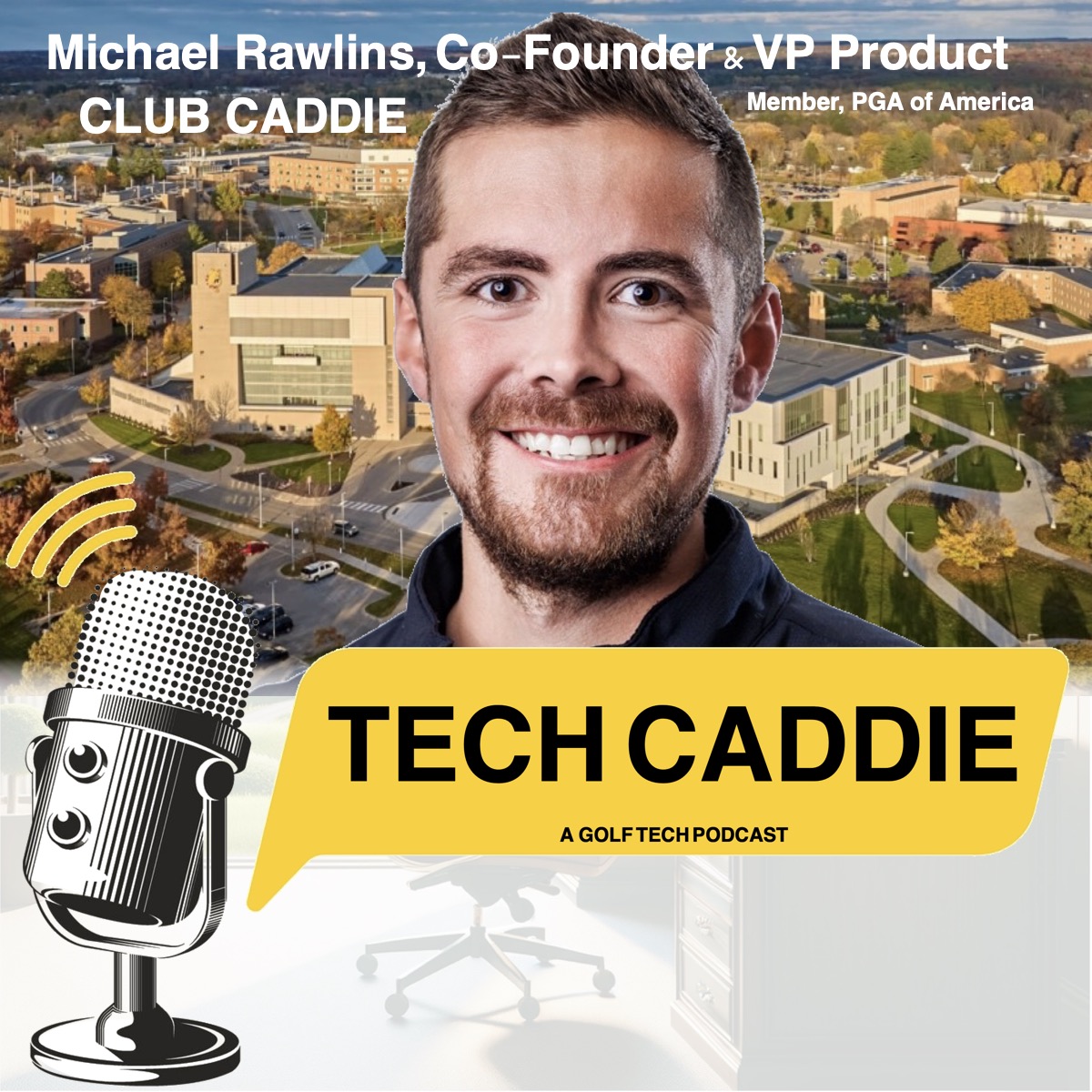
Michael Rawlins, Co-Founder and VP of Product at Club Caddie.Michael, a Class A PGA Member, shares the fascinating origin story of Club Caddie, from his early days as a PGM student at Ferris State to meeting CEO Jason Pearsall at Rackham Golf Course, leading to the co-founding of the company.
Michael Rawlins, PGA
49min

Mike Hendrix welcomes Bryan Lord, founder of Teesnap, one of the most disruptive forces in modern golf software. Bryan shares the full origin story: from the initial idea while at Purdue to securing major investment from Allegiant Airlines' Maury Gallagher.
Bryan Lord
57min

Mike Hendrix talks with David Clark, the founder of Easy Tee Golf. David shares how his product background at Capital One and Amazon shaped Easy Tee’s UX, why 50% of his customers are nine-hole courses, how Reserve with Google already drives ~13–14% of online bookings, why he shipped Waitlist before “squeeze times,” and what “default alive” meant for going all-in as a founder.
David Clark
52min
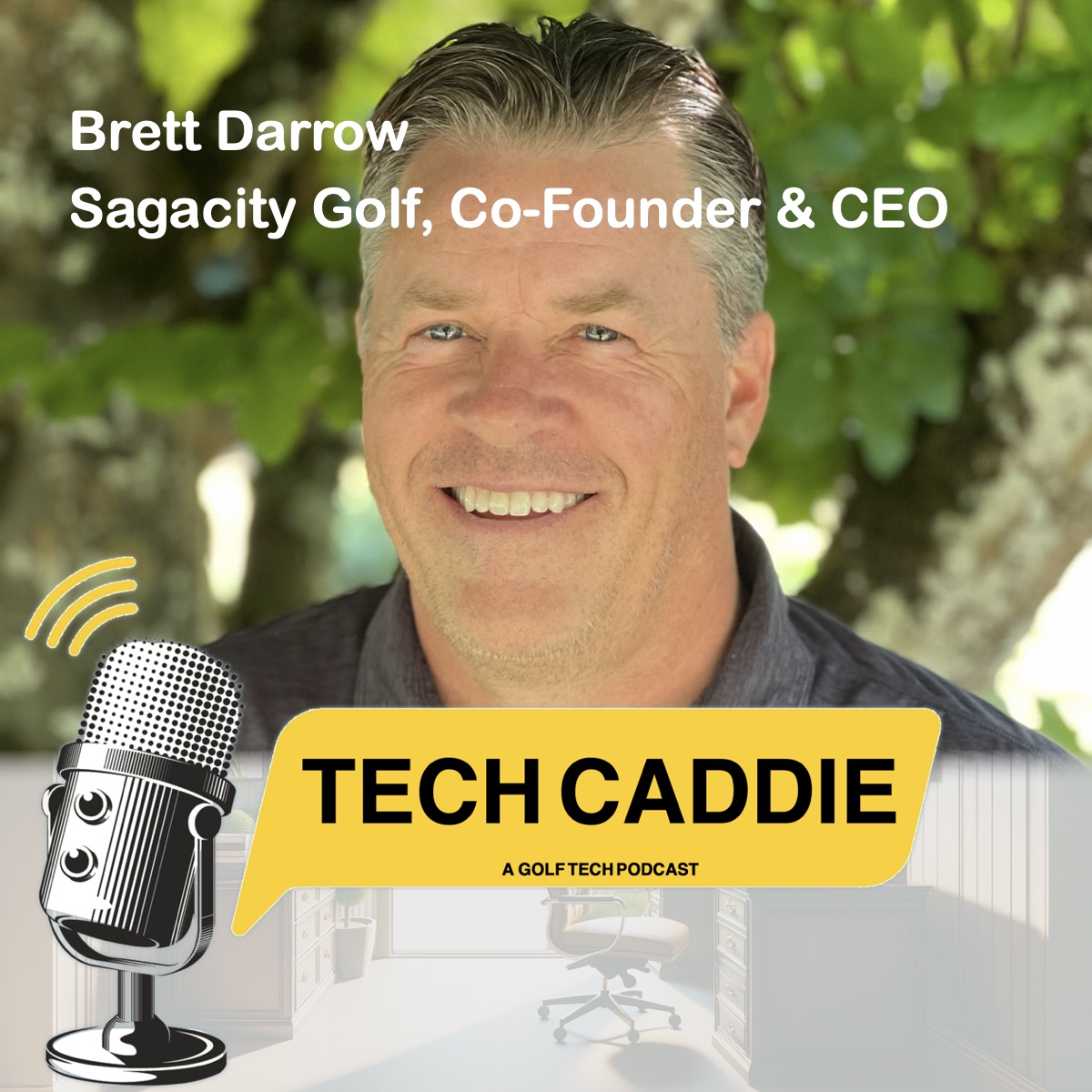
Mike Hendrix sits down with Brett Darrow, the visionary behind GolfNow and Sagacity Golf. Discover the untold stories of building and selling GolfNow, the challenges of innovation in golf tech, and the exciting future of Sagacity Golf's Yards app and advanced tee sheet solutions. A must-listen for golf entrepreneurs and industry enthusiasts.
Brett Darrow
60min

Can your golfers give feedback during the round? Real Time Feedback lets them text the shop in real time—no phone calls, no drama. Great for F&B, pace of play, and 5-star reviews. Hear how it works on the latest Tech Caddie podcast. 🎧 #golftech #golfbiz
Mike Terrell
45min

Zack Enriquez of Par 6 Media joins Tech Caddie to share how golf courses can show up in ChatGPT and Google Spotlight by improving their photos, metadata, reviews, and local listings to drive real bookings in the AI era.
Zack Enriquez
45min

Fraser Marriott, Head of Golf at Lightspeed Commerce, for a rare in-depth conversation about Lightspeed Golf’s growth, strategy, and vision. Fraser shares how a startup mindset still drives their team, why customer support is central to their success, and what’s coming next on their roadmap—including their Reserve with Google integration and plans to support both public and private clubs.
Fraser
46min

In this episode of the Tech Caddie podcast, Mike Hendrix is joined by golf industry veteran James Cronk—consultant, speaker, and co-founder of Golf Industry Guru. Together, they dive deep into one of the most overlooked areas of golf operations: e-waivers and risk management.
James Cronk
50min

Paul Sampliner shares his journey from growing up across the street from Highland Park Golf Course in Cleveland, to becoming a PGA golf professional, and eventually pioneering some of the earliest golf call centers and online tee time booking models while working for Marriott, Hilton, and later GolfNow.
Paul Sampliner
52min

2 Googlers join Mike for an honest conversation about when and why Google became interested in adding tee times to their results. They discussed the impact on golf courses not using an approved tee sheet, why some golf courses have more than one booking vendor available through search results and how long it takes for tee sheet and aggregator vendors to enable the Google integration.
Kathleen Oshima & Adam Jaffe
53min

In this episode of the Tech Caddie podcast, Mike Hendrix interviews Jake Gordon, co-founder and CEO of Noteefy, a company focused on demand technology for golf courses. They discuss the challenges faced by golf operators, particularly the issue of no-shows and cancellations, which lead to significant revenue loss.
Jake Gordon
55min

Nick Anderson joined the Tech Caddie podcast to share his impressions of the 2025 PGA Show and provide updates about his tee sheet and point of sale platform, MemberSports.
Nick Anderson
49min

In this episode of the Tech Caddie podcast, host Mike Hendrix chats with Martin Ort from Desert Canyon Golf Club about how his family-run course has embraced technology to stay ahead. From video game design to managing one of Arizona’s most tech-forward golf courses, Martin shares his unique journey.
Martin Ort
41min

In this episode of the Tech Caddie Podcast, host Mike Hendrix dives into the transformative power of golf course data with Bodo Sieber and Craig Kleu, Co-Founders of Tagmarshal. Learn how Tagmarshal is helping courses optimize pace of play, improve golfer experience, and boost revenue by capitalizing on dynamic pricing opportunities and expanded tee time inventory.
Bodo Sieber & Craig Kleu
42min

In this episode of the Tech Caddie podcast, Mike Hendrix interviews Jason Wilson, founder of Gallus, a company that provides mobile app solutions for the golf industry. They discuss the evolution of Gallus, the importance of mobile apps for golf course operators, and the essential features that make an app valuable.
Jason Wilson
53min

In this episode of the Tech Caddie podcast, Mike Hendrix interviews Chad Wright from Deer Ridge Golf Club about their recent technology transition from ForeUP to Sagacity and Toast. They discuss the challenges faced with ForeUP, the benefits of the new systems, and how they integrate operations for a better customer experience.
Chad Wright
50min

Watch as Mike and Chad explore the booking experience when using Lightspeed Golf in a desktop environment. Chad provides a pro tip in using Golf EMS to simply his events and golf packages operation and learn why Chad opted to leave foreUP and Sagacity Golf in favor of Lightspeed.
Chad Pettingill
40min

In this episode of the Tech Caddie podcast, Mike Hendrix interviews Jonathan Wride and Jarrette Schule from TenFore Golf. They discuss the origin story of TenFore, the challenges faced in developing golf management software, and the importance of user experience. Jonathan opens up about how he co-founded Supreme Golf with Ryan Ewers and the journey that led to Jonathan leaving Supreme Golf to help Jarrette build TenFore Golf.
Jonathan Wride
1hr 10min

In this episode you'll meet Jay Snider who built a simple tee sheet and email tool for his country club, to help keep dues down. Today, Proshop Tee Times has become a robust point-of-sale, tee sheet, member management solution for a wide variety of golf courses.
Jay Snider
52min

In this episode of the Tech Caddie podcast, Mike Hendrix interviews Rob Smyth from Cobalt Software, discussing his journey in the golf technology industry, the evolution of Smyth Systems, and the impact of family-owned businesses on company culture.
Robb Smyth
1hr 11min

CourseRev is a voice reservation system for golf courses that uses AI technology to handle tee time bookings over the phone. The system can integrate with tee sheet systems like Lightspeed and Club Prophet, allowing golfers to make reservations, join waitlists, and receive directions to the golf course. The system has surpassed online reservations in terms of volume and has handled more than 75-80 calls per day for a course. CourseRev is a game changer in terms of labor costs and customer experience.
Manna Justin
52min

Colin Read, co-founder of Whoosh, discusses his background in golf and entrepreneurship, as well as the challenges and opportunities in the golf tech industry. He emphasizes the importance of improving member and guest experiences, as well as staff workflows, through technology.
Colin Read
48min

Mike Hendrix interviews Scott Mingay from the USGA. They discuss the development of the GS3, a golf ball that measures green speed, smoothness, and firmness. The GS3 is used by golf course operators and superintendents to improve the playing experience and make data-driven decisions about maintenance practices. The conversation focused on the GS3 ball and the Deacon course management system. The Deacon platform is a cloud-based system that integrates data from various sources to help golf course superintendents make informed decisions.
Scott Mingay
58min

Menno Liebregts, founder of Golfspot, discusses the challenges of managing customer data in the golf industry and the need for an integrated solution. He shares insights on the company's journey, customer base, funding, and expansion plans. The conversation highlights the importance of open platforms and the impact of data on decision-making in the golf industry.
Menno Liebregts
37min

Jason Pearsall, the founder of Club Caddie, shares his journey of building the company and the importance of understanding the day-to-day operations of a golf course. Jason has the unique perspective as a golf course owner as he purchased Warren Valley Golf Course in 2022. Club Caddie started as a food and beverage delivery system called Golfler, but quickly evolved into a full clubhouse management software. Pearsall's experience as a golf course owner and operator have allowed him to build a product that solves real problems for golf course operators. The company has experienced significant growth and success, winning deals with management companies and continuously improving their product.
Jason Pearsall
1hr 11min

Kevin Fitzgerald, Assistant Director of Public Affairs for the Southern California Golf Association, provides an update on recent meetings regarding the implementation of a pilot program for golf tee time bookings in Los Angeles. The Golf Advisory Committee and the Recreation and Park Board of Commissioners both endorsed the staff recommendation for a $10 non-refundable deposit per player when booking a tee time.
Kevin Fitzgerald
34min

Jon Schultz, founder of ezLocator, discusses how their solution helps superintendents find the daily optimum hole location and enhances communication within a golf facility. ezLocator now include AI to improve the customer experience.
Jon Schultz
35min

In this episode of the Tech Caddie podcast, Mike Hendrix speaks with Kevin Fitzgerald, the Assistant Director of Public Affairs for the Southern California Golf Association, about the intersection of golf and public policy. Included is the TikTok video from Dave Fink which helped expose the gray market on the KaKao app, used by hundreds of golfers to score the best tee times available at the LA City municipal golf courses. Aaron Gleason from Golf Geek Software, discussed their solution called FairPlay Guardian, which uses machine learning to detect fraudulent activity in tee time bookings. Matt Holder from Loop Golf emphasized the need for operators to understand the pricing pressure and revenue management opportunities in the golf industry.
Kevin Fitzgerald, Aaron Gleason, Matt Holder
54min

Aaron Gleason discusses the issue of reselling tee times at LA City Golf courses and how Golf Geek's FairPlay Guardian technology can help detect and prevent fraudulent activity. He also spoke about the importance of knowing the conversion rate of a booking engine and how marketing automation can help increase revenue.
Aaron Gleason
29min

Mike Hendrix and Kevin Fitzgerald, the Assistant Director of Public Affairs for the Southern California Golf Association have a conversation about golf in Los Angeles. They discuss the role of the advisory board for Los Angeles City Golf Courses and the intersection of golf and public policy. They also peer into the issue of reservation systems and online brokers in the golf industry and specifically the City of Los Angeles.
Kevin Fitzgerald
43min

Matt Holder from Loop Golf joins the podcast to discuss Loop Golf. Matt talks about the early days for Loop and mistakes made along the way. Mike and Matt go into detail about tee time scraping and how Loop helps golf courses.
Matt Holder
29min

Don Rea joined Mike Hendrix on The Tech Caddie podcast for a conversation about the technology Don uses to run the golf course he owns in Mesa, AZ - Augusta Ranch Golf Club. Don is the VP of the PGA of America and he speaks about operating technology from that perspective and from his knowledge gained as a podcast host with Jay Karen, the Executive Director of the NGCOA.
Don Rea Jr.
48min

Del shares his background as an entrepreneur and his life in golf. He discusses the history of Seven Jars Distillery and the discovery of buried treasure on his family farm. Del talks about entering the golf business and the importance of technology in the industry. He shares his experiences with EZLinks and Fore Reservations, as well as the development of Kodology and Pitch CRM.
Del Ratcliffe
1hr 6min

Morgan Kimmins from Springfield Golf Resort in Chandler, Arizona discusses their use of Lightspeed technology and the impact it has had on their business. He highlights the benefits of Lightspeed's punch pass feature and the ease of use of their booking engine. He also discusses the importance of communication and the use of technology for frost delays. Morgan emphasizes the value of support and training provided by Lightspeed and the positive experience they have had with their customer service.
Mogan Kimmins
42min

Dave Vanslette, Founder and CEO from FAIRWAYiQ discusses the evolution of the company and its focus on data and automation in the golf industry. They have developed hardware sensors and software solutions to optimize golf course operations and enhance the player experience. They are focused on reducing friction and improving efficiency in the golf industry through AI and automation. The company has a strong customer support system and aims to provide value to golf courses of all types
Dave Vanslette
51min

Brendon Beebe, former CTO of foreUP, discusses his experience in the golf industry and building a successful company. He emphasizes the value of bootstrapping, hyper-focusing on specific market segments, and building a flexible system to meet the needs of different golf courses. At the end of the episode, Brendon asks Mike about how he would compete with GolfNow if he was to build a tee time aggregator and how he would use GolfNow if he was a golf course owner.
Brendon Beebe
51min

Allison George, a golf course owner and operator, discusses her experiences with various technology platforms in the golf industry. She shares personal updates, including her involvement in the golf industry and her use of technology in her golf courses.
Allison George
55min

Noteefy is a waitlist software that aims to help golfers play more golf and golf courses make more money. The product allows golfers to set their preferences for tee times and receive alerts when those tee times become available.
Dathan Wong
36min

Tyler Arnold, CEO of Eagle Club Systems, discusses the company's golf management software and its success in the industry. He highlights the flexibility and simplicity of their system, as well as their focus on customer support.
Tyler Arnold
35min
Mike Hendrix (00:00)
Hi, this is Mike Hendrix. And today I have two guests from Apparation, Jason Patronas and Mike Dickoff. And this is a Tech Caddie podcast.
Mike, Jason, welcome to the show.
Mike Dickoff (00:26)
Thank you very much. We're glad to be here.
Mike Hendrix (00:27)
We've known each other for, ⁓ you know, several years, Mike, you and I talk a lot, but we've never had you on the podcast. ⁓ and we'll get into kind of the most recent developments as to, as to why we're doing this. This is like my version of, ⁓ that idiot Dave Portnoy from that school up North that we don't mention on this podcast. This is my version of the emergency podcast because I,
because I do, you know, I definitely root for you guys. I'll be, I'll be really clear with everyone, but there is a timeline to some things. And I do think that you all have reached a place, ⁓ perhaps faster than others. And I thought it would only be fair to kind of timestamp it, and have a, have this place in history. and that's really why I pressed you guys to come on right away. ⁓ you showed me this, what, two days ago?
Mike Dickoff (01:23)
Two days ago.
Mike Hendrix (01:24)
Two days ago today we're taping, it's Friday, January 16th. And so you showed me this on Wednesday, January 14th. And I just wanted to, again, timestamp this thing. so ⁓ we'll get into that in a minute. ⁓ How did you guys meet? How did this duo come together in Minnesota?
Mike Dickoff (01:43)
Well, yeah, we both live in Minnesota. We live about 200 miles apart. instead of dumb and dumber, we're cold and colder. think I'm in Minneapolis and Jason's in Duluth. And, actually we were introduced by someone, ⁓ who I think, you know, in the golf industry, ⁓ Kevin Utreiner who manages twin cities golf. And, ⁓ Kevin was looking for some capability that combined the, the apps I was building.
that were all about key time planning and helping people manage ⁓ their key times, find people to play with, invite others to play. It's everything you do before you get to the golf course. And Jason had, who is a much better golfer than I am and likes to play competitive games had built a scorecard that allowed people to manage their scorecard and calculate the results of all their side games.
You know, Kevin was looking for something that combined those two capabilities together. So he introduced us and we became very fast friends and connected and By happenstance we had both built our mobile apps on the same technology platform. So it was actually pretty Accenture touch which is now extjs It's a really good robust platform for mobile development and you know rest assist them. I do
Mike Hendrix (02:49)
Which was what? Which was what?
⁓
I do know Kevin Unterreiner, for people that don't know Kevin, and Kevin is, you might know one of his brands, Twin Cities Golf, you would be hard pressed in all of North America to find someone that is more dialed into their local golf community than Kevin Unterreiner is into Minneapolis or Twin Cities Golf.
Mike Dickoff (03:25)
I've looked hard and I haven't been able to find any
Mike Hendrix (03:27)
Yeah, he is a unique dude. Back in my days at Golf Now, ⁓ took a run at maybe an acquisition there, but it didn't work out. ⁓ But yeah, he's really a unique guy and has built a really cool company. ⁓ Jason, are you full-time operation, Jason? what are you up to on a day-to-day basis?
Jason Patronas (03:52)
Yeah, well, Mike and I work very closely together. We talk on the phone a couple of times a day and, you know, both have a passion for golf and trying to solve problems for the golfer that hopefully gets them to play more and operators make more money and courses make more money and, ⁓ families get to play and the game, the game grows and we all know that golfers need some tools.
to do these things and golf has traditionally been slow to adopt some of the technology and we're kind of here to show that we can bring, you know, first rate technology to the golf industry and expose it to the golf organizations without them having to do all that much. You know, if they, you know, that trust is going to be a big part of that adoption and consultants like you who have connections with the vendors to articulate that.
You know, you can slowly adapt to stuff. You don't have to be too scared because there are trusted individuals in this industry that understand your pain points.
Mike Hendrix (04:48)
think what's most impressive is that you've built this really cool stuff living in an LTE 3G world or something up there in northern Minnesota, Jason, your internet looks amazing for the podcast. But ⁓ I joke. ⁓ So so listen, for for those people that don't know, so smbGOLF right, we have this data subscription that different technology companies use.
Mike Dickoff (04:54)
EEEE
Mike Hendrix (05:17)
and, some, you know, big associations, I'll keep the names kind of behind the curtain, but, ⁓ that originated with what was called the IGDB, the internet. What was it Mike? Internet golf or internet golfers database. Internet golf database. so that was the foundation of what we've then gone on to build, ⁓ at smbGOLF. And, and so lots of credit to, to Mike Dickoff for, doing that.
Mike Dickoff (05:33)
It's an internet golf database.
Mike Hendrix (05:46)
so I'm headed to Orlando, in a couple of days, Monday, I'll, go down there and, I'm going to do some different things and I'm going to be with some different vendors and, different speaking engagements and whatnot. But I'll tell you, ⁓ the, the common theme is certainly AI, right? It's hard right now to even give a presentation, ⁓ in golf where AI isn't included. And of course.
for lot of people that know like, in my background, think a lot of people's background that watched this podcast, we tend to be drawn towards tee times and golf. And so I think there's a lot of people thinking about AI and tee times and how this whole world is going to work. We, think ⁓ a group of us all spoke about this at TechCon a couple months ago in Frisco, Texas, that was hosted by the NGCOA.
And we did it in Frisco, of course, because the PGA of America is headquartered there. ⁓ And so I was hoping Jason, that you could show us what you guys have built. You all have a web app today called Primo Tee Times. Mike, why don't you explain, you know, forget about AI for a second, but explain what Primo tee times is for golfers and industry people.
Mike Dickoff (07:07)
Yeah, I guess I would describe Primo as maybe the first or one of the first availability aggregators. So basically it's a site where a golfer can go and find available tee times across a wide range of golf courses. We're kind of US centric right now, but quick numbers. There are about 11,000 public golf courses in the United States right now, roughly. About 70 % of those
allow golfers to book tee times online on their websites. And of those 70% Primo can access availability on over 90%. So if you're looking for that, and but I guess our kind of our attitude on Primo is we're trying to help golfers. We're trying to give golfers a convenient tool that helps them play a little more often. And we're trying to help them play wherever the heck they want to play. We're not we don't bias the results.
If they want to see tee times near Orlando, Florida, we just show them all the courses near Orlando, Florida. We show them all the public courses. We them filter it and sort it. ⁓
Mike Hendrix (08:07)
And Mike,
you would agree, right? There's other, there are other entrepreneurs right now kind of chasing that same thing, right? That there's certainly a group of people in golf that have come to realize that some of the more traditional tee time marketplaces, you know, they don't have almost all of the inventory, right? Or even almost all of the available inventory. They actually don't have that. The consumer
Mike Dickoff (08:15)
There are.
Mike Hendrix (08:35)
might kind of by default think they do. when we dig into the data that we have at smbGOLF, it actually becomes clear. That's not even close to accurate today.
Mike Dickoff (08:45)
Yeah, in our market here in Minneapolis, St. Paul, where it's the most.
Mike Hendrix (08:50)
connected, it's the most connected metropolitan area ⁓ for tee times to the internet in the country.
Mike Dickoff (08:58)
Right. And it's very diverse in terms of the vendors, right? Sure. It's very, yeah. There's no dominant vendor. And I guess the other maybe kind of relevant point as Jay starts to show we're doing here, ⁓ Primo is not a booking engine. It's an availability engine. Once you find the tee time you want to book, we would direct you to the golf courses, tee time booking page.
to do the booking. that any transactions that result from this activity are directly between the golfer and the golf course operator. Our little company doesn't have an interest in being ⁓ a marketplace where we're offering our own hot deals, et cetera. We're really just trying to facilitate the connection of the golfer with the golf course operator.
Mike Hendrix (09:41)
Yeah, you are very golfer centric, right? You I think Jason mentioned it earlier. You're part of your ethos is you want to help people play more often, right? And you think you that that happens through discovery.
Mike Dickoff (09:53)
Right. Yeah. We, yeah. If we think, if we make it a little more convenient, little more fun to go through these processes that it will, you know, even, even avid golfers only play, you know, let's say you play twice a week during a six month golf season here in Minnesota, you're going to play 50 rounds. Well, that means there's a 310 days you're not playing. If we can squeeze another round or two out of every golfer that translates into substantial.
amount of fun for golfers and a substantial amount of revenue for the golf course operators.
Mike Hendrix (10:22)
No, no question. And I didn't want to gloss over it because I do think it's one of the cooler data points in golf that Minneapolis is the most connected city. What we mean by that is you won't find another metropolitan area with a larger percentage of golf courses that offer their tee times online. And I think over a year ago, Minneapolis hit a hundred percent. ⁓ You might write and maybe once in a while it waffles back and forth. I think
For some of us that are really in the weeds, know Daytona Golf Club sometimes has tee times available online. Sometimes they don't. Daytona is one of those, it's crazy.
Mike Dickoff (11:00)
You
know
Mike Hendrix (11:03)
understand
how we remember all these names, but we remember these names. So, but anyway, Minneapolis is cool that way that it's so connected. ⁓
Mike Dickoff (11:12)
And
here's another tidbit. ⁓ if you look at the, I tend to think of markets in the US by metro area, Minneapolis, St. Paul. So the cities of Minneapolis, St. Paul, yes, but then the surrounding suburbs. ⁓ There are four vendors that are almost head to head in terms of market share in our market. It's GolfNow it's Club Prophet it's...
Lightspeed and it's foreUP and foreUP Lightspeed and Club Profit all have more customers in the Twin Cities Metro than they do in any other Metro in the US. All three of them have their largest customer count here.
Mike Hendrix (11:51)
That's an interesting way to look at it.
Although tough times for Club Prophet right now. They just lost the Wilson golf group, went to ⁓ foreUP and then the Robert Trent Jones trail left Club Prophet and went to Club Caddie So we've seen a real attrition across Club Prophet.
Mike Dickoff (12:12)
did
scoop on Wilson. had not, I haven't talked to anybody at Wilson for a while. didn't, and they've got several courses here in Twin Cities.
Mike Hendrix (12:18)
So exactly, exactly. ⁓ I think they have one private course. This is how detailed we get on this course cross Creek or something with Creek in it. And when we, when we were checking the data a couple of days ago, that had stayed with Club Prophet, I think because it's more of a membership kind of environment, but I could be wrong this morning. They could have gone to foreUP and I didn't see it in the reports, but, ⁓ but anyway, I digress. So Jason, what we were hoping today,
is that you could show us how you all and correct me if I get this wrong. You all have taken this primo tee times, which is a web app, right? It's not a, it's not an app that isn't like the iOS store. It's a web app, by the way, we're smbGOLF is launching a web app. think later today, if we get all of our stuff with Firebase figured out, but so I, I'm with you guys on these web app things and, ⁓ you've taken that web app.
And you've essentially put it into inside of chat GPT. ⁓ and you're, and you're waiting for it to go live, but you can show us from a developer mode. You can show us the functionality exactly how this thing will work. Once we, once I don't, it's not we guys, I'm not in on this, but once you guys get approval, ⁓ what this will w what, you know, what this will look like. And so you guys showed this to me two days ago. I thought it was really cool.
⁓ we, we have not seen significant progress as it relates to golf and chat GPT. And so I thought it would be cool for people to take a look at this thing. if you want to.
Mike Dickoff (13:56)
One thing we do every morning, is ⁓ I open up my chatgpt.com on my browser and I go to apps and I type in Golf and still as of this morning, there's nothing there. yeah, we're hoping to, we certainly expect to be one of the first, if not the first golf related apps in the chat. They've only had the store open since December 17th. So it's, this is hot off the presses. Yeah.
Jason Patronas (14:21)
Yeah, and there's probably a lot of people who really don't even know that there's going to be this app ecosystem ⁓ for chat GPT, but all large language models are going to be, platforms are going to have some sort of app store. ⁓ And it's just like when this ⁓ iPhone came out, right? It really took off once the app store ecosystem, now everyone was personalizing it with their own particular apps. And that's what I think OpenAI is going to do.
and ⁓ Anthropic and the rest of them. And where we got onto this was obviously with Primo Tee times and you mentioned Minneapolis because it has so many wonderful public facilities ⁓ that it's sometimes difficult to get your head around all the different places that you can play. And you think that there's one golf course that you're going to go to and you realize there's really dozens of them, but the discovery part is really difficult. And so you Google it, you go find a golf course, then you go
find the ⁓ book button, and then you got to find the time, then you find out that there's no time window for you. So then you got to do that process again. And so a lot of people just either settle for the tee time that works for them at their particular course, so they don't play a diverse number of courses, even though there's a tremendous amount of them Minneapolis. And Primo Tea Times came out of that to try and alleviate that problem, to give people a chance to see all the availability around them and be inspired by.
You know what? I can play golf today. I can play golf tomorrow. I don't know exactly what golf course, but you just showed me all the places that have availability for this day. And now that becomes inspirational to now go and say, I'm going to do this today. And then it's just the process then of, of picking which golf course and then the tee time. And then you go right directly to the golf courses website to book. And that's important, right? It's intentional to not disrupt that relationship between the golfer and the golf course. Right.
And that's where we focused on primo tee times. And as an engineer, you know, in living in now on the day of AI, you know, I'm no different than, you know, a lot of people wondering about, you know, I've been building software 30 years now. And I would say, you know, just being able to write software would be enough, you know, to be a, a job forever. But I realized that AI is the new piece and being 30 years into this, I'm able to see the power of having the background of being a software engineer this long and how AI really helps.
And that's where I mentioned to Mike, said, Mike, there's just so much that we have already by being able to query across different golf courses and different tee sheets. Now it becomes a little bit more clear to say, I want to play golf on Saturday. My son's got a soccer game out West at this location. And I have to tee off by eight o'clock to get it. Show me the golf courses I can go play at that have availability. Like that's the, that's the conversation as if you're on the phone with your friend.
or your wife asking about playing golf, you say, know what? Okay, Jimmy's got a soccer game. Maybe I can't, maybe if I tee off before eight o'clock, I can do that. Well, to do that, you have some discovery, right? There's a lot that you have to do now. And pretty soon you just give up. But imagine that within a few seconds, you can say, you know what? I can play. Now you're on the phone with three of your buddies and you're playing a golf course out West that you probably never, you know, never played. ⁓ And you got two things. You, you play golf.
And you also were able to get your family time at the same time. And we know when it comes to scheduling, any time that we can get these decisions up quicker, the sooner that you'll be able to do, hopefully you can do both, right? And so when it came to AI, mentioned, Mike, that's the kind of chat interface that is needed. And then when we saw that OpenAI put out an SDK for inline apps.
Mike Hendrix (17:59)
SDK software developer kit. people that don't know.
Jason Patronas (18:04)
Right, and so now they allow you to now, within your chat, bring up a rich, to bring up what they're calling a widget. And I said, Mike, I think
Mike Hendrix (18:13)
Why
don't you show us as you're saying this?
as Jason's doing this just for context. ⁓ I have connected in my chat GPT, I've connected to HubSpot. And so I can, people may not know this, but I can now be in chat GPT and query my HubSpot data.
And really just ask ChatGPT to do some things for me that the functionality doesn't exactly exist organically in HubSpot. ChatGPT can go and do some things for me ⁓ just to help me ⁓ do a better job of storytelling with my data, do a better job of visualization with my data. And occasionally ChatGPT will point something out to be about my data that I didn't know. And so, ⁓
So let's see, you're in your chat GPT here. You've gone to apps, which.
Jason Patronas (19:03)
Yes, so this is the app store for ChatGPT. There's some curated apps that are already in here from some big name brands. They got a little bit of heads up, but booking.com, Canva. And so if I go to, we've installed ours. And if I, just to show you that it's really the case, here's our Primo Tee times embedded enabled app. ⁓ Some details here.
You know, just showing us some of the information. This is our MCP server. We can go over kind of what that is at some point.
Mike Hendrix (19:34)
Why don't you maybe just explain, we've talked about MCP servers a little bit ⁓ on this pod. We talked about it a lot at the tee time summit. Why don't you just briefly explain MCP.
Jason Patronas (19:47)
Yeah, large language models, like just think of like, you know, chat GPT, you know, they are powerful, but they are fundamentally limited by what they're trained on. And MCP is the bridge that bridges that gap. You know, it lets the AI understand live context and act ⁓ inside specific domains like golf, the real time availability, ⁓ that kind of stuff is what LLMs don't really do very well with that. And so.
An MCP is a way for a third party to give data to an LLM that it can make decisions on. And so we created an MCP server to talk to our Apparation backend, which finds availability, finds golf course directory, and we'll be adding more features to it. But the discussion goes from the LLM to the MCP and then back down to the LLM and hopefully bringing up a rich app that allows the user to start continuing their journey.
through an embedded app within their chat session.
Mike Hendrix (20:46)
And the, and you correct me if I'm wrong, Jason, but the concept of MCP came from Anthropic, right? And, and they very similar actually to all of this website schema work that we've been doing at smbGOLF re really Anthropic said, we need some standardized language here. ⁓ so that multiple LLMs can actually work through one MCP. ⁓ and if we have some standardization there, that everything's going to run faster and make more sense. But.
Again, Jason, you can correct me on any of that.
Jason Patronas (21:16)
yeah, that's exactly right. And hopefully it becomes, you know, they're saying as a standard, you you've got big money companies that have influence and they all want to have their own flavor of things. So think it will shake out over time, they won't be drastically different. I don't think you still need some way of discovering, you still need to teach the LLM, hey, what tools are available to me in this particular context? so we-
Mike Hendrix (21:27)
Of
That's why, that's why when you just said different companies and big money, that's why schema.org, again, schema is this language that we, my company smbGOLF, that we are injecting into lots and lots of golf course websites to help AI understand the website better. That's why schema.org worked because it was Microsoft, it was Yahoo, it was Google, and it was Yandex.
that cooperated together, right? To create schema.org. So they didn't fight and say, no, it should be my version or it should be my version. Those four companies got together to create schema.org. And that's how schema I think really got traction.
Jason Patronas (22:21)
Yeah. And let's hope that that's, you know, that becomes in this, in this industry as well. And, know, so we ended up when we created our MCP server, what you do is you define some tools and you have an interface and you tell the LLM, ⁓ you know, once you install the app, ⁓ the LLM goes, okay. I have this new in my toolbox. have something golf centric. And we give instructions, ⁓ to the LLM to say, Hey, if you're looking for a tee times or looking for golf course information, you have a tool.
that you can communicate through this MCP server that's golf set and gives you the context of being a golf centric information. Okay. And so now when I go into my chat and I think my window is up here right now. It is. And I'm going to do, you know, ⁓ at primo tee times. And I'm going to say, since it's Orlando PGA show, we're going to show me courses.
Mike Hendrix (23:11)
And as you're typing that, the most important thing is that you did have to tell this particular chat, we're querying primo tee times in this chat. You had to do that little connection right.
Jason Patronas (23:20)
Yes, yes, I did. Yeah. So and that's that's going to be I think it's going to be a fairly common idiom like
Mike Hendrix (23:24)
Yeah. I mean, that's I do with when I want, and I want chat GPT to query my HubSpot data. The first thing I have to do is say at HubSpot. it's it, that's for everybody.
Jason Patronas (23:27)
I'm trying to find
Mike Dickoff (23:34)
Yeah. just, just to be clear, as we sit here right now, if somebody was watching this podcast and they opened up chat, TPT, and they tried typing in at primo, they wouldn't get anything because right now it's in a developer, you know, sandbox mode where only the insiders, you know, they're testing it,
Mike Hendrix (23:50)
Maybe tomorrow.
Just for the audience, you all have submitted and you're literally just waiting for the approval now. That's the stage you're in.
Explain where you are.
Jason Patronas (23:59)
We are in pre submittal right now. I'm still working out. have some documentation we have to do. There's some screenshots that are needed to, for them to put it in there, the app store. And so it's some of it there, but functionality wise, we feel really good. so what, mean, what you saw here right now is the first, you know, I, I wouldn't say this is the first time anyone's ever seen anything like this, where you from within a chat, you've summoned up a, you know, this, you know, this rich app, which allows you now to scroll as if you're into the web, right?
And generated text prior to having this SDK, it became difficult to show larger lists of things because there's just the context window. And so you're limited and just only showing text. And that becomes a real problem for usability for searching for things. But you see now, just by saying, show me golf courses in Orlando, I was able to bring up this ⁓ version of pretty much Primo tee times. And I can bring it up into full screen mode.
So now if you have, ⁓ you know, you got this big screen, you got all these different golf courses, you can scroll through them really easy. You see all the golf course information. These little primo guys over here are, these are telling you that we are connected and we can see availability at these golf courses. And you see we have quite a few golf courses.
Mike Dickoff (25:14)
That's the 90 % I talked about earlier.
Jason Patronas (25:16)
So then I'm going to show you something here is interested. This is our we're going to do a map. You were going to look at some. These are some of the courses in in Orlando that we just summoned up. Now it's pretty common to see a map like this on many websites and many apps. OK, what's what we end up having here is this this this primo button here. So these are just about 50 golf courses in Orlando. And when you tap on the primo button, what you're noticing now is you're going to start to see these numbers show up in here. Right?
These numbers are the availability at those golf courses right now.
Mike Dickoff (25:47)
today.
Mike Hendrix (25:48)
And your date is set up in the top left there, correct?
Jason Patronas (25:51)
Yeah, so this is Friday. So now if I'm just someone looking to think about playing golf, can say God, there's a lot of places I can play. I got one down here and 25 here and I might not be interested. I just of what course it is. I just want to know I can play right. That's the biggest part. And yes, we can choose the date. So I mean, just to kind of show some of the power here, I'm going to choose the 17th tomorrow.
Now it becomes like, you know what? Yes, we can play. And then I can go to, you know, one of these tabs here or these, and, know, just, you know, tap on it. And here's those tee times. I can scroll through these tee times and I say, you know, the nine fifties looks pretty good. And I come right here. We have, you know, a little, ⁓ know, placard for the golf course and then.
Mike Hendrix (26:33)
Let me ask you on that. It looks like you've got some golf course detail in there. Obviously you've got the logo, but you've got some golf course detail in there. Where are you? What's your source of information for that?
Jason Patronas (26:41)
It's our golf course database. So this is all coming from the Apparition golf course database.
Mike Hendrix (26:47)
Mike, what's the source for the Apparition Golf Course database?
Mike Dickoff (26:49)
IGDB.
Mike Hendrix (26:52)
Don't you also pull in some information directly from the, mean, obviously smbGOLF gets information directly from the golf course website. think, I mean, I guess the point I'm trying to make is again, the golf course website ends up being the source of truth for the golf course. And if the course website isn't, isn't maintained properly, ⁓ you know, as a golf course operator, you're going to have erroneous information.
making its way out onto the web into AI models, et cetera, et cetera.
Mike Dickoff (27:24)
I mean, the other secret sauce in this underlying data is that in our database for ⁓ each golf course ⁓ is not only things like the name of the golf course, the address, the number of holes, the scorecard data, but also ⁓ some very specific data in terms of, this is a course that uses foreUP for its booking engine. And within the foreUP system,
Here's the foreUP course ID and the foreUP I know there's three attributes for foreUP that you need in order to properly query for availability. So there's that whole infrastructure of data, which is different for each of the 15 different ⁓ tee sheet systems that we can currently query.
Mike Hendrix (28:13)
Jason, what else you want to show us here?
Jason Patronas (28:15)
So this is bringing up a course list and then we end up finding the t times. What we're going to do is do another search here. I'm going to do, well, I'm just going to just ask to just show me tee times.
Mike Hendrix (28:27)
perhaps the worst internet resolution we've had in the history of Tech Caddie Podcast.
Mike Dickoff (28:31)
One thing that is interesting that we're wrestling with is, if you do that same query in the web app, you have an instant response. So there is overhead in the ⁓ AI engines that I'm sure will be fine tuned over time, but ⁓ for someone that has used the web app, you get in here and you go, holy cow, why is this taking so long? ⁓
Jason Patronas (28:56)
Yeah, it's it's you know, again, the LLM is is trying to figure out what you're you know, you're trying to do. It then has instructions to go find course information or go find you know, tee time. So here I asked for my tee times. These are those tee times that we ended up looking at in I think we did Orlando. I'm going to open this up into full screen mode. So here's real time information of golf courses in Orlando. There's 20 of them, but look at what we see here. We see the count of how many tee times are available.
We see the the tee sheet vendor very important is to give attribution to them. Because it is it is there's you know it's the system that we're drawing from and you end up saying easy sweet tee it up for up chrono all within. ⁓ Different golf courses.
Mike Hendrix (29:40)
everybody at these companies is dropping their coffee mug right now as they watch this.
Jason Patronas (29:45)
the ⁓
Mike Hendrix (29:55)
Listen, I, I do think everyone needs to, you know, take a relaxed pill for a second here on the, from these tee sheet guys. And, know, some of these tee sheet guys are talking about all of all of this security and this and that look, there's a bunch of developers like Mike and Jason out there. They're just trying to help golfers play more golf. Okay. And that means more money for golf courses. And, and from my, the seat that I'm in, in the industry,
I would say these tee sheet companies should actually want to support you guys more. They should make it easy for you guys. If you're just an availability engine, you're not, you're not trying to like take a golfer away from a golf course. I don't think, you know, I don't think any of that is contemplated in what you guys do. I do think if these tee sheet guys could just hit pause for a second, you know, take your phone call, give you a couple end points or something.
Jason Patronas (30:31)
You're
Mike Hendrix (30:50)
It's not that big a deal guys.
Mike Dickoff (30:51)
We'll
be making the rounds in Orlando next week, just to clarify, you know, for all of them, what we're doing, but for what it's worth, um, there isn't a single golf course operator that had to lift a finger to enable this to happen. And there isn't a single, uh, golf course management software company that had to lift a finger to make this happen. we haven't required them to do anything out of the ordinary. Um, uh, so yeah, I mean, I guess what we're, what we're hoping.
There are some barriers we had to fight our way around to get through some security layers that, and yeah, I guess the other thing I'd say is at least the way we've engineered this right now, the only time we go hit a golf course website to get availability is when a golfer wants to see it. We're not pounding them relentlessly every 30 times a minute to maintain a cache.
Mike Hendrix (31:44)
Only people that don't know that is a topic that comes up a lot where the tee sheet vendor, even maybe the booking engine vendor, but the tee sheet vendor will say, well, you're, you're banging my servers left and right. You're costing me more money. You know, I, this is not optimal for our business. That's why I don't support this. That's not what you guys do. You only do that upon request. that's the same as a golfer making a tee sheet request.
Jason Patronas (32:10)
Yes, it's been intentional to do that. Like it's been intended to do. We wanted to be set this out to make sure that they understand that we have, we totally understand the challenges that they have. We understand that they didn't want to have to do anything, right? They don't need to set anything up. Don't need any special APIs and look at what we've been able to provide. You don't want to be the golf course that's not on here because you had your tee sheet said no, especially since there's nothing that we've asked you to do other than, you know, if people want to find availability, we take you to your website, maybe promote.
primoteetimes.com But if these are my favorite golf courses, and I have them, now I want to see, I want to play, I just switched now to the 17th. You get to see in real time here now. I mean, this is ⁓ our moonwalk moment for golf. Like once you see it and you use it, it's going to be very difficult to want to go back and use Google again, right? Things change after you get, you see something along transformational like this.
And this is what golfers are expecting there should be out here. Cause you see it in other industries, right? You can go across it. And what we're trying to do is we want, you know, the, vendors to know that we understand their problems. We understand the challenges, but again, we're not costing them, you know, $15,000 a month because we're a rogue scraper. And it's going to only increase because you know, you're going to get some of these journeymen, you know, using AI to build these scrapers to do other things.
we're not going to be that, that company, you know, we're trying to use your existing web technology, your existing websites to power this. Yeah. And, by all means, you don't want to be the golf course that who's, you know, tee sheet vendor, you know, put up a lot of, you know, roadblocks for your, your course to be found on, on Primo. Cause I do believe if golfers find it, they, they will, they will stick with, ⁓ they will stick with this.
Mike Hendrix (33:56)
after the PGA show, I think what you'd want to see is many, of these technology companies sit down with their leadership group and say, look, we need to define a policy of how we're going to work with all of these different people. And it should, in my opinion, it's my humble opinion, that policy shouldn't be
I'm just going to shut everything down and I'm going to build the Berlin wall or something. You shouldn't look at it that way. Look, have we come across a couple of bad actors in golf? We have. Do we want to dismiss the fact that that costs some people a lot of money? No, we don't. If again, from my seat, I don't mean we with you guys, ⁓ but ⁓ companies like whoever a Club Prophet, a foreUP or whatever.
They can figure out policies that make room for developers like you guys to go run and build really cool things that helps golfers and golf courses. And yet at the same time, have some protection in place so that bad actors can't do bad things.
Jason Patronas (35:04)
Right, Mike's been talking about for years with me that there should be a tee time Federation. There really should be some entity that has, you know, on the on the board is, you know, somebody from each one of these tee sheets. Like they should get together and.
Mike Hendrix (35:17)
I
think that that's what the tee time summit was Jason, but not even, even in the tee time summit environment. Again, that was hosted by the NGCOA Even there you've got, I don't even egos, whatever you want to say, like why some people don't want to participate in the tee time summit is, is beyond me. It really, to me is a message of, cause we don't care about our, how this might affect our customer. We don't care.
about if there's other smart people in the industry, we don't care about anything except ourselves. Right. And that's, know, you can have that approach, but over time the market's going to speak. Right. Something like that. I think that's, that's, that's obviously everybody's individual choice, but at some point you're going to wake up and you're going to say, I wish I had been a little more cooperative.
Jason Patronas (35:55)
It's coming, it's already coming.
Mike Dickoff (36:05)
Yeah, you know, in a previous life, I spent a couple of decades working in the airline industry in technology reservation, airline reservation technology. you know, the travel industry has very sophisticated ⁓ infrastructure in place to share data across companies that are arch enemies. Those airlines hate each other, but they cooperate when it comes to data because they know it's good for business and good for consumers.
And it wouldn't take, but we've actually created kind of a blueprint for what we think a handful of industry APIs might be that could really kind of smooth the path here. we'll be socializing that with the tee sheet companies here over the coming weeks and months. I don't know, Mike, mean, that might be something smbGOLF, kind of an honest broker, maybe could play a role in.
You can't have something like that run by one of the tee sheet companies because not the other ones will trust it. Right. Right. So yeah, there's definitely up to there. Yeah. You know, the other thought I'd throw in here on this topic is back to the, back to the concern that tee sheet companies have about, you know, people bombarding their sites with, with, with requests. mean, we, ⁓ you know, I'm, I'm of the generation that remembers
what it was like when I wrote my first program on a computer that had 16K of memory. When I started buying disk drives for our Navitair airline reservation software business in 1993, a gigabyte of disk storage cost $1,000. So I'm sort of always very, very...
careful about how many computing, about the computing resources we're using. And some of the younger developers I've worked with kind of laughed at me like, you Mike, you don't have to worry about that anymore. Well, I think you always have to worry about it. And then you look at the literally hundreds of billions of dollars being spent now for these AI data centers. And I mean, I think it's important that we manage those computing resources carefully and enable these AI engines to be as efficient as they can be. So.
You want to know, you want to see a list of golf courses ⁓ within 50 miles of any major city in the US? Well, you could ask an AI engine to do that and it could crawl around the internet for a minute and consume a whole bunch of resources to do it. Or it could make a very efficient API call to an API that's got the answer and could deliver it in a microsecond without hardly consuming any resources.
Mike Hendrix (38:32)
Yeah. And I'm not even so sure. ⁓ Jason, I'm going to ask you, I'm going to surprise you here with a requested prompt, but I'm not even so sure Mike that it's about API as much anymore. Right? You know, you all just would like some standardization with parameters, make it easy for us to pull a date up a time within that date. I think that that type of thing, like, I don't know that all of this stuff always has to be about API's, but you guys are the
Jason Patronas (38:57)
If we could get a deep link that if you click on the 1.36 tee time, it takes them right into the booking engine.
Mike Hendrix (39:04)
Why
in the world all these guys wouldn't just create a public deep link opportunity for any developer that wants it. I that I don't quite understand, but look, I'm not that smarter guy.
Jason Patronas (39:16)
I just want to bring on the topic of scraping and the resources that each one of these tee sheet vendors, and they do, it's a legitimate cost. And if it's $10,000 $15,000 a year, that's a large number of customers revenue a month. So if this is available, there's a reason why people are out there scraping because there's a need. There's a need for somebody to go and do it. Now, if they lean into one or two availability engine aggregators, then
Mike Hendrix (39:29)
Yes.
Jason Patronas (39:43)
the need for that becomes even less. so that means that across the board.
Mike Hendrix (39:47)
Yeah. But see what just happened right there. Let me just be Mr. Newt. See what just happened right there. You just said one or two available aggregators. Really? If everybody can like set their themselves aside for a second, it should be any availability aggregator, right? Why, why do they have to just pick one or two?
Jason Patronas (40:04)
Yeah, I'm just I just point out that, you know, right now you're seeing, you know, this is this is real. This is happening. Right. Yeah. All right. So Jason, I
Mike Hendrix (40:12)
Jason, can we do this? Can you type this in exactly? know, obviously I want you to use Primo tee times for it. Find me the best T times in Nashville, Tennessee.
Jason Patronas (40:21)
Using Primo? Yeah.
Mike Hendrix (40:23)
Yeah, I want to see what happens if we put that in a chat
Jason Patronas (40:25)
Well, we have some instructions that are OK. Show me. tee time in Nashville.
Mike Hendrix (40:31)
Yeah, but I said best. I'm curious to see what happens when we say, show me the best tee times.
Jason Patronas (40:36)
Okay, the demo gods are gonna be.
Mike Hendrix (40:39)
So for everybody watching, they had no idea I was going to ask them to do this loading.
Well, that's, that's kind of part of the point here. told pop available tee times within 30 miles of Nashville, Tennessee for a four player group using primo tee times. should now see the best price. So catch EP price. You've now seen the best price and most playable options across popular Nashville area golf courses. There you go. Great.
Jason Patronas (41:07)
Yep.
So then let me go back into full screen. So you see here now, I think these are all, don't, I'm not Nashville, but if you pulled them up on your, on a Cedar crest golf course, actually you do this, I'll tell you go to Cedar crest golf course, uh, Hendrix it's powered by Club Caddie and go and see for today if there's 20, 20 times available.
Mike Dickoff (41:28)
Keep scrolling across Jason.
Mike Hendrix (41:30)
Can't
we talk about Franklin Bridge? That's a famous golf course. That's a big time NGCOA guy. Why can't we talk about like what happened at Franklin Bridge that gave us no tee times?
Jason Patronas (41:38)
They don't have, they're, they're, well, they don't have t times. Right.
Mike Dickoff (41:41)
Tomorrow.
Try tomorrow. Flip it to tomorrow.
Keep flipping. mean, it is possible. It is possible.
Mike Hendrix (41:44)
Let me see.
Jason Patronas (41:49)
They
have one they have one on
Mike Dickoff (41:51)
There's
one.
Mike Hendrix (41:52)
Also Franklin Bridge is just an incredibly busy golf course. Good for him.
Mike Dickoff (41:56)
Good
Jason Patronas (41:57)
Yeah, absolutely. So if you're a golf course operator, you should be looking at this going like, what is Franklin Bridge doing that I'm not?
Mike Hendrix (42:05)
Yeah. And Franklin bridge. just pulled it up on another browser so that they use light speed. It's an awesome looking a website. and, and well, let me, let me open up their booking engine, see the difference. So if I go to tomorrow, you got zero in it.
Jason Patronas (42:24)
I got one on
Mike Dickoff (42:26)
This was for four players. if you ask me.
Mike Hendrix (42:29)
I'm
doing four players. Yeah. No tee times found. So, so it's the same experience, whether you went through primo chat, GPT, or you went directly to Franklin bridges website. He just is sold out for Saturday.
Jason Patronas (42:43)
Yeah, and he's got one on the 18th that I have.
Mike Hendrix (42:46)
That's awesome.
Jason Patronas (42:47)
So now, mean, you had you had wonderful Google engineers on one of your podcasts they were watching. You know, they weren't at this point able to go across vendors. You know, they were all right. And so what we're seeing here now is, you know, real live working software. It's not vaporware. We are a small company and we understand this this environment very well. And if we can do anything else to try and help others.
in the industry to adopt this technology. This is what golfers want and this is what they're looking for and we're hopefully to get some trusted partners to help us bring it more to market.
Mike Dickoff (43:24)
Yeah, and Mike, I know you've got kind of a diverse audience that watches the podcast, but, know, we could, we could use some, again, we're small team, just sitting here in our houses in Minnesota, cranking away on this stuff. And we could use some help from some golfers around the country who can help us, you know, really optimize this user experience.
Mike Hendrix (43:46)
Yeah. So that means you're looking for beta tests. Yeah.
Mike Dickoff (43:49)
Right.
And we're looking for early adopter golf courses that don't mind maybe being on the leading edge of some new technology to ⁓ work with us again to optimize this for best experience. And then as we've discussed a couple of times, we are definitely hoping that the golf course management software companies will collaborate with us to create great experiences for golfers and more business for golf course operators. Yeah.
Jason Patronas (44:18)
So I'm just going out to Primo tee times here. So we're trying to figure out ways where we can provide sponsorship. These are some local companies that.
Mike Hendrix (44:26)
Alright, enough with the selling. Okay, we got it. We got it. We got it. Jason. got it.
Mike Dickoff (44:33)
Well, that did that did kind of raise one interesting point though that, you know, maybe people would be interested is when we took Primo and we stuffed it into or embedded it into the chat, we did have to make some changes. So for example, all those sponsors that were scrolling across the top of the screen, we removed those because we're not sure what the rules of the game are within chat right now. They made it pretty clear they didn't want pop-up ads. We thought, well, maybe they don't want any ads at all. So.
We neutered it by just hiding certain pieces. So that's part of what generated the effort level on creating the chat GPT version of this is we had to make some changes.
Mike Hendrix (45:15)
It's very cool that you guys gave us such an early look at this. You know, from my perspective, I'm just super interested to understand how long will it take for you guys to go live? And I, not that that's up to you, right? this, just this working through this process with chat GPT, because what's, what's frankly interesting to me is are they going to favor the biggest companies in golf first?
Or are they just going to favor the people that raise their hands first, right? And followed the rules, so to speak. And we don't know. We don't know the answer to that question. ⁓
Mike Dickoff (45:51)
We could probably guess that money will have something to do with.
Mike Hendrix (45:53)
Hopefully, hopefully it's not a pay for play. There's too much pay for play in our industry anyway. And you know, suffers because of that. The golf course owner suffers and the, and the golfer ⁓ suffered.
Jason Patronas (46:08)
And
LLMs don't work very well with bias. They really are meant to be really answer engines. not that they can't be tweaked to fit ⁓ that model, but they really try and seek the most reliable, accurate data. And if our MCP ⁓ becomes that, where you want to find Tee TIMEs and you don't have to install an app, that it just becomes embedded within the OpenAI LLM or in Claude from Anthropic
And any person who says, hey, show me tee times in Nashville, the best level, the same prompt that you did, and then said, but I need to play between nine and 10 o'clock. Right. So that we have the time, you know, we're going to tweak it so we can put it up a time window. Right. So that makes it even easier. So you narrow it down. You don't have to go through five, you know, 50 different golf courses. You'll see the 10 that may have tee times for that particular. And then hopefully you're clicking and you're booking right on the website within a matter of seconds.
Mike Hendrix (47:02)
And I do want to just kind of double back on Franklin Bridge or, know, if you own Franklin Bridge, if you're Brooks West or whomever, whatever golf course is up here, this should not freak you out. Okay. Simply another way for people to discover your purchasable tee times. I struggle with the concept of no, no, no.
Don't do this. You have to find my domain. I don't advise that. I believe that this wouldn't cost Franklin Bridge any money.
Mike Dickoff (47:38)
And remember, our end goal is to, if they want to play your courses, to bring them to your website to book. That's right. It's just another way of getting someone to your website.
Mike Hendrix (47:48)
That's right. I look on some level, not to be too old, but God knows I am. ⁓ it's just an interactive version of the yellow pages for God's sake. Right. And everybody was in the yellow pages. So let's not get too freaked out about these new experiences. I think that they're going to lead to more money for golf course owners. And I think that that's a good.
Jason Patronas (48:08)
When golfers find availability faster, they're going to play more golf.
Mike Dickoff (48:11)
We've
gotten, ⁓ we have done some work with, ⁓ some local golfers here in that we had, we had Primo web app, you know, up and running back in September when our golf courses here were still open. And there is a, ⁓ an organization here that, it's a very large membership program with 150 golf courses that participate in it. So they have a lot of nomadic golfers that, you know, move from course to course and, you know, they may play 50 times a year and they'll play.
20 different golf courses. And they, ⁓ I hope you don't consider this too much selling, selling though, but they, they raved about the capability because it was so much easier and more convenient than hopping around from website to website to website. We talked about the uniqueness of the Minneapolis St. Paul market. We happen to be a market where GolfNow is present here, but they aren't dominant here. And therefore, if you go to golf now.com and a lot of, you know, a lot of Metro areas where they're dominant.
You see pretty much not every golf course, but like you're
Mike Hendrix (49:09)
Go ahead and stop sharing there, Jason. Mike, ⁓ how many metros are they dominant in? There's not too many anymore.
Mike Dickoff (49:17)
Well, ⁓ phoenix, ⁓ throughout florida pretty Yeah, yeah, yeah there But it is diminishing for sure it is it is slowly but surely diminishing
Mike Hendrix (49:22)
Orlando.
There's a few!
We know that through this data we're tracking. yeah. Yeah. Okay. Well, listen, we got to go. went, I'm almost worried we went over time, but, ⁓ thank you for showing this list. Congratulations. I think it's really cool what you guys have built. ⁓ I have no idea how you're going to make any money on this, but I know that for a lot of developers, they kind of figure that out next. And so, ⁓ you, you, you've built this cool thing.
I have, I am fingers crossed that it gets approved by chat GPT and goes live. And I thank you for your time and thank you for coming on the podcast and has shown to us.
Mike Dickoff (50:08)
We appreciate the platform. Thanks a lot,
Mike Hendrix (50:10)
Okay. All right. So that's Mike Dickoff, Jason Patronus, Apparation, ⁓ really cool stuff they've built here and we're rooting for them on behalf of the Tech Caddie. Thanks. Thank you.
Mike Dickoff (50:22)
guys.
00:07
Lorem Ipsum is simply dummy text of the printing and typesetting industry. Lorem Ipsum has been the industry's standard dummy text ever since the 1500s, when an unknown printer took a galley of type and scrambled it to make a type specimen book. It has survived not only five centuries, but also the leap into electronic typesetting, remaining essentially unchanged. It was popularised in the 1960s with the release of Letraset sheets containing Lorem Ipsum passages, and more recently with desktop publishing software like Aldus PageMaker including versions of Lorem Ipsum.
00:43
Lorem Ipsum is simply dummy text of the printing and typesetting industry. Lorem Ipsum has been the industry's standard dummy text ever since the 1500s, when an unknown printer took a galley of type and scrambled it to make a type specimen book. It has survived not only five centuries, but also the leap into electronic typesetting, remaining essentially unchanged. It was popularised in the 1960s with the release of Letraset sheets containing Lorem Ipsum passages, and more recently with desktop publishing software like Aldus PageMaker including versions of Lorem Ipsum.
01:34
Lorem Ipsum is simply dummy text of the printing and typesetting industry. Lorem Ipsum has been the industry's standard dummy text ever since the 1500s, when an unknown printer took a galley of type and scrambled it to make a type specimen book. It has survived not only five centuries, but also the leap into electronic typesetting, remaining essentially unchanged. It was popularised in the 1960s with the release of Letraset sheets containing Lorem Ipsum passages, and more recently with desktop publishing software like Aldus PageMaker including versions of Lorem Ipsum.
01:50
Lorem Ipsum is simply dummy text of the printing and typesetting industry. Lorem Ipsum has been the industry's standard dummy text ever since the 1500s, when an unknown printer took a galley of type and scrambled it to make a type specimen book. It has survived not only five centuries, but also the leap into electronic typesetting, remaining essentially unchanged. It was popularised in the 1960s with the release of Letraset sheets containing Lorem Ipsum passages, and more recently with desktop publishing software like Aldus PageMaker including versions of Lorem Ipsum.


Be the first to receive golf course technology updates on articles, podcast episodes, product reviews, buying guides, new releases, and more!


