
Tech Caddie sits down with Golf Genius founder Mike Zisman on building category-leading tournament tech—and what’s next: racquet sports and a possible liquidity recap.

Mike Zisman

1hr 2min


In this Tech Caddie episode, Mike Hendrix talks with Mike Zisman, Founder and Executive Chairman at Golf Genius—a builder with decades of operating experience who still calls himself a coder first. Zisman shares the origin story behind Golf Genius (starting as a buddy-trip scheduling problem solved with integer programming), how a $100 outsourced developer became the leader of a 130-person Romania-based development org, and why golf’s “90 minutes of chaos” before tournaments shaped the product’s DNA.
They also dig into the company’s most pivotal growth moments: a deliberate go-to-market motion built around PGA of America professionals, and the partnership that transformed the business by becoming the technology arm behind US handicapping and more. Zisman explains why he’s unlikely to pursue tee sheet or POS—largely because of partner overlap—while expanding the suite through acquisitions and coaching tools. And he drops a few unexpected nuggets: Golf Genius is pushing into racquet sports tournament management, and the company may bring in investor dollars for a minority recap to provide liquidity for early employees (including Zisman) after years of reinvestment.

Metolius founder Ross Liggett — now VP of Data at Noteefy — joins Mike to unpack the acquisition, golfer data ownership, and where AI is taking tee time booking next.
Ross Liggett
51min
Golf District co-CEO Kevin Kalner breaks down the StubHub-style tee time resale platform disrupting golf booking — prepaid rounds, weather guarantees, and a new "unsolicited offer" tool that lets golfers bid on sold-out tee times.
Kevin Kalner
46min
Jon Last joins Tech Caddie to unpack the NGCOA Business Pulse Report, the K‑shaped economy, and what current golf data says about pricing, technology, and golfer expectations.
Jon Last
53min

NGCOA CEO Jay Karen joins host Mike Hendrix to talk association challenges, membership growth, booking engine performance, dynamic pricing, and how AI can help golf course operators finally “measure what matters” in their tee time business.
Jay Karen
48min

Connor Van Gilder, whose background is in product design for complex enterprise solutions at companies like Zonos and Entrata, explains why he believes the digital tools surrounding golf—the tee sheet and point of sale (POS)—must be as thoughtfully designed as the golf course itself. Vn Gilder, founded Trutee Golf.
Connor Van Gilder
49min

In this episode of the Tech Caddie Podcast, Mike Hendrix welcomes Southern California Golf Hall of Famer John McNair, VP of Golf Operations for JC Resorts. With 26 years at the helm and a portfolio of 21 courses, John shares the "silver bullet" behind their 24,000-member affinity program and why controlling your own data is the ultimate competitive advantage.
John McNair
51min
Tech Caddie sits down with Golf Genius founder Mike Zisman on building category-leading tournament tech—and what’s next: racquet sports and a possible liquidity recap.
Mike Zisman
1hr 2min
Primo Tee Times inside ChatGPT: live availability search, MCP explained, and what this means for golf course bookings.
Mike Dickoff & Jason Patronas
51min
Vache Hagopian joins Tech Caddie to explain why Jonas Synergy was built, who it’s for, and how long-term service, integration, and strategy shape better club technology decisions.
Vache Hagopian
37min
In this Tech Caddie episode, host Mike Hendrix (Founder & President of smbGOLF) sits down with Rusty Grimm, Founder of Rustic Golf Properties, to unpack one of the more practical—and fast-moving—growth stories in golf operations today: how Rusty went from buying one golf course to building a portfolio of six properties in Wisconsin.
Rusty Grimm
49min
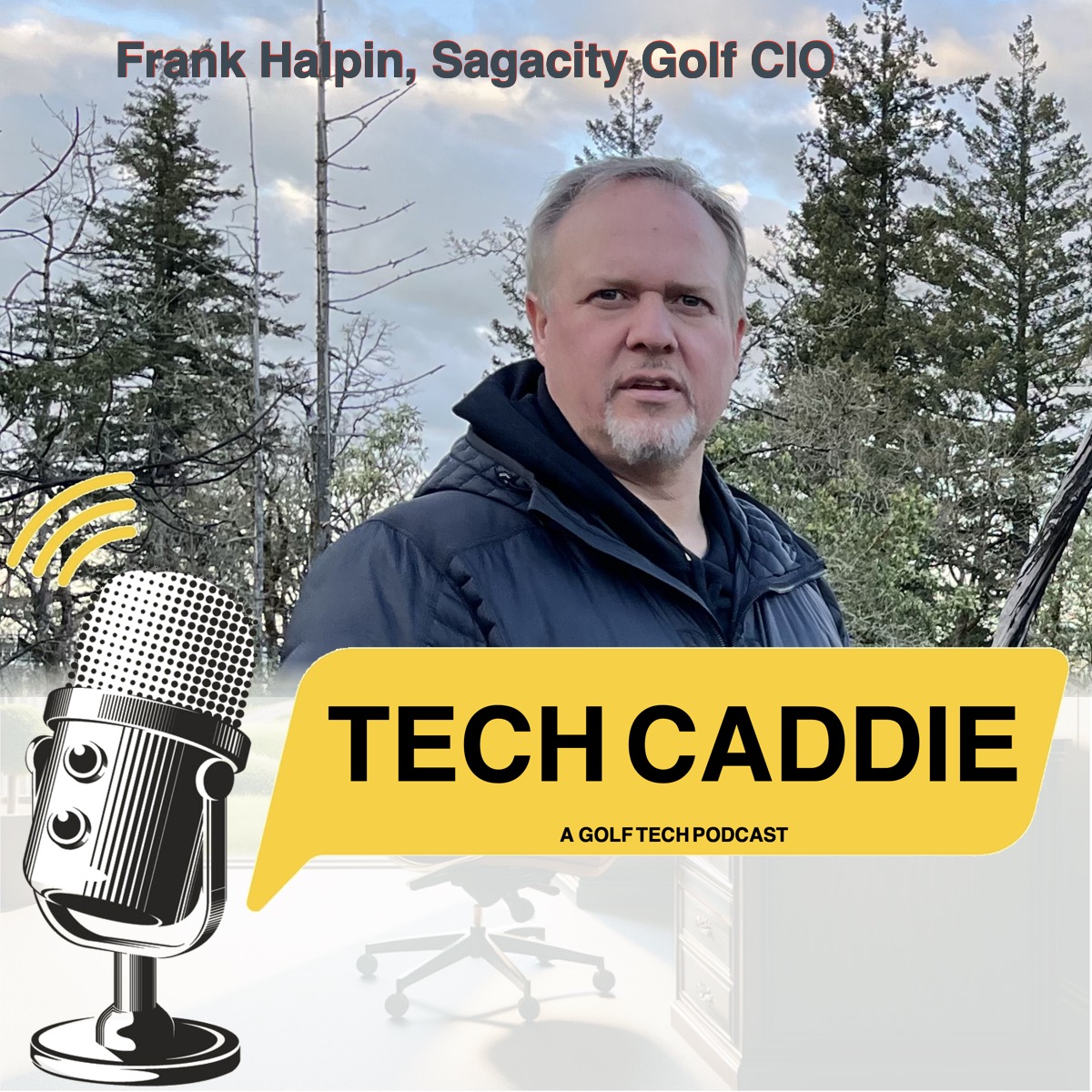
In this conversation, Frank Halpin, co-founder of GolfNow and CIO of Sagacity Golf, shares insights into his journey through the golf technology industry. He discusses the evolution of Golf Now, his transition into real estate, and the founding of Sagacity Golf, which focuses on integrating AI into golf operations. The conversation explores the future of AI in the golf industry, emphasizing the importance of technology in enhancing customer experiences and operational efficiency.
Frank Halpin
57min
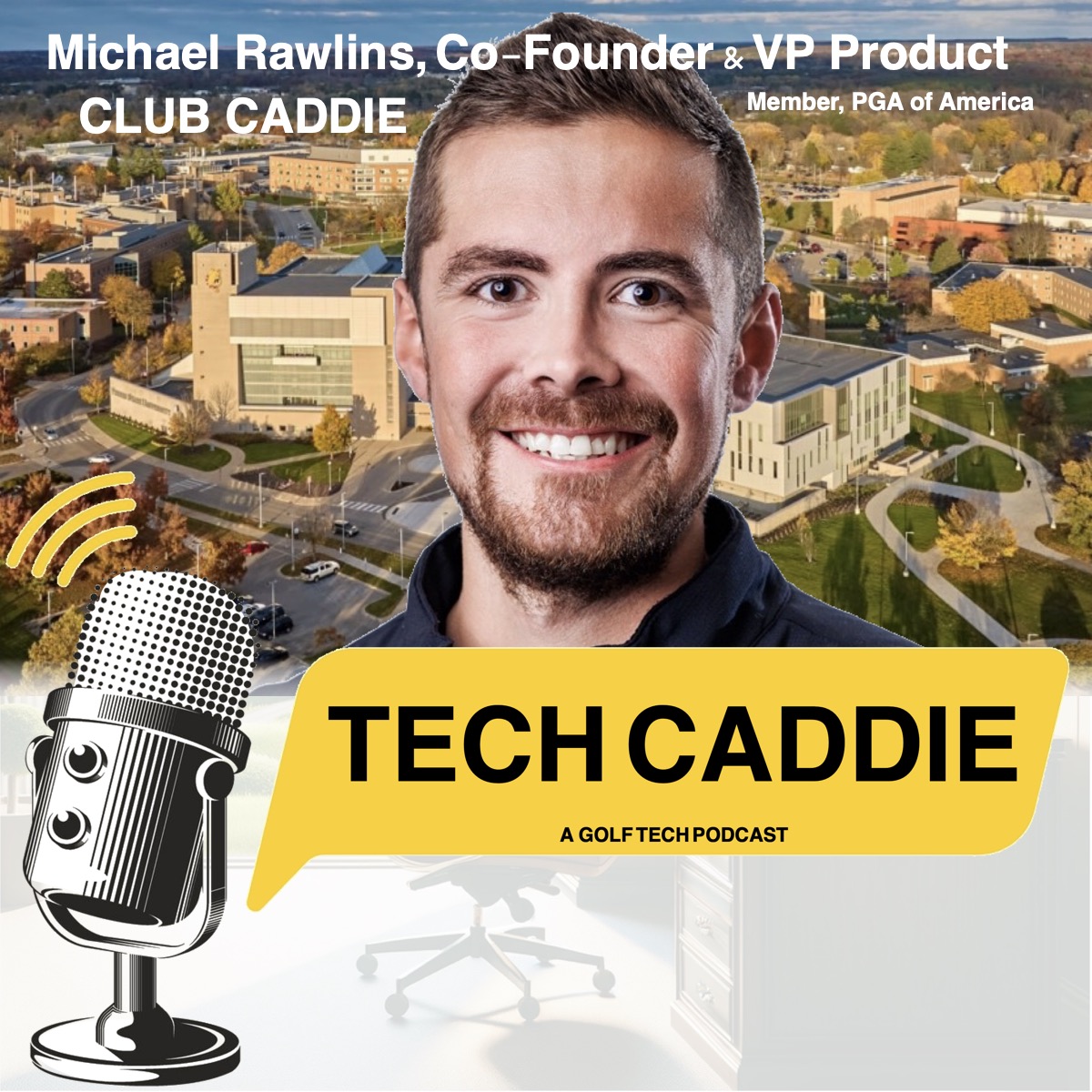
Michael Rawlins, Co-Founder and VP of Product at Club Caddie.Michael, a Class A PGA Member, shares the fascinating origin story of Club Caddie, from his early days as a PGM student at Ferris State to meeting CEO Jason Pearsall at Rackham Golf Course, leading to the co-founding of the company.
Michael Rawlins, PGA
49min
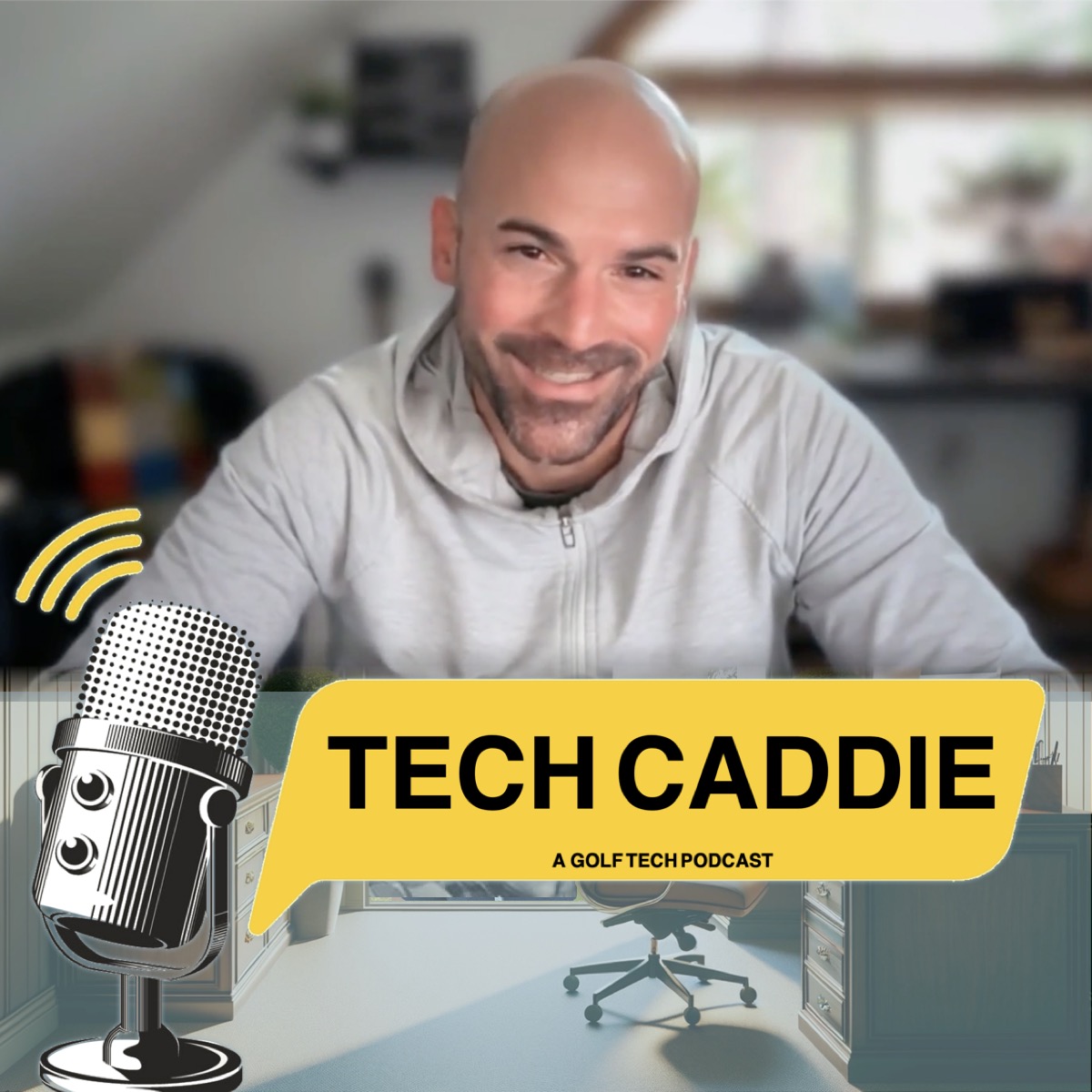
Mike Hendrix welcomes Bryan Lord, founder of Teesnap, one of the most disruptive forces in modern golf software. Bryan shares the full origin story: from the initial idea while at Purdue to securing major investment from Allegiant Airlines' Maury Gallagher.
Bryan Lord
57min

Mike Hendrix talks with David Clark, the founder of Easy Tee Golf. David shares how his product background at Capital One and Amazon shaped Easy Tee’s UX, why 50% of his customers are nine-hole courses, how Reserve with Google already drives ~13–14% of online bookings, why he shipped Waitlist before “squeeze times,” and what “default alive” meant for going all-in as a founder.
David Clark
52min
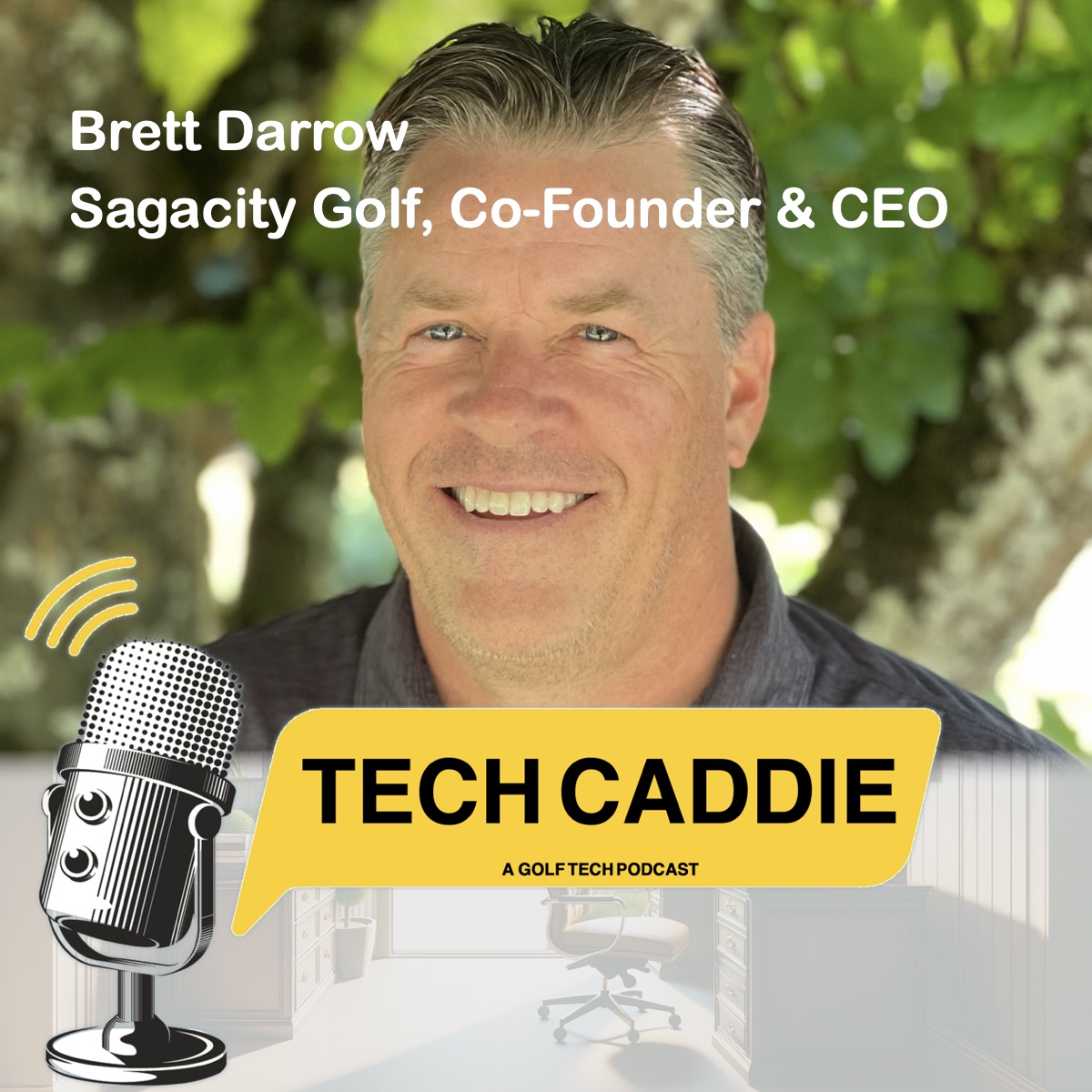
Mike Hendrix sits down with Brett Darrow, the visionary behind GolfNow and Sagacity Golf. Discover the untold stories of building and selling GolfNow, the challenges of innovation in golf tech, and the exciting future of Sagacity Golf's Yards app and advanced tee sheet solutions. A must-listen for golf entrepreneurs and industry enthusiasts.
Brett Darrow
60min

Can your golfers give feedback during the round? Real Time Feedback lets them text the shop in real time—no phone calls, no drama. Great for F&B, pace of play, and 5-star reviews. Hear how it works on the latest Tech Caddie podcast. 🎧 #golftech #golfbiz
Mike Terrell
45min

Zack Enriquez of Par 6 Media joins Tech Caddie to share how golf courses can show up in ChatGPT and Google Spotlight by improving their photos, metadata, reviews, and local listings to drive real bookings in the AI era.
Zack Enriquez
45min

Fraser Marriott, Head of Golf at Lightspeed Commerce, for a rare in-depth conversation about Lightspeed Golf’s growth, strategy, and vision. Fraser shares how a startup mindset still drives their team, why customer support is central to their success, and what’s coming next on their roadmap—including their Reserve with Google integration and plans to support both public and private clubs.
Fraser
46min

In this episode of the Tech Caddie podcast, Mike Hendrix is joined by golf industry veteran James Cronk—consultant, speaker, and co-founder of Golf Industry Guru. Together, they dive deep into one of the most overlooked areas of golf operations: e-waivers and risk management.
James Cronk
50min

Paul Sampliner shares his journey from growing up across the street from Highland Park Golf Course in Cleveland, to becoming a PGA golf professional, and eventually pioneering some of the earliest golf call centers and online tee time booking models while working for Marriott, Hilton, and later GolfNow.
Paul Sampliner
52min

2 Googlers join Mike for an honest conversation about when and why Google became interested in adding tee times to their results. They discussed the impact on golf courses not using an approved tee sheet, why some golf courses have more than one booking vendor available through search results and how long it takes for tee sheet and aggregator vendors to enable the Google integration.
Kathleen Oshima & Adam Jaffe
53min

In this episode of the Tech Caddie podcast, Mike Hendrix interviews Jake Gordon, co-founder and CEO of Noteefy, a company focused on demand technology for golf courses. They discuss the challenges faced by golf operators, particularly the issue of no-shows and cancellations, which lead to significant revenue loss.
Jake Gordon
55min

Nick Anderson joined the Tech Caddie podcast to share his impressions of the 2025 PGA Show and provide updates about his tee sheet and point of sale platform, MemberSports.
Nick Anderson
49min

In this episode of the Tech Caddie podcast, host Mike Hendrix chats with Martin Ort from Desert Canyon Golf Club about how his family-run course has embraced technology to stay ahead. From video game design to managing one of Arizona’s most tech-forward golf courses, Martin shares his unique journey.
Martin Ort
41min

In this episode of the Tech Caddie Podcast, host Mike Hendrix dives into the transformative power of golf course data with Bodo Sieber and Craig Kleu, Co-Founders of Tagmarshal. Learn how Tagmarshal is helping courses optimize pace of play, improve golfer experience, and boost revenue by capitalizing on dynamic pricing opportunities and expanded tee time inventory.
Bodo Sieber & Craig Kleu
42min

In this episode of the Tech Caddie podcast, Mike Hendrix interviews Jason Wilson, founder of Gallus, a company that provides mobile app solutions for the golf industry. They discuss the evolution of Gallus, the importance of mobile apps for golf course operators, and the essential features that make an app valuable.
Jason Wilson
53min

In this episode of the Tech Caddie podcast, Mike Hendrix interviews Chad Wright from Deer Ridge Golf Club about their recent technology transition from ForeUP to Sagacity and Toast. They discuss the challenges faced with ForeUP, the benefits of the new systems, and how they integrate operations for a better customer experience.
Chad Wright
50min

Watch as Mike and Chad explore the booking experience when using Lightspeed Golf in a desktop environment. Chad provides a pro tip in using Golf EMS to simply his events and golf packages operation and learn why Chad opted to leave foreUP and Sagacity Golf in favor of Lightspeed.
Chad Pettingill
40min

In this episode of the Tech Caddie podcast, Mike Hendrix interviews Jonathan Wride and Jarrette Schule from TenFore Golf. They discuss the origin story of TenFore, the challenges faced in developing golf management software, and the importance of user experience. Jonathan opens up about how he co-founded Supreme Golf with Ryan Ewers and the journey that led to Jonathan leaving Supreme Golf to help Jarrette build TenFore Golf.
Jonathan Wride
1hr 10min

In this episode you'll meet Jay Snider who built a simple tee sheet and email tool for his country club, to help keep dues down. Today, Proshop Tee Times has become a robust point-of-sale, tee sheet, member management solution for a wide variety of golf courses.
Jay Snider
52min

In this episode of the Tech Caddie podcast, Mike Hendrix interviews Rob Smyth from Cobalt Software, discussing his journey in the golf technology industry, the evolution of Smyth Systems, and the impact of family-owned businesses on company culture.
Robb Smyth
1hr 11min

CourseRev is a voice reservation system for golf courses that uses AI technology to handle tee time bookings over the phone. The system can integrate with tee sheet systems like Lightspeed and Club Prophet, allowing golfers to make reservations, join waitlists, and receive directions to the golf course. The system has surpassed online reservations in terms of volume and has handled more than 75-80 calls per day for a course. CourseRev is a game changer in terms of labor costs and customer experience.
Manna Justin
52min

Colin Read, co-founder of Whoosh, discusses his background in golf and entrepreneurship, as well as the challenges and opportunities in the golf tech industry. He emphasizes the importance of improving member and guest experiences, as well as staff workflows, through technology.
Colin Read
48min

Mike Hendrix interviews Scott Mingay from the USGA. They discuss the development of the GS3, a golf ball that measures green speed, smoothness, and firmness. The GS3 is used by golf course operators and superintendents to improve the playing experience and make data-driven decisions about maintenance practices. The conversation focused on the GS3 ball and the Deacon course management system. The Deacon platform is a cloud-based system that integrates data from various sources to help golf course superintendents make informed decisions.
Scott Mingay
58min

Menno Liebregts, founder of Golfspot, discusses the challenges of managing customer data in the golf industry and the need for an integrated solution. He shares insights on the company's journey, customer base, funding, and expansion plans. The conversation highlights the importance of open platforms and the impact of data on decision-making in the golf industry.
Menno Liebregts
37min

Jason Pearsall, the founder of Club Caddie, shares his journey of building the company and the importance of understanding the day-to-day operations of a golf course. Jason has the unique perspective as a golf course owner as he purchased Warren Valley Golf Course in 2022. Club Caddie started as a food and beverage delivery system called Golfler, but quickly evolved into a full clubhouse management software. Pearsall's experience as a golf course owner and operator have allowed him to build a product that solves real problems for golf course operators. The company has experienced significant growth and success, winning deals with management companies and continuously improving their product.
Jason Pearsall
1hr 11min

Kevin Fitzgerald, Assistant Director of Public Affairs for the Southern California Golf Association, provides an update on recent meetings regarding the implementation of a pilot program for golf tee time bookings in Los Angeles. The Golf Advisory Committee and the Recreation and Park Board of Commissioners both endorsed the staff recommendation for a $10 non-refundable deposit per player when booking a tee time.
Kevin Fitzgerald
34min

Jon Schultz, founder of ezLocator, discusses how their solution helps superintendents find the daily optimum hole location and enhances communication within a golf facility. ezLocator now include AI to improve the customer experience.
Jon Schultz
35min

In this episode of the Tech Caddie podcast, Mike Hendrix speaks with Kevin Fitzgerald, the Assistant Director of Public Affairs for the Southern California Golf Association, about the intersection of golf and public policy. Included is the TikTok video from Dave Fink which helped expose the gray market on the KaKao app, used by hundreds of golfers to score the best tee times available at the LA City municipal golf courses. Aaron Gleason from Golf Geek Software, discussed their solution called FairPlay Guardian, which uses machine learning to detect fraudulent activity in tee time bookings. Matt Holder from Loop Golf emphasized the need for operators to understand the pricing pressure and revenue management opportunities in the golf industry.
Kevin Fitzgerald, Aaron Gleason, Matt Holder
54min

Aaron Gleason discusses the issue of reselling tee times at LA City Golf courses and how Golf Geek's FairPlay Guardian technology can help detect and prevent fraudulent activity. He also spoke about the importance of knowing the conversion rate of a booking engine and how marketing automation can help increase revenue.
Aaron Gleason
29min

Mike Hendrix and Kevin Fitzgerald, the Assistant Director of Public Affairs for the Southern California Golf Association have a conversation about golf in Los Angeles. They discuss the role of the advisory board for Los Angeles City Golf Courses and the intersection of golf and public policy. They also peer into the issue of reservation systems and online brokers in the golf industry and specifically the City of Los Angeles.
Kevin Fitzgerald
43min

Matt Holder from Loop Golf joins the podcast to discuss Loop Golf. Matt talks about the early days for Loop and mistakes made along the way. Mike and Matt go into detail about tee time scraping and how Loop helps golf courses.
Matt Holder
29min

Don Rea joined Mike Hendrix on The Tech Caddie podcast for a conversation about the technology Don uses to run the golf course he owns in Mesa, AZ - Augusta Ranch Golf Club. Don is the VP of the PGA of America and he speaks about operating technology from that perspective and from his knowledge gained as a podcast host with Jay Karen, the Executive Director of the NGCOA.
Don Rea Jr.
48min

Del shares his background as an entrepreneur and his life in golf. He discusses the history of Seven Jars Distillery and the discovery of buried treasure on his family farm. Del talks about entering the golf business and the importance of technology in the industry. He shares his experiences with EZLinks and Fore Reservations, as well as the development of Kodology and Pitch CRM.
Del Ratcliffe
1hr 6min

Morgan Kimmins from Springfield Golf Resort in Chandler, Arizona discusses their use of Lightspeed technology and the impact it has had on their business. He highlights the benefits of Lightspeed's punch pass feature and the ease of use of their booking engine. He also discusses the importance of communication and the use of technology for frost delays. Morgan emphasizes the value of support and training provided by Lightspeed and the positive experience they have had with their customer service.
Mogan Kimmins
42min

Dave Vanslette, Founder and CEO from FAIRWAYiQ discusses the evolution of the company and its focus on data and automation in the golf industry. They have developed hardware sensors and software solutions to optimize golf course operations and enhance the player experience. They are focused on reducing friction and improving efficiency in the golf industry through AI and automation. The company has a strong customer support system and aims to provide value to golf courses of all types
Dave Vanslette
51min

Brendon Beebe, former CTO of foreUP, discusses his experience in the golf industry and building a successful company. He emphasizes the value of bootstrapping, hyper-focusing on specific market segments, and building a flexible system to meet the needs of different golf courses. At the end of the episode, Brendon asks Mike about how he would compete with GolfNow if he was to build a tee time aggregator and how he would use GolfNow if he was a golf course owner.
Brendon Beebe
51min

Allison George, a golf course owner and operator, discusses her experiences with various technology platforms in the golf industry. She shares personal updates, including her involvement in the golf industry and her use of technology in her golf courses.
Allison George
55min

Noteefy is a waitlist software that aims to help golfers play more golf and golf courses make more money. The product allows golfers to set their preferences for tee times and receive alerts when those tee times become available.
Dathan Wong
36min

Tyler Arnold, CEO of Eagle Club Systems, discusses the company's golf management software and its success in the industry. He highlights the flexibility and simplicity of their system, as well as their focus on customer support.
Tyler Arnold
35min
Mike Hendrix (00:00)
Hi there. Mike Hendrix here from smbGOLF. And today my guest is Mike Zisman, Founder and Executive Chairman at Golf Genius. And this is the Tech Caddie podcast.
Mr. Zisman, welcome to the podcast.
Michael Zisman (00:30)
Thank you, Mike. Thanks for having me.
Mike Hendrix (00:32)
I am well, thanks for coming on. I have referred to you often when you're not in the room as the hardest working guy in golf. And the reason I've always said that about you is I saw you at more conferences than anybody else when you were getting Golf Genius going and it just stuck with me that like, and this guy is committed, you know, and I never forgot it.
Michael Zisman (00:52)
Yeah, I would say, yeah, I'm pretty tenacious. I love what I do though. know, I'm 77 years old and still doing it because, you know, well, there's two things. One thing I love is mentoring young people. You mentioned Ben Wolf in your area, he's been with us forever and, you know, basically helping grow the game. I often say I'm a passionate golfer, not to be confused with a good golfer.
Mike Hendrix (01:14)
That's a lot of us
Michael Zisman (01:16)
Hope Springs eternal and I'm still working away at it.
Mike Hendrix (01:19)
Yes, of course. So, you know, I, I also kind of know about you, not, not because of like a family thing, but a long time ago, I noticed that you had been at IBM and my whole family is an IBM family. That's what I did for my college summer job. Like we're IBMers, my family. And so I researched you years ago. I wanted to understand how you got to IBM and what happened.
But, we'll get into that. Cause I think the story about the software company that you sold the Lotus is a really cool story. But I am also interested, like when did you get drawn to golf? I mean, were you a 12 year old playing golf or did that happen later in your life? How did you get drawn into golf?
Michael Zisman (01:59)
That's a good question. It came in two stages. So when I was a kid, I grew up in Pittsburgh, not far from Columbus, Midwestern city like Columbus. And I played golf as a young kid. And I always played at a public course, a South Park golf course. And it had a par three hole that was 145 yards. And I always parred this hole, Mike. And one day the ball went left. I chipped it up. It went right. It went left. It went right.
I threw down my five iron, broke it in half, walked home five miles where I never play golf again. That was stage one. And I didn't, and I didn't. And I live here on the main line of Philadelphia surrounded by golf courses. And I would drive around and go like, what are these people doing? mean, what, what are they doing chasing this ball? And, in my first company, didn't mention was sold to Lotus at one point, my VPSL said, Mike, we gotta go play golf. Yeah. We gotta go play golf. went to Cobbs Creek.
golf course, is now through a major renovation. And, uh, you know, I fell in love with the game and, and, uh, you know, started playing again. And from my 40th birthday, uh, went out to, uh, uh, Phoenix and went to a golf school at McCoy. still remember McCormick ranch, which still exists. And, uh, uh, you know, I've just came to really love the game. It's it's a, you know, I, give a good, in this May, I'm taking my two sons to play Pebble Beach, right? It's a great family game. used to play with.
My boys when they're younger, my younger daughter is into golf. It's just, it's a great family game and I love it.
Mike Hendrix (03:27)
Yeah, it is a, it is a great game. it sounds like almost like a 25 year hiatus or so something like that. Yeah.
Michael Zisman (03:34)
⁓ yes, it was literally. I literally swore. I I literally walked home five miles with my golf bag, threw it away and said, I'll never play. I'll never do this again. That's funny. And, I would, you know, as I said, walk and drive around and think, like, what are these people doing?
Mike Hendrix (03:48)
Well, Pittsburgh golf is special to me. When I was with golf now, Pittsburgh was one of many of these rust belt cities really that I oversaw. and boy, Pittsburgh was tough for us, Mike. We struggled to really connect with the individual owners. I think we did get there, but Pittsburgh was as hard as it could be for a market for us.
Michael Zisman (04:11)
Yeah, that's a great city. I ⁓ have very, very fond memories of growing up there.
Mike Hendrix (04:16)
Yeah. Yeah. Okay. So, I tell everybody about soft switch soft switches. I've got that right. Correct. Switch is your first. And I think you're the Founder. I was off switch. explain that a little bit because I think it helps people understand Golf Genius. Wasn't your first rodeo. I think it probably plays a role in why you were so successful.
Michael Zisman (04:24)
You've done your homework. ⁓
Yes.
Yeah. So, I, my background, I'm a, I'm a recovering academic, uh, which would probably come out a bit. So I, you know, through ended up, uh, as a chemical engineer at Lehigh. In fact, I'm going to visit Lehigh tomorrow, uh, ended up in grad school at Penn PhD in decision science. My, my PhD thesis was literally an AI thesis back in 1977. Uh, went to MIT for a couple of years, realized this is not for me. I don't want to be an academic.
So I moved back here and started a company and we zigged and zagged like many companies do but soft switch ended up being The major company to interconnect all the email systems that people had at the time So like many companies we solved the problem that doesn't exist today Like when you want to send me an email, you don't wonder what email system mom you couldn't care less, right? We we have protocols like you know for email like SMTP and pop3 and all that sort of stuff and we ended up
connecting all these mail systems. So a large corporation might have IBM mainframes you mentioned. They had DEC systems, Wang systems, HP systems. None of them talked to each other. We built the backend software to interconnect them all. So if you were on Wang and I was in IBM and Mike, you sent me a message with an attachment, you thought I was on Wang, you looked in the Wang directory and saw me and you didn't know that it was actually getting routed to an IBM mainframe. The document was getting translated into IBM format and stuff. And it was very successful company. were in
Probably 85 of the Fortune 100, you know, 400 or...
Mike Hendrix (06:07)
Let me interrupt. Did you raise money for that company?
Michael Zisman (06:09)
We did, we did. was actually at dinner with a friend last night, cause it's an interesting relates back to golf Genius. So I started, I started that company in 1979. left my T in 79 started initially as a consulting firm in what then was called the office of the future office automation had a client called air products and chemicals here observed that they had this problem that G you know, that the guys in the UK would write this big contract and Wangward processor send it to Allentown.
The guys all bullshit. They rekeyed on IBM word processor. sent it back to the UK and they go again and they, there's gotta be a better way to do this. And that led to this editable document translation and stuff like that. And so in 1983, I said, there's a real business here. I raised what I was convinced would be all the money I'd ever need. I raised $600,000 from a local firm that sort of did, you know, local friends and family. And that wasn't the
Mike Hendrix (06:45)
Right. ⁓
family
Michael Zisman (07:04)
yes, they raised money from different families and that was on the way to raising $20 million, which back then was a lot of money. Today is nothing, but then a lot of money. And I was fortunate because it was sort of the premier venture capital firms, the new enterprise associates, Yoke Investment Partners. And the company was, it was hard. It was hard. I'll tell you, we were way ahead of the market. So it was gruesome for a while. Had to cut the company back three times, but eventually,
You was quite successful. As you said, we sold it to Lotus and 11 months later I made my acquired Lotus. But what's interesting is that firm that invested the $600,000 with me in 1983, invested in Golf Genius 37 years later.
Mike Hendrix (07:48)
Yeah,
that's beautiful. That is beautiful.
Michael Zisman (07:51)
It was a successor firm to it, but it's the same guys invested in. We, I financed Golf Genius myself internally from two or nine to 2020 and in 2020, this local private equity firm and Roy McIlroy's venture firm invested in the company. Gotcha.
Mike Hendrix (08:09)
And, and so I'm just curious where the entrepreneurial spirit comes from. What was your dad, his own boss, your mom, her own boss, like, does that come from?
Michael Zisman (08:19)
No, that's a very good question.
yeah, I never really thought about that. That's a really good. mean, I, I was the kid who got up at four, three in the morning to live in the morning newspaper, the Pittsburgh post-gazette. ⁓ I sold it. I sold flower seeds. sold vegetable seeds. I sold magazines subscriptions. mean, I'm a very lower middle-class family. I mean, we suffering by any stretch.
Mike Hendrix (08:42)
In Columbus, we had two papers. sure Pittsburgh had like six, but.
Michael Zisman (08:47)
That too, it had the press and the Post Gazette.
Mike Hendrix (08:49)
So we had the dispatch in the citizen journal. And if you were, and so I was in the paper route business. I, I, I really believed in that a lot. I made good money as a kid doing that. One of the papers was the morning paper and one was the afternoon so I could work for both of them. And that's what I loved about it. know, had to go to school.
Michael Zisman (09:08)
I worked the morning paper and if you need, you know, you, as you said, you could do quite well. mean, yeah. I mean, I had a hundred, I had a hundred papers and at Christmas you'd get a two buck tip. That's $200. That's a lot of money. You know, 12 year old kid. So I was always working. then when I, I mean, it's interesting in 1967, I was a sophomore at Lehigh.
And at that time you had to take a course in computer programming. And I remember it was a beautiful fall day. I remember the building I was in and we started talking about computer programming and I had McCracken's Fortran book and I raised my hand and I said, where is this computer? It's in the basement. I never left the basement. The only photo of me in the Lehigh yearbook besides my mug shot is me to key punch.
I felt in love with programming that day and I stayed in chemi chemical engineering because I started I'm gonna but I was really already in the programming I knew immediately as soon as I left my first job at DuPont was in data systems and I said you know I love software I I mean I love running a company my happiest days of the day is writing code
Mike Hendrix (10:25)
Sounds like it. That's what I was just going to ask you. Yeah. So you probably at your core think of yourself as a coder.
Michael Zisman (10:31)
Absolutely. Love it. I still love looking at it. I wrote the original scheduling program that Golf Genius uses, a very important part of our product. It's a mathematical programming system. But other than that, have 150 very capable people in Romania that do all the development. I really like to start a software company and then started this consulting firm which led to
this problem of connecting these systems together. and, you know, I was back in the writing software and I've always, know, I I sometimes, you know, I'm trying to, you go into a golf galaxy, right? And you go, good Lord, what is the cost of all this inventory? And what if it doesn't sell in software? You don't have that problem. There's no inventory, right?
Mike Hendrix (11:16)
That's right.
So, okay. So for the people that don't know, so Lotus, and if I have this, correct me if I'm wrong here, but you know, Lotus even had a, was somewhat competitive ultimately to Excel, right? Wasn't there Lotus one, two, three, and that was like the spreadsheet, preferred spreadsheet, if you will, of IBM, IBM buys Lotus, you become an IBMer through that. And I think you work your way up within IBM and end up serving in a pretty important role in terms of a.
international business strategy, that type of thing.
Michael Zisman (11:47)
So the history of spreadsheets is the spreadsheet was invented by two guys who were at Harvard Business School and were presented with the classic, here's this huge spreadsheet you got again. This one guy, Bob Franks, and said, you gotta be kidding me. He went off for two, literally, I know it's true, went off for two weeks and came back with VisitCalc. VisitCalc was the first spreadsheet that ran on an Apple II. And when the PC came out,
Mitch Kapoor said, well, we should just go build VisiCalc for the PC. And that became Lotus 123. Now here's a good story for you, my entrepreneurs. Lotus's business plan was in their first year of business with Lotus 123, their business plan was to do $2 million in revenue. They did 53 million. Because Ben Rose was a guy on Wall Street, looked at this and said, this will revolutionize Wall Street. imagine running
Mike Hendrix (12:29)
Wow.
Michael Zisman (12:36)
Wall Street today without spreadsheet. It was in the seventies. They had calculators and these big yellow sheets of paper. So anyhow, Lotus one, two, three emerged and then Microsoft actually acquired a company called Multiplan. And they evolved that into Excel. And then it was the spreadsheet wars. When I first got to Lotus, we were at the end of losing the spreadsheet wars because Lotus built a suite, Lotus smart suite.
Mike Hendrix (12:37)
Yeah, right.
Michael Zisman (13:02)
Yeah. Microsoft had the Microsoft, Microsoft office suite. and, really, you know, kind of over time dominated that market and still do. think Excel is probably the most widely used program in the world. Yeah. Either that or word one of the other Excel or word. yeah. So, so my kind of, it's interesting is, at the time I sold soft switch to Lotus. So Lotus had a product called Lotus notes.
which became very, very popular. And customers would say, look, we're not going to have another island of email. You need to tie this, all this stuff together. And we were the key to doing that. So they, they acquired us in June of 94. Um, and then, you know, literally in June in 95, IBM did a hostile tender offer for Lotus because they wanted Lotus notes. As I say, there's not much unique in the world as close as I get is in a period of 11 months, I went from a company of 400 people, my company to 6,000 people at Lotus.
to a quarter million at IBM. was the CEO of Lotus and was one of the, what's called the worldwide management council under Gershwin was the top 50 executives at IBM. So it was, you know, I learned a lot, you know, people say, God, isn't it, you know, and most entrepreneurs can't stay in an IBM, right? It's like, this is, this is insane. This is crazy. I'm out of here. I was, as I say, as a recovering academic, really curious about like, wow, if you could get a quarter million people marching in the same direction every day.
you can really kick ass. The learn was you cannot get a quarter million people in the same. It didn't even close. By the time you got that, your message got to China. We'd already changed the mess.
Mike Hendrix (14:28)
Yeah, right.
Yeah. Yeah. But you know, I, always go back to, the Watson family is who founded, IBM. I always go back to the fact that like, so maybe you can't get them to march together, et cetera, et cetera. But at the end of the day, they created a quarter million jobs just in a one year snapshot, right? Like it's an amazing thing to create that many jobs and have that much impact. I can tell you this, IBM got so big that my father would come home sometimes and tell me stories about we have to diversify.
our area in this city because we employ too many people in that city. And if God forbid something happened, it would destroy the city. And so IBM had put in plans to say, we'll never employ more than X percent of any one town because we wouldn't want to have a detrimental impact on the town.
Michael Zisman (15:27)
So the way I think about it is when TJ Watson made the bet on system 360, it was the biggest bet ever made in business. Talk about bet the company. was bet the company. We're going to go from this 1401 computer to this whole series of scalable systems, Different size processors, different memory, disk drives, printers. And because there was no one else to do it, they had to do it all themselves. They invented the disk drive. These huge, you know, and
And it was the bed of the century. I sort of think about commercial data processing as starting in 1964 when IBM released System 360, right? And I wrote my first program in 1967. I didn't know I was near ground zero. I knew I loved simulating distillation columns and simulating heat exchangers. But here's what's interesting. And I joke around because one of our new competitors characterized us as ⁓ a legacy company, which is this.
That's one of the spheres you try. There's their legacy. And I say, well, I'm in pretty good company. IBM is a legacy company. Microsoft is a legacy company. Amazon is a legacy company. But if you look at IBM, the rise and decline and then rise. Right. Most people never get over the decline. That's right. Think about, and if you were to go look at IBM stock price, and the same thing is true with Microsoft, look at IBM stock price. It absolutely flatlined.
When we had sales and marketing people running IBM, Ginni Rometty, who I know really a great, literally flat line, bringing a new CEO and he has done an unbelievable job. If you had bought IBM stock five years ago, you would be smiling. The same thing happened to Microsoft. mean, Microsoft got eclipsed by the web. The whole time Steve Ballmer was there. I like Windows, we're committed to Windows. I don't want to hear anything else. The stock was flat for like 12 years.
New CEO comes in and says, that's the old world. The new future is cloud computing, Azure, and Microsoft has also been. If you just bought IBM and Microsoft stock five years ago, who are old legacy companies, they were the definition of computing, say in the 90s. now they're back on top. It's fantastic to see. My takeaway is leadership matters.
Yes, I agree. I'm more more a concluder in a technology driven company. You need a technologist.
Mike Hendrix (17:48)
Yes. And I would also say this, although I don't like to think of myself as a process guy, but I will say this process matters as well. Like people learn things in the first 20 years of a company and they applied them. And then the guy that comes along 20 years after that, you know, just be aware there's a reason maybe for some of these processes that are in place. So, With that said, so let's go to, let's go to Golf Genius. You had this amazing exit by the way. So congratulations on that. think that, I mean,
Cause I understand that that exit's larger than what golf channel paid for golf now. Like that was a really good exit. ⁓ which actually, which actually when Lotus bought your company. Yeah. Yeah. okay. So, but we get to about 2009 and I don't know this for, for facts. So you tell me I'm going to assume that the earliest iteration of golf Genius was to solve a personal problem that you were probably involved with a couple of trips.
And you just kind of thought, I think I could do this better.
Michael Zisman (18:46)
Exactly right. So I let I mean just to connect all the dots. I sold soft switch to Lotus in 94 and 95 IBM did a hostile tender offer for Lotus. I stayed at IBM because I said I was curious about like wow you could kick ass if you get a quarter million people in the same and I love working with Gershner and he liked me because I'm a strategy guy and I ended up staying there in different capacities till 207. I finally said I'm done. I'm done.
And I was always the guy organizing the annual buddy trip. Starting back in 1989, when I started playing golf again, I was always organizing the annual buddy trip. know, 12, 16 guys, fly down to Keowa, right? You know, fly down Thursday morning, you play 18 on Thursday, 36 Friday, 36 Saturday, 18 on Sunday, you know, the plane come in. And, you know, we go on a trip, you know, Mike Hendrix had come up to me and said, you know,
You you had me play with Mike Zisman three times and you know I can't stand Zisman. And I didn't play with John at all. And you know, I thought dinner, Thursday night was at eight o'clock. You guys all left at seven thirty. And my background actually, and what I really love is scheduling. So when I was at my master's degree is in basically operations research, you think programs. And I was all the guy figuring out, OK, who's going to play with whom?
I'm sure you've done these little spreadsheet. Okay. one, one, Mike and that, that, that, that, and that doesn't work. Start over. That doesn't work. And, I was sitting here with my wife one night. We're going to see. And I finally said, this is an integer programming problem. I know how to solve this problem. One thing led to another, but you're right. I was solving that the buddy golf trip problem, which we still do a lot of right. And built this scheduling system, that
you know, is unique in the industry because it automatically attempt to get as much diversity as possible. So say eight golfers go on a trip to play seven rounds of golf. Well, in seven rounds of golf, you'll be with three people seven times is 21. There's seven other golfers you like to play with every golfer exactly three times. And by the way, you'd like to be partnered with each of those golfers once in a typical, you know, best ball partners. We do that like that. Yeah. Right.
⁓ It's a we literally can generate it's you know runs every day Literally generate and score 50 million schedules a second. Yeah, it's it was my Epitome of my programming career
Mike Hendrix (21:10)
And so let me ask you, know, you say to your wife, it's an integer problem. Like you realize that how quickly do you then realize it's a company or a company waiting to happen?
Michael Zisman (21:21)
So that's a very good question. by, well, I started it in 2009, in January of 2009. I mean, in fact, I'll tell you a funny story. You know, I was, I realized this is an integer programming. This is an optimization problem. I know how to solve this problem. And I started working with a professor at Wharton who was a brand new professional as a graduate student. He's one of the gods of integer program, guy named Marshall Fisher. And one Saturday morning, whoever's at his house, and we come up with this algorithm.
a way to go do this. And he said, you know, I'm really curious, Mike, why don't you hire a programmer around here and we'll see how it goes. So I came home literally sitting where I am right now in the loft in my bedroom. I typed, I Googled Java developer, Philadelphia, you hire Java developer. And up on the sidebar comes this thing called rent a coder, which still exists and has a different name where you could post a problem and people could bid on it. So I posted this problem and I said, look, you need to know something about probability and combinatorics and that, that, that.
And all these people jump in and say they're all outsourced. I bid on that $50, $500. And I said, well, I'd pay $500. And this one guy comes along and says, well, it's a very interesting problem. I like these sorts of problems. I have some questions. OK. So the next morning, got up. This is honestly God's trailer. I said, you know, this may have legs. And I wrote this what I thought was this pristine 12-page spec. I sent it to this guy. And I said, take a look at this. Get back to me in a couple of days. 56 minutes later. I have read your spec. I understand it completely.
I'm concerned that maybe missing something because you said it was a $500 problem. I would have done this for $100.
Mike Hendrix (22:55)
Hahaha
Michael Zisman (22:56)
And I can see you're new to RenterCoder, so I will show you how to resubmit it so I can bid $100. Well, how do you say no? That guy and his wife now run the 130 person development organization, Romania. He wrote his first code. Then I said, Alex, Alex, I'm going to take over. I'm going to take over writing. I know exactly what I want. And they went off and did other things. But by 2010, I mean, at the PGA show in 2010, we announced
Mike Hendrix (23:10)
good, I'm glad!
Michael Zisman (23:26)
at GolfTripGenius.com.
Mike Hendrix (23:28)
Yeah. And,
and, and had you, and had you raised money going into that show or that was self-funded at this point?
Michael Zisman (23:34)
Self-funded by me. Self-funded by me till 2020. But here's the bad news. So we announced this product at the PGA show in 2010. About a month later, I get a call from someone that says, hey, I heard about what you're doing. And I think I could really use this. And by the way, our total charge was $249, not per golfer, but for the captain, the guy who was going to organize the trip.
to use a software as long as it took to organize, say like six months to get the trip ready, right? $249. We now only charge 149 for the same thing, but $249. Guy calls me up and says, yeah, I'm taking 20 golfers to Scotland and I think I could use your software. I said, great. And he said, well, you know, what kind of discount do you offer? You're gonna spend a hundred thousand dollars taking 20 people to Scotland and you're worried about my $249. I turned around and said to my wife,
This is not a good sign. So it turned out to be very small market. We still do it, it evolved from that to, but after the schedule really, well, you need tournaments, you need accounting, need, you you know, Mike paid for the rental car and Joe put out, you need that, you need photography and it's still used quite widely, but it was a very small market. We evolved from that to links, you know, like public golf organizing league. instead of, instead of, ⁓
16 people playing five runs you have you know 50 people playing over 20 rounds different same sort of problem and and by 2014 I felt we had enough capability that we could go compete in the club market Where there were you know for for? Sort of desktop types event man was the largest and most successful of them was used in all the big clubs in the East Coast
Mike Hendrix (25:18)
Event man was blue golf somebody you felt like you competed with
Michael Zisman (25:22)
Well, blue golf probably existed. They were just working in PGA sections. Right. Yeah. So we didn't see them. was three other small companies, one in the US, two in We acquired all four of them. Just to get the customer, just to acquire the customers and get those guys an exit. And, you know, we hired a VPS sales who's still with us, Nick Wolf. Grew up in Ohio. Of course. boy.
runs our sales organization. And we were plotting along, you know, we were able to land most of the clubs in Philadelphia through Nick's connections. People love the product, a lot of development. ⁓
Mike Hendrix (25:57)
You know, Mike, what I remember about Golf Genius, especially that 2014 era, right? So I remember, and I'm interested to know how intentional this was. You were incredibly close to the PGA golf professional, and I'm not saying the PGA of America, I'm saying you were building a relationship anywhere you could find a PGA pro. seemed like golf Genius was his best friend. And I would love to understand.
how intentional that was, if it just seemed to make sense and you didn't really spend time on it. Like I think that's go to market strategies.
Michael Zisman (26:31)
It was very intentional, but 100 % of the credit goes to Nick Wolf. So we don't sell to the general manager in a club, Mike. We're not like a club, essentially, where Joan is selling to the GM. We sell to the director of golf, the head golf professional. So Nick was a PGA professional. Nick was the head professional at Waynesboro Country Club, about 10 minutes from me here, and joined us at beginning of 2014.
And his view was, look, as I like to say, there's 29,000 PGA professionals and they all know each other. know, Mike and I were at this club in 49 and then you became assistant for that, that, that they all know I'm exaggerating a little bit. And so it was very intentional. In fact, we often say that we're, we have, we have 75 PGA professionals in the company. Yeah. Maybe even 80 at this point, not just, but you say U S Canada, UK, but all of our
Mike Hendrix (27:17)
I know, yeah, a lot.
Michael Zisman (27:25)
customer facing people, it's sales or account management or customer support, with one exception of a legacy guy, they're all PGA professionals. They know golf. They know how to set up tournaments. They know what I call the 90 minutes of chaos before a tournament starts. They know when Mike Hendrix walks in the pro shop and slams down the scorecard and says, this card is not dotted right. Right. Really? Yeah. I'm a new kid and you're the president of the club and I'm now shaking in my boots, right?
Mike Hendrix (27:48)
Right,
Michael Zisman (27:54)
Um, so it was very intentional. you know, we, uh, I mean, one of things I often say to people, and I think you'd agree with this being in the business, I it's off switch. We sold corporate America. So you saw the entire breadth of people from really nice people to not so nice people in the golf industry. It's almost all nice people. And I mean, that's very serious, very seriously. PGA professionals chose a, chose that career because they had a passion for golf.
One thing people don't realize is when these PGA professionals go through a PGM schools, they learn a lot about customer interaction. They learn how to deal, you know, with a woman in the pro shop who doesn't like what you have. They're very, very good at customer interaction. I joke around with one of our best salespeople, a guy named Scott Johnson in Florida. And I say, Scott, just out of curiosity, if I held a gun to your head, could you say Mike instead of Mr. Zisman?
I don't think I could
Mike Hendrix (28:55)
Yeah. so 2014, 2015, you've, you've kind of Nick's kind of cracked that nut a little bit. He understands what the secret sauce is going to be in the storytelling, et cetera, et cetera. Uh, but then we get to a stage, um, where I start to watch you guys, you start making a lot of acquisitions and you mentioned those early acquisitions, but I'm talking about now like operation 36, things that are like clearly going
outside of just league and tournament and travel management, you clearly made an intentional decision. We're going to diversify. We're going to get our brand into more golf things,
Michael Zisman (29:32)
And
so our proposition to a golf professional today is to say, Mike, you spend your time doing three things. You run a Golf Shop, you run tournaments, know, teaching and coaching. We have software products to do all three of those things. And we bundle those together as a suite, a lot of smart suite, Microsoft Office. And we track very carefully our ability to get these other products in use.
So yeah, it was very intense. And again, it was because we have PGA professional go, know, Mike, Storm and stuff's nice. You know, running a pro shop, there's just a lot of white space in a pro shop. You know, the club essentials of the world handle POS, but bear in mind, the pro shop's the second citizen to club essential or Jonas. They're focused on the F and B. They're focused on the F and B world. So the PO systems are optimized for F and B. Yeah, we need POS in the pro shop, but you know, here you go.
I don't mean that discouraging, but we don't do POS. We fill in all the white space like that.
Mike Hendrix (30:28)
And I don't know if this is through acquisition or you created it, but I think one of your modules, I don't, I'm not sure if that's the right term. One of the items in the suite is just called Golf Shop. Right? I mean, it is.
Michael Zisman (30:40)
Yeah, it is Golf Shop. And in fact, that's again, our golf professionals said, look, there's a real opportunity here because thing just take demo club tracking. You know, let's say ⁓ a driver in a pro shop costs 600 bucks retail. They paid 300 for you walk in and just always amazed me. And you say, I'd like to try that driver. Well, you would think the pro shop would say, Mr. Hendrix, that's great. Here it is. I'm going to charge it to your account. And when you return it, I'll credit you. my God, we couldn't do that to Mr. Hendrix.
We can't do that. So Mike takes the driver. He's not a bad person. either used to he returns it. It goes in his garage. He forgets or he brings it back to the pro shop. No one's there and he leaves it on the counter. Where did this thing come from? Yeah, I guess what we put a bar tag on the driver. Scan it in. You know we know who has it. If it shows back up in the in the pro shop so you know you can jump. We charge like 2500 bucks for annual subscription.
You make that up just in demo clubs. But I'll tell you one of the things we did last year that I think is just amazing. Talk about a boring use of AI. So imagine in a typical pro shop, how many boxes come in a year? Boxes of soft goods, boxes of shoes. And in that box is a bunch of shirts from Peter Millar and a sheet of paper. Says, here's what we ship to you. From to line item, line item, line item, line item.
Normally, someone literally has to take that and go key it into their system. We use ChatGPT. You upload that PDF. We say to ChatGPT, here's the data structure I want. Go create it. We now have an XML file in the system it goes. People love it. I mean, it's just a, it's pure labor savings. There's nothing worse than that assistant pro dredging through this stuff, keying this stuff. Man, imagine how many hundreds of times that happens here in a pro shop.
It's one of examples of AI, you know, working really, really well. So yeah, we built GolfShop, but then we acquired Operation 36. We built our first coaching product, but when we acquired GolfShot, they own CoachNow, which was kind of the leading brand in video analysis. That and OnForm are the two big players. And OnForm is a very good product. When we did that, we said, okay, let's move our coaching stuff on top of theirs.
Branded All Coach now use their UI UX. And so today we're the only people who can say, here's what I call a full stack solution. Video analysis, telestration, collaboration, the ability to communicate with students, scheduling and payments. that product has been very, very successful. But again, it's saying, what does that golf professional do and how can we best serve them?
Mike Hendrix (33:19)
Mike, you mentioned payments and I think I've said on this podcast many times, I feel like a lot of the software in golf is really just almost a front, you know, for a payments company. Is payments that critical to Golf Genius as well? it?
Michael Zisman (33:35)
I wish it were, I wish it were because when I, I'm a member at Marion golf club, when I go register for a golf tournament, I would say I'm on golf Genius and I registered playing the member guests that goes into the, in our case, the Jonas system and Jonas is on my member statement. in private clubs, do none. do, you're, if you're, if you're doing outings with us, you know, we'll do that. All of the state and region, what are called AGA that they run tons. mean, and make like the golf association at Philadelphia runs 200 tournaments a year.
What are you talking about? They got 12 people. So we service those people. That's all payments. But we do, I don't know, $300 million in payments, which is a drop in the bucket. Right. Yeah. I have all the time, venture capital, private equity. Oh, you're a payment company. Stop. Yeah. Yeah. There are people, I'll take an example, GolfStatus. GolfStatus specializes in charity events.
Mike Hendrix (34:24)
Right.
Michael Zisman (34:33)
and it's free as long as they're doing the payment processing, which is fine. They're basically saying, we're going to make our money on the spread. Let's say, you know, their credit card fees, they're paying 2. something percent, they're going to charge the goal for 4 % or 4.5%. And there's a lot of companies that do that. mean, but for better or worse, you know, that's not, it's just because we sell to clubs and courses that tend to have, you know, we're running through the system of record, it's not a big moneymaker for us.
Mike Hendrix (34:59)
You mentioned the affiliates. And to me, this is the most interesting thing about Golf Genius. Is ultimately the deal that you were able to strike with the USGA slash GHIN mean, one, would just ask you upfront, is that one of the most transformational things that happened for Golf Genius? Or am I overestimating how important that was?
Michael Zisman (35:21)
It transformed the company. It was the transformational event.
Mike Hendrix (35:22)
Yeah, that's what I think. Yeah.
So
listen, we have a lot of founders that watch this and just a lot. I mean, can you walk us through that a little bit? How that came to be?
Michael Zisman (35:34)
So we were out, know, this is Hague, it's 2014. We're out, you know, selling our tournament management system, which back then was $2,500, which was, so think the USGA provided a tournament, you probably remember it, TPP. Yes. You know, TPP was an old desktop program that was free. Eventman came into the market with the audacious price of $400.
And with an even more audacious price of $2,500. And I knew through this vape buying that the USGA had contracted with Deloitte to build the new tournament management system. I'm like, this isn't going to happen. This is not what you want to go. I don't want be critical. I love Deloitte. You want to go implement Workday. They have a playbook. You talked about process. They have a product. Go do it. For something as innovative as tournament management software, it's funny how I knew about it. And I kept
working my way through and dealing with the IT people and, it was getting no, we're building our own system with Deloitte. It'll be fine. Blah, blah, blah. And then I was at a dinner. I call it the serendipity of life. was the writers dinner, the writers dinner sponsored by the Met USGA section. And the guy who ran that section said to me, Mike, there is a window of opportunity. You need to contact this person. I wrote an email to that person.
got an email that said, will hear from Sarah Hirschlund in the next 48 hours, who is the chief revenue officer. And she said, look, we know about golf genes people love, but we can't pay $2,500 per club. said, Sarah, I haven't asked you to pay anything, but let's talk about how we could work together. And we came together in 2016, whereby we licensed them to distribute a basic version of our product. called our club version to all clubs. So every club that does handicapping gets this product.
included in their handicapping subscription. The USGA paid us a fixed amount for that, but we then had the right to upgrade those people to our premium offering. Sure. Now all that was USGA branded. They also said, interesting enough, Sarah said to me, you know, Mike, this 20, she said, we really shouldn't even be in the tournament management business. mean, no other national association does that. It's sort of an, I said, well, Sarah, let's write the divorce agreement right now.
Five years, you don't want to, we will transition it to the allied golf associations, but we won't, we'll take what you're paying us and we'll whack it up among them. We're not, Oh, here's our opportunity to charge three. You know, we're going to do the right thing here. And sure enough, after five years, they said, yeah, we don't want to do this anymore. We went to all the AGA's and like 53 of the 57 AGA's use our software. Northern California is the only major exception uses blue golf.
A couple other associations do things, but we transitioned that to the AGA. Well, what's interesting. And that was tournament management. And those AGA's, mean, they're huge partners of ours. We were major sponsor of IAGA and stuff like that.
Mike Hendrix (38:37)
was a speaker recently at Miami Valley Golf Association. Of course, in Ohio, for people that don't know, we're one of these oddball states. We have multiple associations in Ohio.
Michael Zisman (38:39)
the
There
used to be five.
Mike Hendrix (38:51)
Anyway, anyway, the point is I'm sitting at this table and I'm watching the different presenters or whatnot. The only other person at the table with me is your golf Genius guy and he gets up and gives his presentation and then I, you know, and so no question you have a very close relationship with all those guys.
Michael Zisman (39:05)
I do
not appreciate how hard those people work. mean, I know Gap Golf, they run 200 tournaments a year. Yeah. They have like 12 people. It's all volunteer, but these guys are, and it's for the good of the game. They run these play days where you can sign up to play the country club and things like that. In any case, after the tournament management deal, they said, okay, we're going to take our resources. We're going to go write a new handicapping system using the new world handicap system spec. That didn't go well either.
came back to us and said, look, can you build this? But it has to be up in 2020. Well, they had already done a lot. They had done all the design. They had a New York firm that did all the design, which is, you know, it's the hard work. It's getting the design right. had this, as I call it, we had to put the meat in the sandwich. We had to write the code behind it. I don't mean to underline big infrastructure problems. And we, in January 6, 2020, we brought up the world handy, we were the first country in the world to bring up the world handicap system.
⁓ And we just renewed that. So we do all the handicapping in the US plus 20 other countries. Great relationship with the USGA. Fantastic relationship.
Mike Hendrix (40:11)
Is, is the deal such that someone else, another company could participate in that in the United States, or is it an exclusive agreement?
In terms of the world handicapping system...
Michael Zisman (40:22)
The
USGA is the exclusive licensee in the United States for handicapping. They are the licensee from what's called the World Handicap System Board. And they have chosen us to be their IT arm to do all that. So, yes, today it is exclusive and the contract comes up every five years. We just renewed it January of either 25 or 26, I forget which.
Mike Hendrix (40:51)
Very good. So, so one of the ways that this podcast came, this episode that came together as we were having some back and forth about all of these upstarts, right? All of them. I clearly there's a, uh, there is a newer generation of players that honestly probably started playing the game and golf Genius already existed, right? They don't know a world without golf Genius, right? And so it only stands to reason that some of those people are going to say, Oh, I wonder if I could do it better.
And that's kind of like what's great about entrepreneurs. Yeah. And so I'm curious to know and kind of hear from you directly. How do you think about that new class or generation of management platforms and that type of thing? What do how do you all look at that at Golf Genius?
Michael Zisman (41:23)
That's exactly right.
Well, we look at it very seriously. You I've often said I do some teaching and I often say to people, know, Mike, you seem like a really confident guy. You're a really confident guy. Well, what's the difference? You know, what happens after you're really, really, really confident? What comes after that arrogance? I got this locked, right? And I said, arrogance is God's gift to entrepreneurs.
Mike Hendrix (41:56)
Mm-hmm.
Michael Zisman (42:03)
because people get arrogant, they get complacent, and that's what makes room for the next guy. Otherwise, the player would just keep growing and growing and growing, right? But we've seen that never works, you know, for variety of economics reasons. So we pay very, very close attention to entrepreneurs, and there are, you know, whole set of them. I think what I would say is, you know, again, being a recovering academic with 50 years in business, if you've ever read The Innovator's Dilemma, which is one of the great books,
I recommend anyone. like you don't go directly after the incumbent. You nibble away at the edges, right? I'll use golf status as an example, golf status, same owner who owns Dormie Club. They started out coming right at us, but quickly realized that didn't work and they built a nice little niche doing charity tournaments, right? Squabbit.
probably has more presence than all these other guys. And they've been around for quite a while, totally free product, a guy in Toronto. I think what people don't understand is they talk about golf tournament software. And what I would say is you have to think about it this way. There's a golfer, right? A single golfer that gets serviced by the golf shots, the swing use, the 18 birdies of the world. And they're starting to add what we call small games capability, including us.
so that that individual golfer can do it. Then there's a segment of groups of golfers where we used to be in the early days. Then there's public courses, private clubs, regional associations, national associations. So I we do all the scoring for the USJ except the two big shot link tournaments, PGA of America, England Golf Wheel. I mean, we have a huge business at the national association level. There are some small companies who are kind of opening up that niche of what I'll call groups of golfers.
and then want to use that to step up into servicing clubs. It's a big difference. mean, the needs of a guy organizing his own little golf league are very dramatically different than a club that's running a member guest, that's running a club championship and things like that. So we look, I mean, I wish these guys will, I often say competition accelerates innovation and reduces cost. Which of those don't you like, right?
That is, you know, that's the essence of a capitalist economy. can complain a lot about the things in United States of America today. It is a capitalist economy where innovation is valued, entrepreneurship is valued. so we walk, you know, we welcome the competition. We have a whole competitive response team that's monitoring what people are doing.
Mike Hendrix (44:34)
Go
through that process, Mike, of, know, this is something that we used to do at golf now. And I look, your arrogance, you know, comment resonates. I get it. Right. We used to have off sites where we would try to disrupt ourselves. We would try to in a, in a three day period, you had to come up with an idea. We had to P and L it within the whole thing. Do you all go through a similar process?
Michael Zisman (44:56)
Similar, similar with IBM, we have what we call red and blue teams. So I'm the blue team with an IBM product. You have to have the red team and tell it and build a competitive product or compete with it. We spend a lot of time in competitive analysis, working with these products to the extent that we can, understanding what they do well, what they don't do well, explaining, know, positioning with, with, you know, competitive guides and things like that.
⁓ we take it very seriously. And what I would say is, you know, big companies get complacent and, if, if you're lucky, some competitors will come along and hit you by two by four and you realize this is not a good time to be complacent. or if you're not lucky, you continue staying complacent and you get, mean, IBM, IBM and it's, they thought it controlled the pace of innovation. Deck, you know, deck ate their lunch for a while. And then the PC ate Dex lunch. So I, mean,
One of the often say to my guys, look, one of the advantage I have over all of you is I'm a really old man. I've been in this industry for 50 years. I've seen the rise and fall of IBM, the rise and fall of deck, the rise and fall of compact, of tandem, all sorts of software companies that don't exist anymore. I often just, you know, one of the great books for me is a Andy Gros book, only the paranoid survive.
Mike Hendrix (46:13)
Yeah. I, I, I, when I would interview people, I would talk about a healthy amount of paranoia in a competent person. Right. And that's what I love that balance of is there healthy paranoia and yet is she confident? And I would look for those two things to match.
Michael Zisman (46:29)
You're
absolutely right. And I say the one downside of being an entrepreneur is you wake up every day being paranoid. As opposed to my train, right? When Sabrina's done with her clients, she goes home. I mean, she was thinking about her kids, right? One of the downsides. And I would say that, you know, you're absolutely right. mean, we're we're very confident about what we have and what we do and work very closely with our customers. We have 300 people in the company, but we're very, very cognizant.
Mike Hendrix (46:36)
Yes, that's right.
Michael Zisman (46:58)
that you know it can take years to go up and minutes to go down. Yeah. really paying a lot of attention. What I would say and I'm look I mean yeah my advice to these guys is you all think you're competing with me? You're competing with each other. Yeah. And by the way some of the people
Mike Hendrix (47:16)
That's the one, Mike. I'm not sure I'm going to check off and say I agree. But I appreciate you that.
Michael Zisman (47:22)
compete
with me. They want to compete with me. What I say is you better be paying a lot of attention to the other companies in your space who are trying to do the same thing. you know, par four comes along and says we're taking on golf Genius live tourney. We're the only alternative to golf Genius unknown golf. But the reality is they're all
Mike Hendrix (47:41)
Are you familiar with Pizmit? Absolutely.
Michael Zisman (47:43)
Just got rebranded, just got rebranded from what?
Mike Hendrix (47:46)
rebranded how about smart golf out of Canada.
Michael Zisman (47:49)
Canada
we know Smart Golf is doing a good job competing with us because they picked a niche. Yes. They do. We acquired a company in Canada that ran leagues in a very specific way. So we're going to tell you how to run leagues guys. Listen to me. It's college golf. You have large teams. People show up. So Smart Golf is being effective in Canada. We're working on it. But some of these companies have been around a long time. And the problem is
A number of them offer their services for free, right? So golf status makes their money on payments. But if you look at golf status, and I saw it the other day, and you look at what, know, here's the tournaments going, there's 25 of them in the next six months. We do 2,500 a day. Yeah. Yeah, again, but you know,
Mike Hendrix (48:30)
Right. Right. I get it.
You should come to Ohio. we're having, look over the Ohio golf course owners association, kind of a passion project, right? I'm not like, I'm not the executive director. I'm not on the board. I'm just their guy. Right. And I try to make them stronger and stronger every day. and smart golf is a, is going to sponsor that conference. You should come to the conference and you guys should talk. That would be good.
Michael Zisman (48:54)
I'll talk to Ben about doing that. I'm an entrepreneur, right? So I love seeing someone dig into an existing market and succeed. What I would say is don't bite off too much. What's the term? Unique customer profile, ideal customer profile, ICP. You can't have both that guy in Ohio organizing a league
Mike Hendrix (49:05)
Yeah.
CP.
Michael Zisman (49:18)
and the top country club in Ohio, both in your ICP. It doesn't work. These are very different.
Mike Hendrix (49:25)
Mike, I think there's two obvious questions when it comes to, to Golf Genius in Golf Genius in 2026. One is, a lot of people ask tee sheet point of sale. think some people think it's inevitable. I think some people are crossing their fingers, hoping you'll never do it, but I think it would be, it would think it would be good for the audience to hear from you, your perspective on tee sheet and point of sale.
Michael Zisman (49:50)
Yeah. So never say never, but I'm much more in the hands of much more in the school will never do it. And I'll tell you why we partner. We really partner very closely with all these. call them venue management systems. We partner with club essential with Jonas, with North star, with club profit in private clubs in publics, which, know, it's four up. It's I still call it chrono golf. Everyone calls it lightspeed. I still call it chrono golf.
whatever golf now is offering these days after the easy link acquisition T snap. We partner with these people and honest to God, one year, let say 2024, beginning of the year, I had the CEO of club essential and the CEO of Joan is both visit me here one day after the other. And they both said to me, Mike, what we love about partnering with golf Genius is we don't compete with you at all. The Venn diagram is like this. Most of the people we have to partner with, we compete with. And so
for me to turn around and build a tee sheet and compete with them. It's also a very crowded market. Now, Woosh, you so you had the tee sheet guys and then you had four tees. Bob Parisi's company been around a long time serving the high end clubs. Woosh is trying to come in and displace four tees. I can tell you exactly how many customers each of them has. I won't because I guarantee you every Woosh account is a golf Genius account.
We know how many integrations we have with Woosh. We know how many integrations we have with Fortes. It's not a big number. Yeah.
Mike Hendrix (51:19)
No, I know. mean, I you know, I track that data as well. Yeah.
Michael Zisman (51:23)
Those people are using the t-sheet provided by theirs and the other thing is you know, that's interesting. I was just on a call With with courserev, you know people are now building, you know, they had the the phone replacement IV replacement the book t-times You know directly over the phone. You got people like notified doing a great job. There's a good example of pick a niche Yeah, you know pick a niche of wait lists and you know, he'll ⁓
expand out from there. So, you know, I would go look, that's a very crowded space and we'd be competing with lot of partners. Why would we do that?
Mike Hendrix (52:00)
So then the next obvious question is exit. And I know that can be crass. I don't mean for it to be crass, but you know, people found companies for one of two reasons, to create generational wealth for their family or to ultimately sell it. And so I'm curious as to what the perspective is.
Michael Zisman (52:18)
Yeah. So I was very lucky. I created a generation of wealth from a family of four golf Genius. Yeah. So I, and I funded the company myself for 10 years. so I don't, one of the, one of the nice things about, and this is very important to me. One of the nice things about having been financially kind of done before I started this is I don't need to own a large portion of this company. Most of the stock is owned by employees.
That's great. And Wolf, you're talking about Wolf who joined us in 2012 and got stock options at 2012. He's going to do just fine. I will measure the success of this company by how many and he's a PGA professional. How many of those PGA professionals make more money than they ever dreamed of? Yeah. I don't think they're going to make tens and 20 millions. You don't need to. You need to make enough money to put a down payment on a house and put your kids through school. Yeah. That's what you need.
Mike Hendrix (53:11)
what I used to talk about at golf now, would talk about, you know, ultimately my org got fairly big and whatnot. And I would talk about how many babies do we have in the org? How many mortgages do we have? That's what I cared about, you know?
Michael Zisman (53:23)
⁓
Absolutely. for me, I get my thrill out of, mean, Ben Wolf, said, Ben has evolved so much. He's fantastic. He's running a product management group of say six or seven people in TM. This guy used to be an assistant PGA professional at some little club in Ohio. Now an IT guy, right? So, you know, what I'm doing is,
is planning a transition where a year ago I made Chris Kallmeyer CEO. He'd been co-CEO for some time. Chris is, ⁓ by my standards, a kid. He's only 52. 25 years younger than me. The company, investor, mean, think about it, our major investors are Royal McElroy and Tiger Woods. Whatever exit we would have doesn't even qualify as roundoff air for those guys.
Mike Hendrix (54:10)
Right.
Michael Zisman (54:10)
I
don't care. whatever Mike, Mike, whatever's best for you. Like we didn't do well. Whatever's best for you. My friends at MVP capital, same thing. They think so. So there's no pressure whatsoever to sell the company. and if we did, we'd have to find a home that our partners like the USGA are very comfortable with. We're not just going to go sell this to someone who, you know, I don't know. So, so,
We're sort of, we are thinking right now of doing what's called a minority recap, which is to bring in some capital to provide liquidity for people who want it, including me. So I like to say for it's been 17 years when I've had a, a day to salary of zero dot zero zero. Cause I was investing in the company. Why take money out and pay income taxes. Right. So I've never taken a dollar of salary. That it's not that unusual for companies. Cause I own enough stock at the end of the day, or something. So we really, you know, we think.
We think there's an enormous amount of upside. know, right now we are, if you think about our core business, we're now very active in off-course golf. People don't realize there's 3,500 private clubs in this country. Mike, there's 2,800 entertainment golf facilities. There are almost as many entertainment golf facilities as there are private clubs. Yeah. To me, that's a shocking statistic.
Mike Hendrix (55:31)
was on a panel last two weeks ago, whatever with track man and Roberto from Cap Tech. And we talk, we use the smbGOLF data to talk about all of the off course facilities and whatnot. We actually, Mike, we have it right at about 4,000 now where we can find a, a, a simulator or something like that.
Michael Zisman (55:52)
I heard that number the other day and I said, nah, it can't be. More like 2,800, so you're validating it. So now there's even more than there are private clubs.
Mike Hendrix (56:01)
That's right. The other thing we did talk about just for the record is, and there are some that go out of business. You know, these things are not full.
Michael Zisman (56:08)
It's high churn. It's high churn. Yes. Yes. But if you think about those facilities, we'll take Topgolf, for example, three years ago, you would have someone said entertainment golf, you'd say Topgolf. That didn't have a great outcome for Callaway. No. They didn't have a good outcome. If you step back and say what happened is they never created stickiness. They didn't have a consistent customer. your cost of customer acquisition is very high. My takeaway from that and entertainment golf facilities
The KPI that matters more than anything else is Bay utilization. In season, out of season, day, night, weekday, weekend. What we bring is stickiness. We run leagues, run tournaments. They use our coaching products. it's a market. If we're interested in TrackMan, as you know, is a whole new lease on life for them. Yeah. Amen. They're about, I'm guessing, 60 % share in the US of entertainment golf facilities, even more in Europe.
Mike Hendrix (56:55)
Yes.
Michael Zisman (57:04)
Golf Zone is extremely strong in Asia. just announced a partnership with Golf Zone. I saw that. So that's a very attractive market for us. And interestingly enough, and we'll see how it goes, the other market that we're in right now is racket sports.
Mike Hendrix (57:19)
are
okay under the golf Genius brand or a different brand got it yeah
Michael Zisman (57:23)
We're trying to figure that out.
we're sort of under the right now, the product is out there. So we build a tournament management product for tennis, pickleball and paddle. So as you think about 3,500 private clubs in the U S about 3000 or country clubs, they're not like Marion, it's golf or pine Valley, the country clubs. So they have swimming. used to be tennis, but more and more, it's a combination of tennis, pickleball and paddle. So we've installed, we build a tournament management system for those three sports.
Not course reservations, not T sheet. We don't do that. We integrate with the others. Um, and we're, we have it installed in a number of clubs and, uh, but it does raise a whole issue of, okay, how do you position that? Like now we're not just golf, we are serving country clubs. Um, so we're thinking it through and there's some other things we're working on. Um, you know, one of the benefits we have is although we're
Mike Hendrix (57:53)
I'm gonna say you're getting close,
Yeah.
Michael Zisman (58:20)
You know, companies were in year 18 out of 300 employees in the company, almost 140 of them are in development. Wow. That's huge. Now, because it's in Romania as a percent of revenue, it's a much more rational number, but we have, literally 120 people in Romania, 125 people in, it's a wholly owned subsidiary, right? Uh, you know, run by the guy who, picked up the phone in 209.
Uh, then we have another 15 or 20 people in golf shot and swing you that's here in the U S. Um, that gives us enormous flexibility, continual development. You know, we, and, uh, you know, we, we demonstrated a really interesting AI product to the PGA show where, know, I call it the 90 minutes of chaos before tournament starts and Mike walks up the assistant pro and says, by the way, need to Mike system is not going to make it today. Okay.
Well, he now talks into his phone, take, take this man off the T sheet, replace him with a blind with a handicap of about five. Yeah. Or worse yet, Mike Hendrix walks up and says, this card isn't dotted, right? I should be an eight. Please show me the handicap analysis from Mike, where we walk through. This is your index. So we're able to invest in those sorts of things. just had a call about it today. So one thing I would say to the, you know, this upcoming group of competitors is
You got to be realistic. Like when par four announced, they we've raised a million dollars. I got 54 people in tournament management.
Mike Hendrix (59:50)
Yeah, yeah.
Michael Zisman (59:52)
And I've been doing it for 14 years. On the other hand, people find niches. often, I'm sure like sometimes I find I run into a business and you go, God, I never thought that was a business. Someone really found that little unserved market and found a way to do it and scaled it up. And I admire that. I I love entrepreneurs.
Mike Hendrix (1:00:10)
Well, that's good. So I think we're at the end of our of our time. I know you are headed off the country to I don't even know what the name of the place is. You're going to a golf school. So I hope you and and I really do thank you ⁓ for the time. I really always wanted to have you on. I didn't want to have you on as one of our first guests, but I appreciate you coming on and really. ⁓
You are truly one of the people in golf that I think a lot of people admire. So thanks a lot for your time and congrats on everything you've accomplished.
Michael Zisman (1:00:40)
It's been a pleasure spending some time with you, Take care.
Mike Hendrix (1:00:42)
Okay, thanks.
00:07
Lorem Ipsum is simply dummy text of the printing and typesetting industry. Lorem Ipsum has been the industry's standard dummy text ever since the 1500s, when an unknown printer took a galley of type and scrambled it to make a type specimen book. It has survived not only five centuries, but also the leap into electronic typesetting, remaining essentially unchanged. It was popularised in the 1960s with the release of Letraset sheets containing Lorem Ipsum passages, and more recently with desktop publishing software like Aldus PageMaker including versions of Lorem Ipsum.
00:43
Lorem Ipsum is simply dummy text of the printing and typesetting industry. Lorem Ipsum has been the industry's standard dummy text ever since the 1500s, when an unknown printer took a galley of type and scrambled it to make a type specimen book. It has survived not only five centuries, but also the leap into electronic typesetting, remaining essentially unchanged. It was popularised in the 1960s with the release of Letraset sheets containing Lorem Ipsum passages, and more recently with desktop publishing software like Aldus PageMaker including versions of Lorem Ipsum.
01:34
Lorem Ipsum is simply dummy text of the printing and typesetting industry. Lorem Ipsum has been the industry's standard dummy text ever since the 1500s, when an unknown printer took a galley of type and scrambled it to make a type specimen book. It has survived not only five centuries, but also the leap into electronic typesetting, remaining essentially unchanged. It was popularised in the 1960s with the release of Letraset sheets containing Lorem Ipsum passages, and more recently with desktop publishing software like Aldus PageMaker including versions of Lorem Ipsum.
01:50
Lorem Ipsum is simply dummy text of the printing and typesetting industry. Lorem Ipsum has been the industry's standard dummy text ever since the 1500s, when an unknown printer took a galley of type and scrambled it to make a type specimen book. It has survived not only five centuries, but also the leap into electronic typesetting, remaining essentially unchanged. It was popularised in the 1960s with the release of Letraset sheets containing Lorem Ipsum passages, and more recently with desktop publishing software like Aldus PageMaker including versions of Lorem Ipsum.


Be the first to receive golf course technology updates on articles, podcast episodes, product reviews, buying guides, new releases, and more!


