
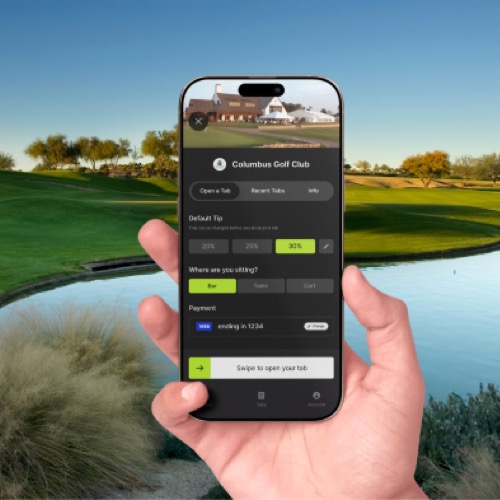
OpenTab's digital tab system sets the bar for mobile payments at golf courses. With features built specifically for golf, we turn every course into a country club.
https://www.joinopentab.com/pricing
Whether you're a classic local spot or a nationwide brand, our pricing plans are designed to grow with your needs.
$129 per location per month
The contemporary hospitality landscape is currently defined by a tension between legacy operational models and the accelerating demand for decentralized, guest-led transaction systems. At the center of this transition is OpenTab, a Columbus-based financial technology company that has positioned itself as a critical orchestration layer for mobile tab management within bars, restaurants, and increasingly, specialized sports environments such as golf courses . Founded in 2024, the organization addresses the specific point of friction known as the "payment moment"—the period of operational inertia that occurs between a guest's desire to depart and the final settlement of their bill . By digitizing this interaction, OpenTab aims to recover significant lost time for service staff and improve the overall throughput of high-volume venues .
The founding of OpenTab in 2024 by Jack Hendrix and his team represents a targeted response to the inefficiencies of the traditional "card behind the bar" model . Historically, the bar tab has functioned as a physical collateral system where a guest surrenders a credit card to a venue as security for ongoing consumption. This model creates several layers of friction: the physical risk of card loss or theft, the administrative burden on staff to manage a filing system for physical cards, and the final bottleneck of processing the payment during peak departure times . OpenTab’s intervention is the creation of a digital identity for the tab, which is tied to the guest's mobile device and a tokenized payment method .
The company’s headquarters in Columbus, Ohio, places it within a growing hub of Midwest fintech innovation, characterized by a focus on practical B2B solutions for the service sector . The organization’s mission, as articulated in its early-stage development, is to remove the payment moment without requiring operators to replace the systems they already trust . This philosophy of non-disruption is a significant strategic differentiator in a market saturated with "rip and replace" technology solutions .
Developmental Milestone Detail Founding Year 2024 Headquarters Columbus, OH Lead Investor LAUNCH Fund (Jason Calacanis) Primary Market FocusBars, Restaurants, and Golf Courses Core PhilosophyRemoving the "Payment Moment" friction Team Size 3 Employees (Early Stage)
The strategic direction of OpenTab is heavily influenced by the background of its CEO, Jack Hendrix. Hendrix possesses a deep and documented history within the golf industry, having competed at the collegiate level for Stephen F. Austin State University (SFA) and the University of New Mexico. During his tenure as a student-athlete, Hendrix demonstrated a high degree of technical proficiency, recording career-low rounds of 64 and 66. His competitive career included multiple top-ten finishes, such as a third-place finish at the Southland Championship in 2019.
This collegiate background is not merely biographical; it provides a foundational understanding of the logistical challenges inherent in the golf course environment. A competitive golfer spends thousands of hours on the course, interacting with pro shops, halfway houses, and beverage carts. The frustration of a delayed round due to a bottleneck at the 9th-hole snack shack or the wait for a beverage cart attendant to process a manual credit card transaction is a lived experience for Hendrix . This "Founder-Market Fit" allows OpenTab to approach the golf industry not as an outside software vendor, but as a specialist solving a problem they have experienced first-hand .
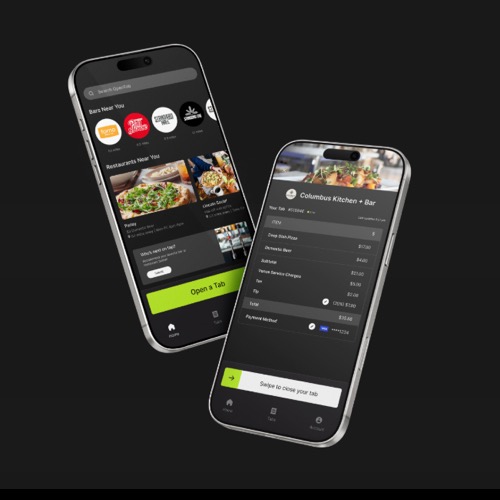
OpenTab's technical strategy is built around the concept of a "sidecar" integration. Rather than functioning as a standalone Point-of-Sale (POS) system, it operates alongside the venue's existing infrastructure . This is a critical distinction for the hospitality industry, where the cost and time associated with switching POS systems can be prohibitive . By integrating directly with established platforms, OpenTab allows staff to continue using the interfaces they are already trained on, while the guest uses their own device for the payment phase .
The integration process involves a bidirectional sync between the guest's mobile tab and the venue's POS database . When a server rings in an order at a terminal, the data is pushed to the guest's phone in real time . This transparency serves a dual purpose: it reduces "bill shock" at the end of the night and eliminates the need for guests to flag down staff just to check their current total .
Supported POS SystemCategory/FocusNoted Strategic Value NCR AlohaHospitality StandardHigh reliability and deep feature set for high-volume barsOracle MicrosEnterprise GradeScalability for large resorts and multi-course operationsPAR BrinkCloud-NativeReal-time data accessibility for multi-location groupsSquirrelFlexibilityPopular in hotel F&B and diverse venue typesPOSitouchFull ServiceStrong support for complex dining workflowsCloverSmall to Mid-SizeModern hardware integration for independent operatorsHeartlandPayment-CentricTrusted processing and comprehensive restaurant tools
One of the most disruptive aspects of OpenTab’s model is the elimination of the need for venue-provided hardware such as tablets, handheld readers, or kiosks . In a traditional setup, a restaurant or golf course might have to purchase dozens of proprietary handheld devices to enable tableside ordering or on-course payments. These devices carry significant upfront costs, require ongoing maintenance, and are prone to battery failure or breakage in outdoor environments .
OpenTab leverages the guest's own smartphone as the primary hardware interface . This shift utilizes the "Bring Your Own Device" (BYOD) trend that has transformed other sectors of the economy. For the operator, this means zero capital expenditure (CapEx) on hardware and no additional training for staff on how to use new gadgets . The "Zero Hardware" promise is particularly attractive for golf courses, where the environmental conditions (heat, rain, vibration on a cart) are hostile to electronic devices .
While OpenTab is highly effective in a standard bar or restaurant, its utility is amplified in the sprawling, decentralized environment of a golf course . A standard 18-hole golf course can cover 150 to 200 acres, creating a geographical challenge for traditional food and beverage service . Service is typically split between three main zones: the clubhouse bar and restaurant, the "halfway house" snack shack, and the mobile beverage carts .
The beverage cart is perhaps the most difficult service point to manage in the golf industry. Historically, it has operated on a "wait and see" model where the attendant roams the course, and the golfer waits to be found . This results in several systemic failures: golfers finish their round before the cart arrives (lost revenue), the cart attendant misses groups because of the layout of the course (inefficiency), and the attendant must handle credit card transactions in areas with spotty cellular coverage (technical failure) .
OpenTab’s application for beverage carts involves placing unique QR codes on tee boxes, scorecards, or within the carts themselves . By scanning these codes, a golfer can browse the menu and place an order immediately, which is then sent directly to the cart attendant’s device or the kitchen . This shifts the model from a random roaming search to a targeted delivery service. The attendant no longer has to wonder where the next sale is; they can drive directly to the group that has already ordered .
This model also solves the "payment friction" at the cart. Instead of the attendant having to stop, ask for a card, swipe it, and wait for a receipt to print, the transaction is handled on the golfer’s phone while they continue their round . The attendant simply hands over the items and marks the order as delivered, significantly increasing the "pace of play"—a metric of vital importance to course managers .
Operational MetricTraditional Cart ModelOpenTab ModelGuest Wait Time30–45 MinutesOn-demandTransaction Time2–3 MinutesNear-instantStaff RoamingRandomTargeted/Data-drivenLost SalesHigh (groups finish early)MinimizedHardware RequiredHandheld card readers/HotspotsNone (Guest device)
The "halfway house" is a secondary revenue center that often becomes a major bottleneck for the course . Because most golfers reach the 9th hole at roughly the same time intervals, the halfway house can experience sudden surges in demand. If a group has to wait 10 minutes to order and pay for a sandwich, the entire course slows down, leading to frustration for groups behind them .
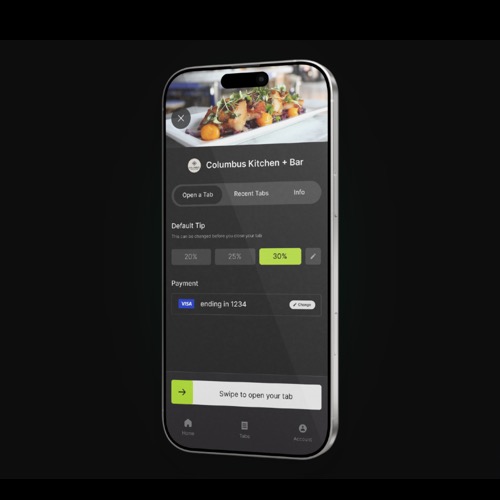
OpenTab allows for pre-ordering and digital tab management that spans the entire property. A player can start a tab at the pro shop when checking in for their tee time, and then use that same tab at the halfway house and on the beverage cart . This unified experience is managed through the mobile app, where the guest can see their total spend across all "zones" of the course . When the round is over, they simply swipe to close the tab, avoiding the final trip to the clubhouse bar just to settle up .
The labor market for golf course operations is currently characterized by high seasonality and a reliance on part-time or student workers . An analysis of job postings for beverage cart attendants and halfway house staff reveals a wage range typically between $9 and $24 per hour, often supplemented by tips . These roles are physically demanding, requiring staff to stand for long periods, work in extreme weather conditions (heat and humidity), and manage inventory controls while providing high-level hospitality .
Staff turnover is a persistent issue in seasonal hospitality roles. One of the primary drivers of burnout is the stress associated with managing payments during peak periods . Servers and cart attendants often spend a disproportionate amount of their time "running cards" and "splitting checks" rather than engaging with guests . OpenTab's "Split Tab" feature is a major technological advancement in this area. It allows guests to handle the complex math of dividing a bill directly on their own phones, removing the administrative burden from the server .
Furthermore, the financial impact on staff is significant. OpenTab reports that venues using their system see a 15-20% increase in tip totals . This is attributed to the frictionless nature of the tipping interface, which provides clear, suggested percentages at the moment of checkout . For a beverage cart attendant earning a base wage of $15 per hour, a 20% increase in tips can represent the difference between a minimum-wage job and a sustainable seasonal career .
Location/Job Title Base Hourly Wage Supplementary Benefits/Requirements Bartlett Park District (IL) - Halfway House$15–$16Concessions oversight Skokie Country Club (IL) - Halfway House$22–$24
Full-time, health insurance, 401(k)
Bensenville Park District (IL) - Cart Attendant$9
Seasonal, 10–35 hours per week
The Reserve at Lake Keowee (SC) - Cart/Halfway$1721+ years of age, background checkOak Brook (IL) - Member Experience Bartender$25–$35Full-time, flexible schedule
OpenTab claims that its system saves servers up to 2 hours per shift on payment handling alone . In a labor-constrained market, this recovered time is an invaluable asset. For a golf course, it means a beverage cart attendant can complete more loops of the course, or a clubhouse server can manage a larger section of the patio . This efficiency does not necessarily lead to staff reductions; rather, it allows for a higher level of "hospitality-focused" service where staff have the time to engage with members and guests on a personal level .
OpenTab does not operate in a vacuum. It competes with a variety of hospitality tech providers that range from legacy POS systems to mobile-first startups. Its primary competitors include GoTab, Rooam, and the mobile modules of systems like Toast and Lightspeed Golf .
GoTab is perhaps the most comparable competitor, offering an "Easy Tab" system that emphasizes contactless ordering and payment . GoTab has achieved significant penetration in the brewery and food hall markets, where hybrid service models are common . However, GoTab often positions itself as a full POS replacement or a highly integrated "system of record" .
OpenTab’s differentiator is its "Zero Workflow Change" for staff . While GoTab and other competitors may require servers to adapt to new kitchen display systems (KDS) or order management interfaces, OpenTab focuses almost exclusively on the payment layer . This makes OpenTab a more attractive "entry-level" modernization tool for venues that are not ready for a full digital overhaul .
It is important to distinguish the standalone OpenTab Solutions from "OpenTab by Arryved" . Arryved, a leading POS for craft beverage venues, launched its own OpenTab feature in 2021 to allow guests to self-order and pay . While Arryved’s product is a feature of their specific POS ecosystem, Jack Hendrix’s OpenTab is a platform-agnostic solution designed to bridge many different POS systems . This nuance is critical for golf course operators who may already use systems like Aloha or Micros and need a compatible mobile layer without switching their entire back-end .
Feature ComparisonOpenTab (Subject)GoTabLightspeed GolfToastPOS IntegrationAgnostic/ExtensiveBuilt-in or IntegratedAll-in-one ProprietaryPrimary GoalPayment FrictionHybrid Service
Course Management
Restaurant MgmtHardwareZero RequiredFlexible/Proprietary
Proprietary
ProprietaryPricing Model
Monthly + Transaction
Transaction + SaaS
Subscription
Subscription + Proc.
The underlying mechanism of OpenTab is its payment orchestration layer, which connects the guest's mobile wallet to the venue's merchant account . This is facilitated by major payment gateways, with Stripe serving as a primary designated partner . By utilizing these enterprise-grade gateways, OpenTab ensures that all transactions are PCI-compliant and tokenized .
A major pain point for bars and golf clubhouse bars is the "forgotten card" scenario. When guests leave a physical card to open a tab, they often forget to retrieve it at the end of the night. This leaves the venue with the administrative burden of securing the card and the risk of a "walkout" where the guest leaves without signing or tipping .
OpenTab’s pre-authorization feature addresses this by tokenizing the guest's payment method the moment the tab is opened . A "pending charge" (often a nominal amount like $0.01) is placed on the card to verify its validity . When the guest closes the tab—or if they simply leave the property—the system can automatically process the final amount, including a default tip . This essentially eliminates walkouts and ensures that the venue and staff are always compensated for the service provided .
OpenTab’s "Restaurant Terms of Use" outline a sophisticated approach to data . The platform collects and analyzes guest behavior to provide venues with "data-driven insights" . This includes tracking which items are frequently ordered together and identifying "super-users" who visit multiple venues in the network .
Crucially, the platform uses pseudonymized data to share insights across the network without disclosing identifiable guest information . For instance, if the system notices a trend where golfers at one course frequently order a specific craft beer after their round, it can inform other courses in the network to stock that item . This collective intelligence is a powerful tool for inventory management and menu engineering .
OpenTab’s expansion strategy is heavily reliant on a decentralized partner program that incentivizes industry professionals to advocate for the platform . This program targets restaurant consultants, POS resellers, and golf management groups who have direct relationships with venue owners .
The partner program offers a compelling financial structure:
This model creates a self-sustaining sales engine that allows OpenTab to scale rapidly without the need for a massive internal sales force . By aligning the partner's financial success with the venue's adoption of the technology, OpenTab ensures a high-quality onboarding experience and ongoing support for the client .
The investment from LAUNCH, an early-stage fund founded by Jason Calacanis, provided OpenTab with the capital and mentorship necessary to move from a prototype to a market-ready product . The $25,000 funding round in early 2025 was specifically designated for product development and expanding the POS integration library . This backing is a significant signal to the market, as LAUNCH is known for investing in "capital-efficient" companies that solve real-world problems through software .
Funding Stage Date Amount Investor Accelerator/Seed14-Feb-2025$25,000 LAUNCH Fund (Jason Calacanis) Focus AreaProduct DevelopmentN/APOS Integration ExpansionStatusCompletedN/AActive Growth Phase
While the current focus is on bars, restaurants, and golf courses, the "OpenTab" philosophy is inherently scalable to any venue where groups of people consume items over a period of time . The company has already identified "Concert Venues" as a secondary vertical . In these environments, the payment friction is even more extreme, as thousands of guests attempt to purchase drinks during a 20-minute intermission.
The implementation of "Private Label Cards" and "Predictive Search" within the app suggests a move toward a more comprehensive guest wallet. Imagine a scenario where a golfer has a "digital membership card" stored within OpenTab that not only manages their bar tab but also tracks their tournament winnings or pro shop credits. This would transform OpenTab from a simple payment tool into a central hub for the member experience .
The emergence of OpenTab is a symptom of a larger shift in the hospitality industry: the decoupling of the "transaction" from the "service." By allowing the guest to control the financial aspect of the meal or the round of golf, the staff is liberated to focus on the human element of hospitality . This is not merely a technical upgrade; it is a fundamental reimagining of the service workflow.
For the golf industry, the implications are particularly profound. Golf has long struggled with "pace of play" and a reputation for being slow and traditional . OpenTab provides a way for courses to modernize their guest experience without losing the "clubby" feel that members value . The ability to buy a round of drinks for your foursome with a single swipe on your phone, while standing on the 18th green, is the kind of modern convenience that will define the next generation of golf course operations .
Furthermore, the economic data supports the adoption of these systems. With a 25% increase in table turnover and a 15-20% increase in tips, the "ROI" of a mobile tab system is nearly instantaneous . In an era of rising labor costs and increased competition for leisure spending, the courses that embrace these efficiencies will be the ones that thrive. OpenTab, under the leadership of a founder who understands the game from the inside, is uniquely positioned to lead this transformation .
The integration of fintech into the fairway is more than just a convenience; it is an optimization of the entire experience economy. As OpenTab continues to expand its POS network and refine its on-course delivery modules, it will likely become an indispensable part of the golf industry’s digital toolkit . The "payment moment" is dying, and in its place is a more fluid, data-driven, and guest-centric future for hospitality .
Operational BenefitMechanismSecondary ImpactTable Turnover25% faster checkoutIncreased cover counts and daily revenueStaff Retention15–20% higher tipsLower recruitment and training costsPace of PlayDigital ordering/deliveryHigher member satisfaction and capacitySecurityTokenized mobile paymentsReduced chargebacks and card theft riskRevenue ProtectionAutomatic closing of open tabsElimination of walkouts and forgotten cards
The trajectory of OpenTab, supported by the strategic mentorship of the LAUNCH fund and the domain expertise of Jack Hendrix, suggests a significant shift in how hospitality transactions will be managed in the coming decade . By focusing on the high-friction "payment moment" and providing a zero-hardware, POS-agnostic solution, the company has cleared the path for rapid adoption across the fragmented but lucrative golf and restaurant sectors . The future of the golf course is digital, decentralized, and entirely mobile .
Tell us about your course and we'll send the three vendors that fit, with the questions to ask each one.
Get my free shortlist

Be the first to receive golf course technology updates on articles, podcast episodes, product reviews, buying guides, new releases, and more!


